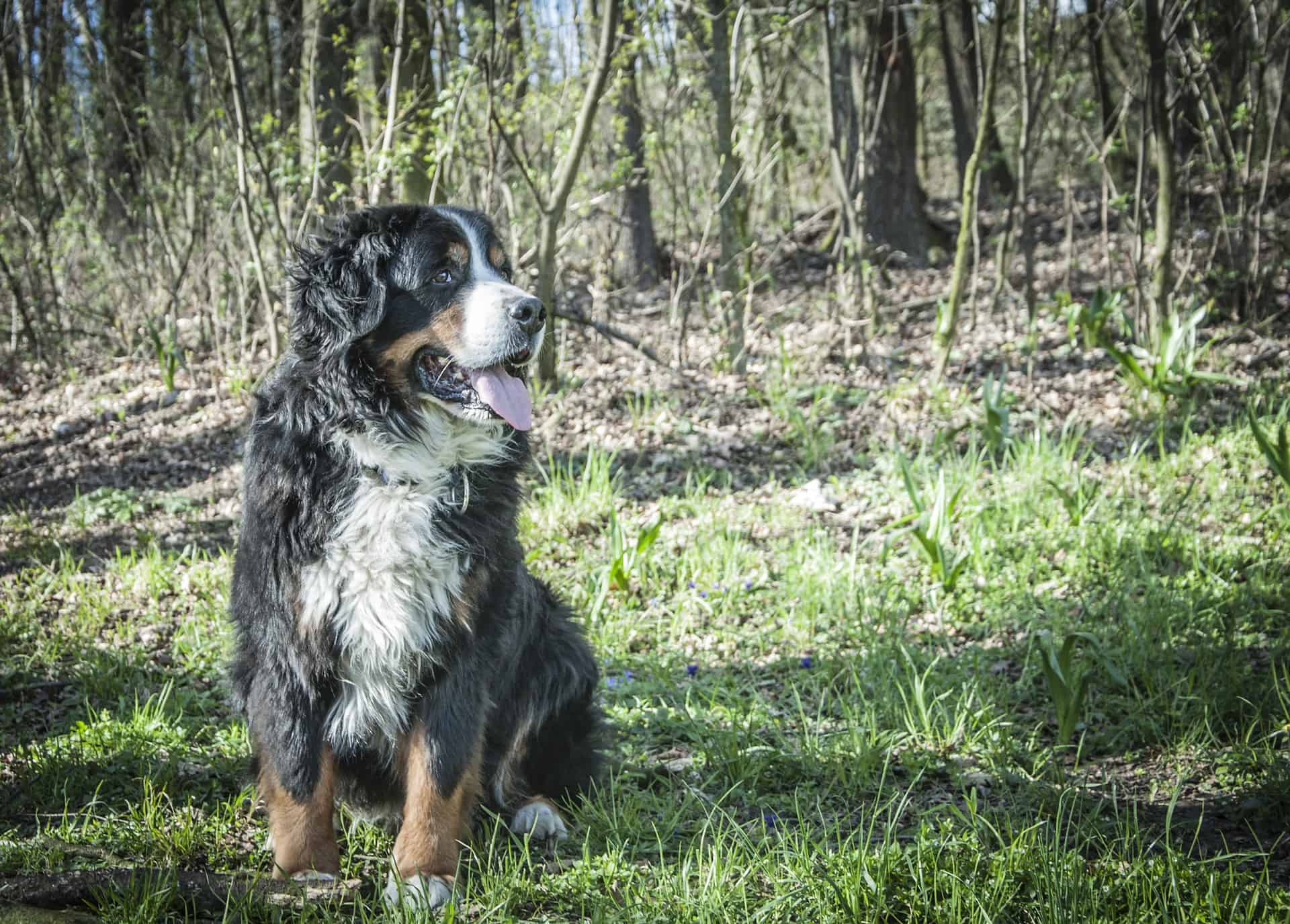
Bernese Mountain Dog
Also known as Berner Sennenhund, Bernese Cattle Dog, Bouvier Bernois
From Switzerland
Purpose & Origin
The Bernese Mountain Dog is the most recognisable of the four Swiss Sennenhunde, and the only one with a long, silky coat. Its origins are speculative: the most widely accepted theory traces the breed to the Roman invasion of Switzerland, where Roman mastiffs crossed with native flock-guarding dogs to produce something hardy enough for Alpine conditions and versatile enough to pull carts, drive livestock, and guard farms. Despite centuries of usefulness on Swiss farms, nobody made a deliberate effort to preserve the breed, and by the late 1800s it was close to extinction.
Professor Albert Heim identified and catalogued these dogs in a broader study of Swiss breeds, finding the best specimens concentrated around the valley region near Dürrbach, where they were briefly known as Dürrbach dogs before taking the name Bernese Mountain Dog. The first Berners arrived in America in 1926, with AKC recognition following in 1937.
Temperament & Behaviour
A well-raised Bernese is calm, sensitive, and deeply loyal, but the calm part takes time. Adolescence can be boisterous, and the breed matures slowly. Once settled, it is a devoted family companion, gentle with children, and typically polite with other dogs and household pets. Strangers tend to be met with reserve rather than aggression. The Bernese does not thrive in isolation; it bonds tightly with its people and will become unhappy if left out of family life. It is not a protective breed in any serious sense, more watchful than reactive.
Activity & Training
Exercise needs are moderate for a dog this size. A daily walk or hike is enough, and the Bernese genuinely enjoys cold weather and outdoor work, including drafting and carting, which taps its original function. Heat is a real hazard; this breed is built for the Alps, not summer afternoons, and heat stroke is a documented risk. Training is relatively straightforward. The breed scores well for ease of training, responding to consistent, calm handling without the stubbornness you find in more independent working breeds.
Grooming
The long double coat requires brushing once or twice a week under normal conditions, but shedding seasons change that significantly. During heavy shed periods, daily brushing is the realistic standard if you want to keep the coat manageable and avoid mats. This is not a low-maintenance coat, and anyone unprepared for regular upkeep will find the shedding considerable.
Health
The Bernese carries a famously short lifespan, and the Swiss have a saying for it: three years a young dog, three years a good dog, three years an old dog, and anything beyond that is a gift. The major concerns include hip and elbow dysplasia, mast cell tumour, and gastric torsion. Cataracts and eyelid abnormalities appear as minor issues, with a range of other conditions seen occasionally. Prospective owners should treat the 7-8 year average lifespan as a realistic expectation, not a worst case.
Why these breeds are similar
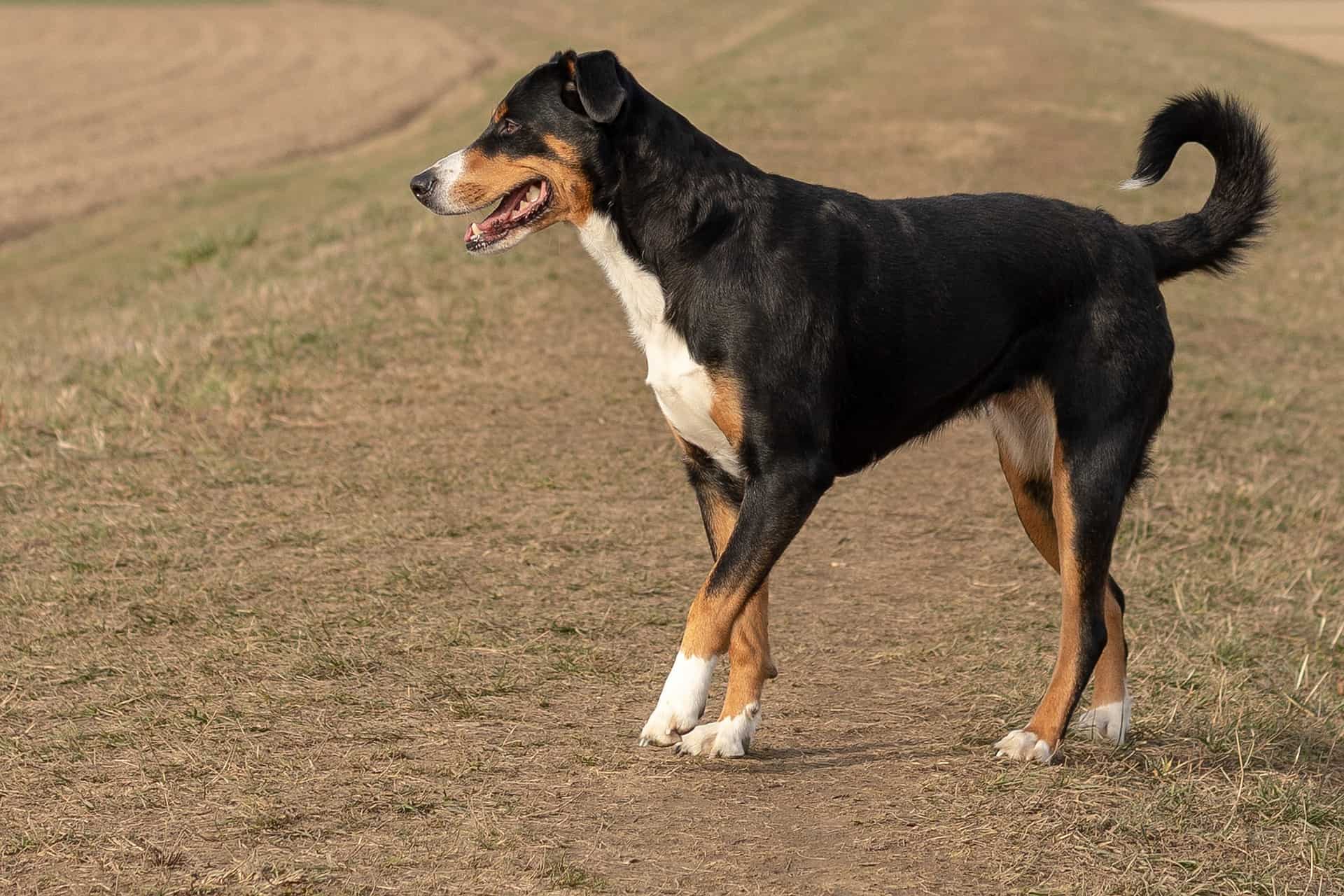
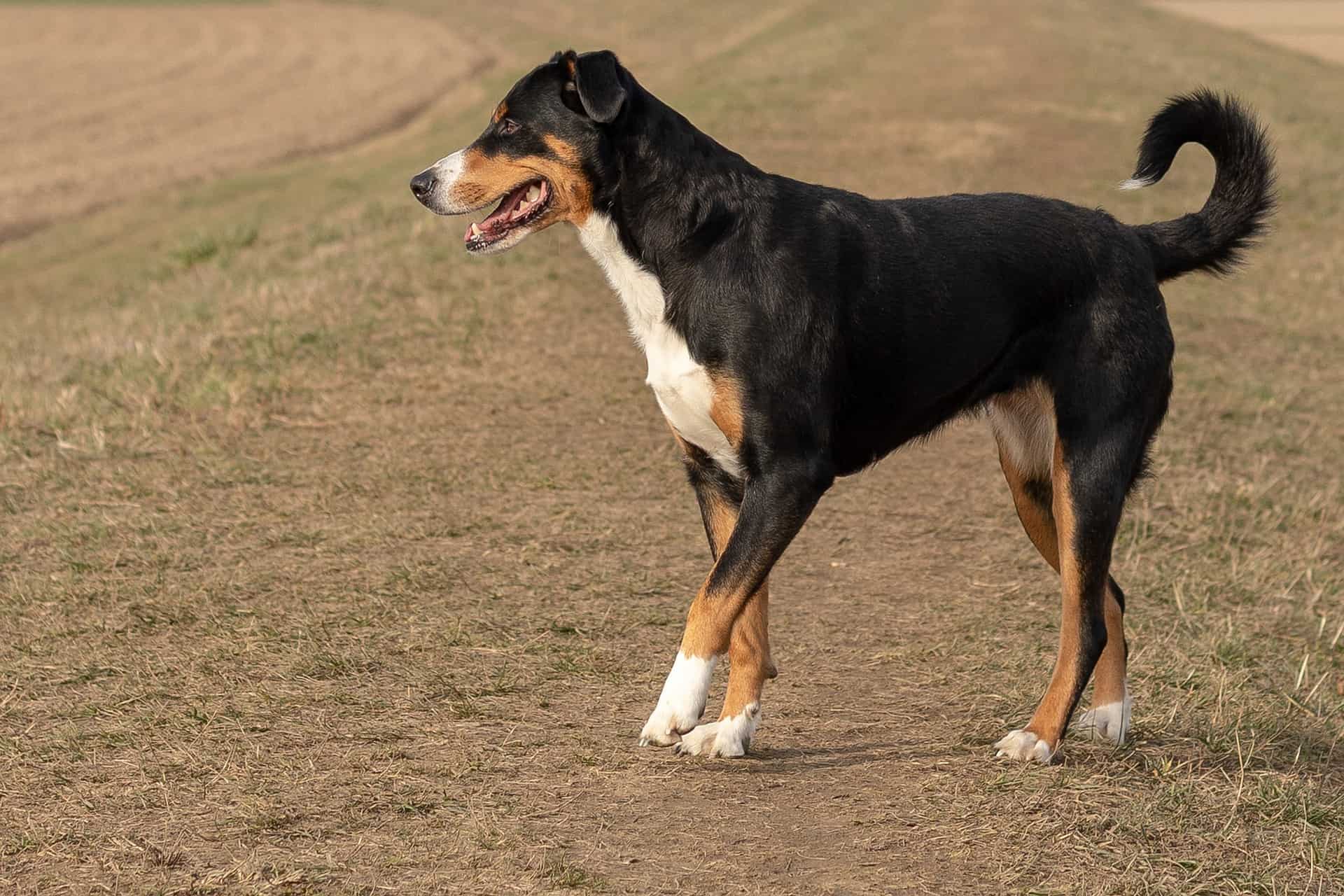
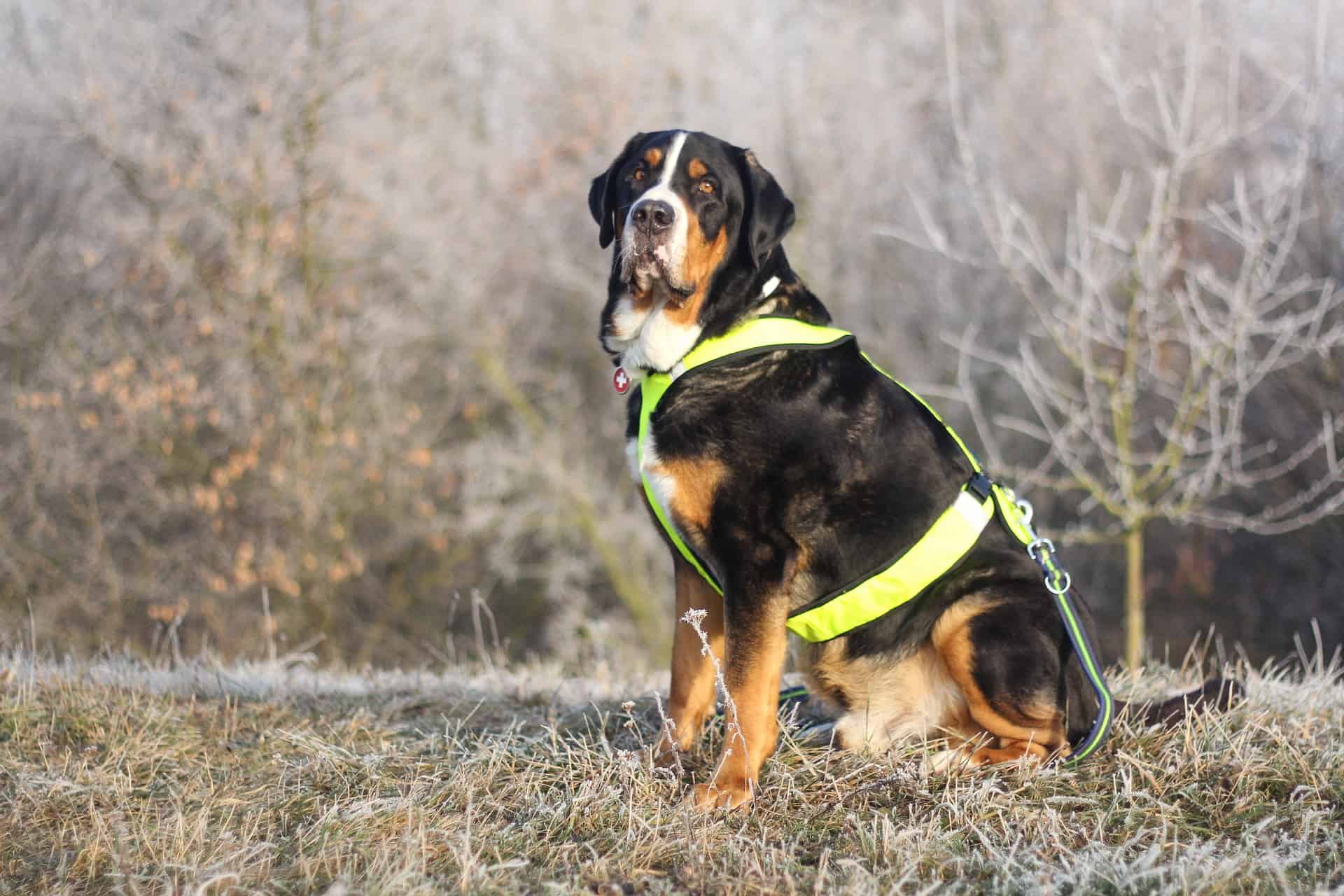
The **Appenzeller Sennenhund** and **Entlebucher Mountain Dog** are the Bernese's smaller Swiss cousins from the same Sennenhunde family, sharing the same tricolour colouring, the same Swiss farm dog ancestry, and the same general working temperament, though both are shorter-coated and considerably more energetic. The **Greater Swiss Mountain Dog** is the closest in size and build, another of Heim's four Swiss breeds, similarly originating from the Roman mastiff cross and used for draft work, distinguished mainly by its smooth coat and slightly heavier frame.
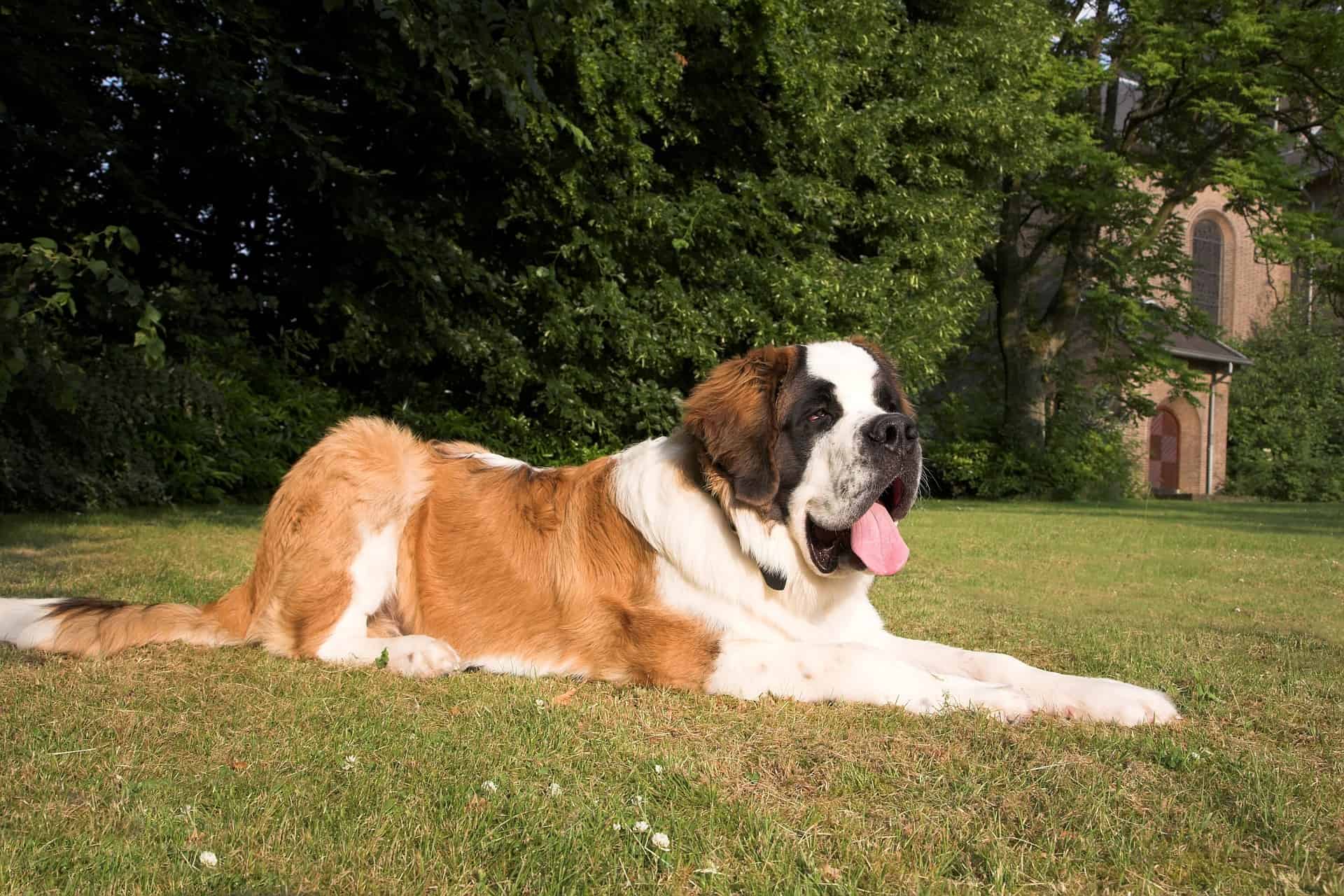
The **Saint Bernard** connects through shared Alpine working heritage and the mastiff foundation stock: a large, cold-weather draft and rescue dog from the same mountainous region, with comparable bone and a similarly calm adult temperament. The **Hovawart** is the outlier in origin (German rather than Swiss) but earns its place through function and character: a large farm guardian and drafter with a loyal, family-oriented temperament, heavy coat requirements, and the same working-dog calm that defines the Bernese.
Trait ratings
- Energy level
- 2/5
- Exercise requirements
- 3/5
- Playfulness
- 2/5
- Affection level
- 3/5
- Friendliness toward dogs
- 3/5
- Friendliness toward other pets
- 4/5
- Friendliness toward strangers
- 3/5
- Ease of training
- 4/5
- Watchdog ability
- 3/5
- Protection ability
- 2/5
- Grooming requirements
- 3/5
- Cold tolerance
- 5/5
- Heat tolerance
- 1/5