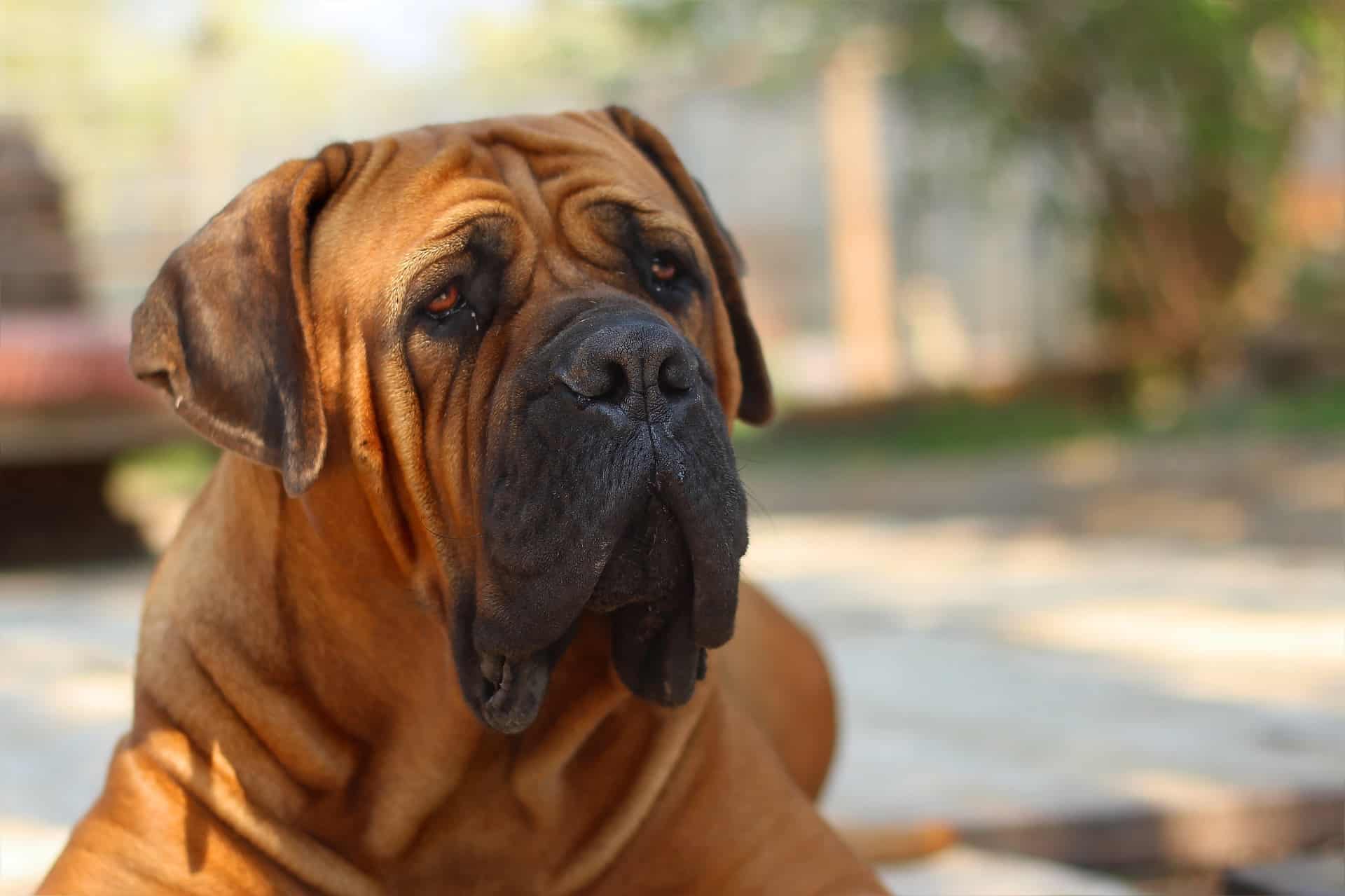
Purpose & Origin
The Boerboel is a South African farm guardian that traces its roots to the mid-seventeenth century, when Dutch East India Company settlers arrived at the Cape with large protective dogs called Bullenbijters. British colonists added their own Bulldog and Mastiff stock in the 1800s, and the mix dispersed northward with the Boers during the Great Trek of 1838, likely picking up native African blood along the way. The name means "farmer's dog" in Afrikaans, and the role was entirely practical: on isolated homesteads, these dogs guarded livestock, controlled oxen, and kept leopards and other threats at bay.
In 1938 the mining company De Beers brought Bullmastiffs to guard South African mines, and those dogs were eventually folded into the breed's gene pool. By the early 1980s the breed had nearly dissolved into crossbreeds; two dedicated fanciers scoured the continent and from 250 candidates selected 72 dogs to anchor a formal registry. The AKC added the Boerboel to its Working Group in 2015.
Temperament & Behaviour
This is a formidably self-assured dog. The Boerboel is deeply devoted to its family and openly affectionate with people it knows, but it treats strangers with flat suspicion and rates near the bottom of the scale for friendliness toward other dogs and household pets.
The watchdog and protection scores are both at the ceiling, which reflects the breed's heritage accurately: it was bred to confront threats, not defer to them. A single dog was capable of fighting off a leopard. That level of confidence requires a handler who can match it. The Boerboel is not a dog for first-time owners; without consistent authority, early socialization, and ongoing structure, its strong will becomes a serious liability.
Activity & Training
Exercise needs are moderate rather than extreme. A long daily walk or a short jog covers the physical requirement; this is not a breed that needs hours of running. Dog parks are a poor fit given its hostility toward other dogs. The Boerboel does well with structured work, and tracking suits it particularly well. Training requires persistence. Ease of training scores low, reflecting an independent streak and a dog that will test boundaries if it senses inconsistency. Socialization from puppyhood is not optional; it is the single most important investment an owner can make to keep the dog's protective instincts within manageable limits.
Grooming
Coat care is minimal. The short, dense coat needs only the occasional bath or light brushing to stay clean. This is one of the lowest-maintenance coats in the mastiff family, which means grooming is rarely a time burden. The breed handles temperate climates well outdoors, with average tolerance for both heat and cold.
Health
The Boerboel's main structural concerns are hip dysplasia and elbow dysplasia, both common in heavy-boned working breeds of this size. Eye issues including entropion and ectropion appear occasionally, as does epilepsy. Prospective owners should ask breeders for hip, eye, and cardiac clearances. Life expectancy runs from eight to twelve years, which is typical for a dog in the 140-to-180-pound range.
Trait ratings
- Energy level
- 3/5
- Exercise requirements
- 3/5
- Playfulness
- 2/5
- Affection level
- 3/5
- Friendliness toward dogs
- 1/5
- Friendliness toward other pets
- 2/5
- Friendliness toward strangers
- 1/5
- Ease of training
- 2/5
- Watchdog ability
- 5/5
- Protection ability
- 5/5
- Grooming requirements
- 1/5
- Cold tolerance
- 3/5
- Heat tolerance
- 3/5
Breeds similar to Boerboel
No similar breeds are mapped for Boerboel yet - try browsing its FCI group or country of origin below.