Harrier
From Great Britain
Purpose & Origin
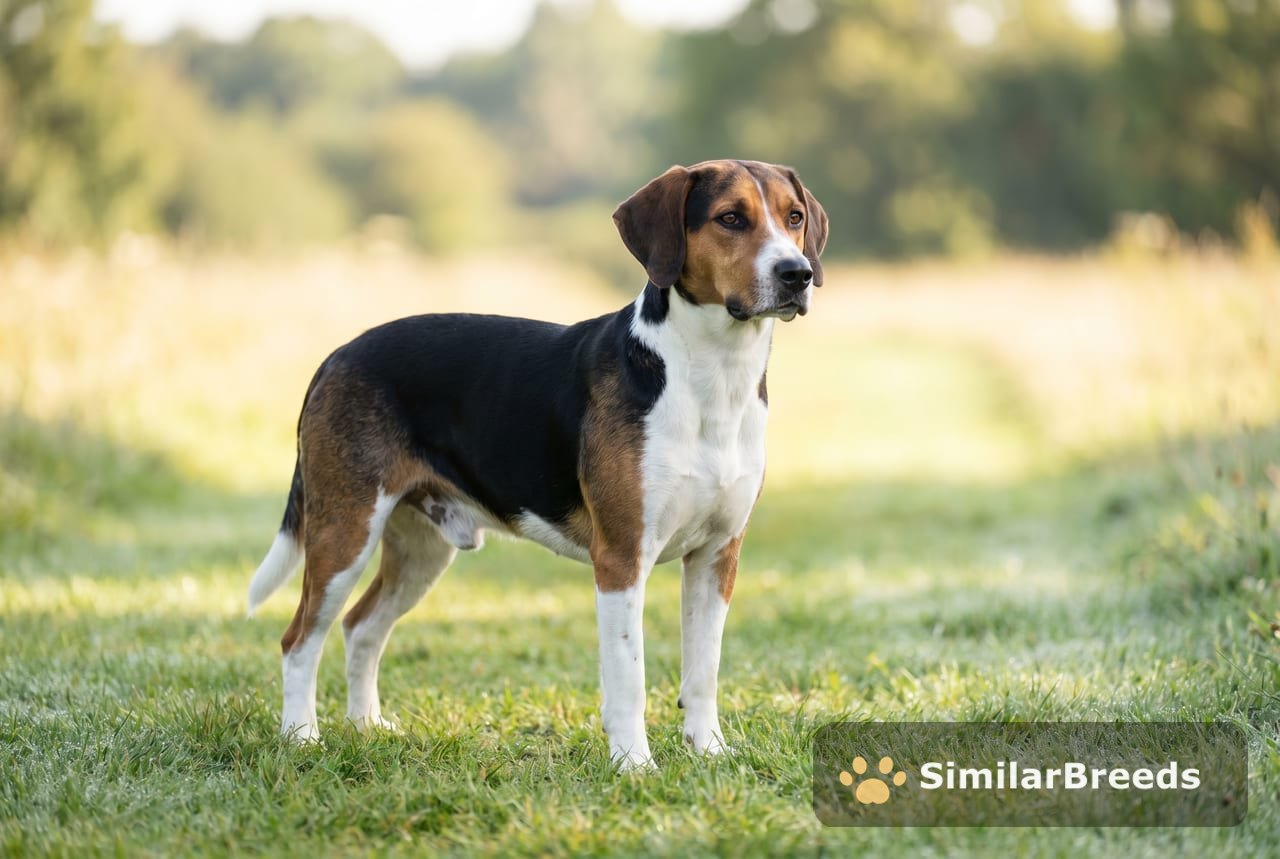
The Harrier is one of Britain's oldest scenthounds, with documented references stretching back to thirteenth-century England. The breed's name derives from the Norman word for hound, which makes tracing its precise ancestry tricky, since early records blur the Harrier into the general history of medieval hunting dogs. Its likely forebears include the long-extinct Talbot and St. Hubert hounds, with probable later influence from the French Basset.
The result was a pack hound purpose-built for hunting hare by scent at a steady pace a person on foot could match. That practical detail mattered: while noble packs were kept by the gentry, ordinary hunters without horses could pool their individual dogs and run impromptu packs.
In the early 1800s, smaller English Foxhounds were bred into the line to produce a longer-legged dog also capable of keeping pace with mounted hunts. The Harrier has been present in America since colonial times, yet despite its classic proportions and convenient size, it has never caught on as a show dog or pet.
Temperament & Behaviour
The Harrier sits between the Foxhound and the Beagle in personality: livelier and more sociable than the former, calmer than the latter. It is an easygoing, tolerant breed that gets along well with children and is generally friendly toward strangers. Its instincts run deep, and its real joy is scenting and trailing. At home, it is affectionate and amiable, but it is fundamentally a pack animal and dislikes being left alone. A bored or isolated Harrier will make itself heard through baying, which is worth factoring in before bringing one home.
Activity & Training
This is a working scenthound with a 4/5 energy level and genuine daily exercise requirements. A long walk or jog combined with a vigorous session in a securely fenced yard will satisfy most individuals, but the emphasis on secure fencing is not optional: a Harrier that picks up a scent will follow it without hesitation. Training is another matter. Ease of training scores a 2/5, which reflects the breed's independence and scent-driven focus rather than any lack of intelligence. It is not a dog that will work eagerly for approval, and training methods that rely on patience and consistent reward will fare better than those built around compliance.
Grooming
The Harrier's coat is about as low-maintenance as a short-coated breed gets, scoring 1/5 for grooming requirements. An occasional brush to remove dead hair is all that is needed. There is no complex coat care, no stripping, no trimming.
Health
The Harrier is a generally sound breed with a lifespan of 12 to 14 years. The primary health concern is canine hip dysplasia, and hip evaluation is the recommended screening test. Epilepsy and perianal fistula are occasionally seen. Eye checks are also suggested. No minor concerns are listed beyond these.
Why these breeds are similar
No similar breeds are listed in the source data for the Harrier. The breed occupies a specific niche: a medium-sized British pack scenthound built for hare, larger than the Beagle yet smaller and more foot-friendly than the English Foxhound. The two breeds most closely related to it in purpose and build are those same two: the Beagle shares its hare-hunting ancestry and pack temperament, while the English Foxhound shares its British origins and larger, faster frame. Any site visitor arriving from either of those breeds will find the Harrier familiar in energy, independence, and the need for a securely fenced yard.
Trait ratings
- Energy level
- 4/5
- Exercise requirements
- 4/5
- Playfulness
- 3/5
- Affection level
- 3/5
- Friendliness toward dogs
- 5/5
- Friendliness toward other pets
- 3/5
- Friendliness toward strangers
- 4/5
- Ease of training
- 2/5
- Watchdog ability
- 5/5
- Protection ability
- 1/5
- Grooming requirements
- 1/5
- Cold tolerance
- 3/5
- Heat tolerance
- 3/5
Breeds similar to Harrier
No similar breeds are mapped for Harrier yet - try browsing its FCI group or country of origin below.