Otterhound
From Great Britain
Purpose & Origin
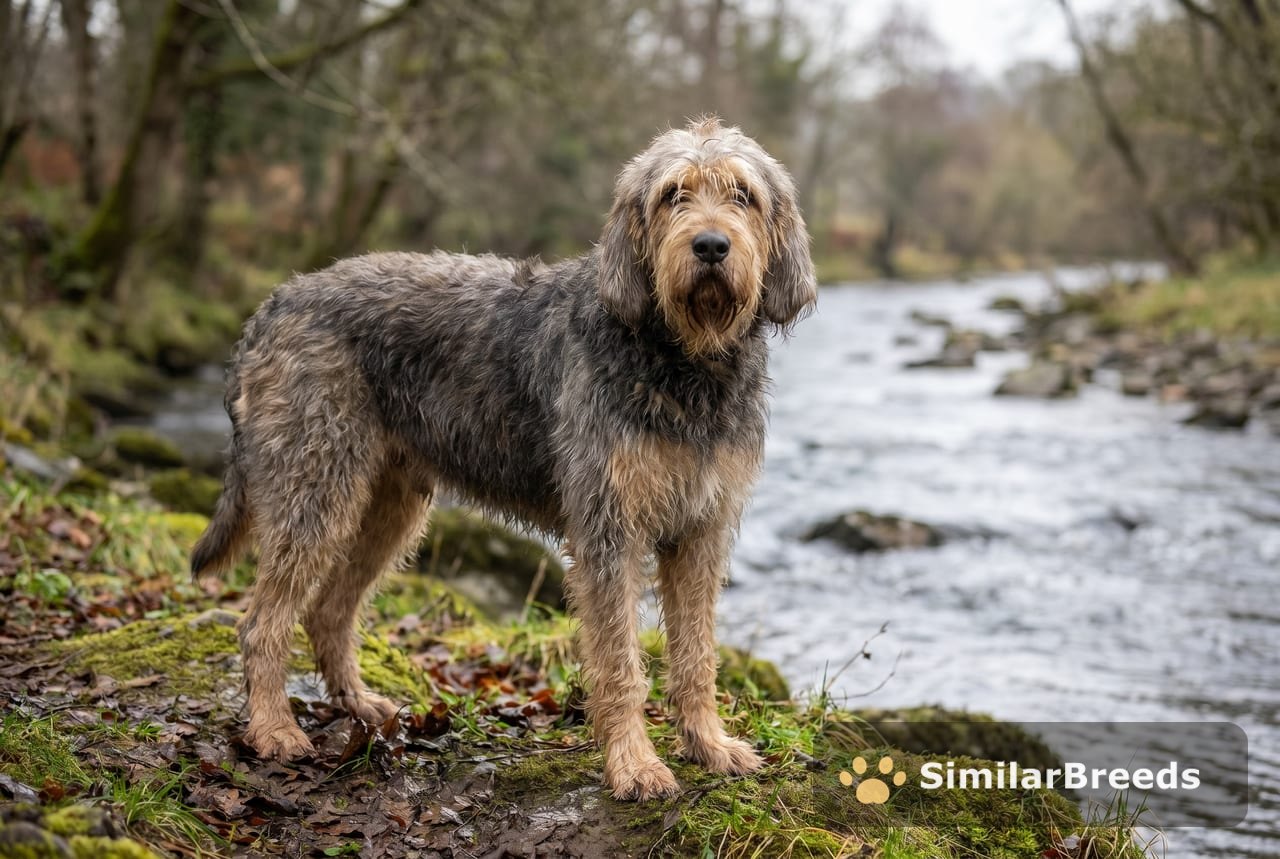
The Otterhound is one of England's oldest and rarest scenthounds, bred specifically to hunt otters along riverbanks and through cold water. Its origins are unclear, though the breed likely draws from French Vendeen hound stock, and possibly Bloodhound, Welsh Harrier, and water spaniel lines as well. Otter hunting served a practical purpose: otters were raiding fish from local streams, and a hound that could follow an underwater scent trail, wade through rivers, and bay at the den entrance was the solution.
The first documented packs appear in records from 1212 under King John. The sport peaked in the latter half of the nineteenth century, with over twenty packs working in Britain, then faded sharply after the Second World War. The Otterhound arrived in America early in the twentieth century and earned AKC recognition shortly after. Today it is among the rarest breeds recognised by either the AKC or the English Kennel Club, close to extinction despite its ancient lineage.
Temperament & Behaviour
The Otterhound is an amiable, low-key dog with a strong affectionate streak and a genuinely easygoing nature at home. It is good with children and open with strangers, scoring as one of the friendlier breeds on both counts. As a packhound it coexists well with other dogs, and it carries none of the aggression that shows up in some hound lines.
That said, the hunting drive is intact: once it catches a scent, it becomes single-minded and difficult to redirect, and it will chase small animals. Because it was kept historically in working packs rather than as a household companion, it is not especially attuned to human instruction and can be stubborn. Its voice is loud and carries far, which matters in a neighbourhood context.
Activity & Training
Exercise needs are moderate but consistent. The Otterhound needs daily activity in a secure area or on a leash, the latter being non-negotiable given its trailing instinct. It has low ease-of-training scores, reflecting its independent, hound-style thinking rather than any lack of intelligence. Patience and food motivation work better than repetition-heavy obedience routines. Scent work and swimming are where this breed is happiest; its enthusiasm in water is genuine and deep-rooted. First-time owners who expect quick compliance will find it frustrating. Experienced hound people who understand how scenthounds operate will get along with it well.
Grooming
The coat is a rough, weather-resistant double coat that kept the dog functional in cold rivers, and it needs weekly brushing or combing to stay manageable. The beard collects water and food and needs more frequent washing. The large, heavily haired feet pick up mud and debris and require regular checking. Tidiness is not this breed's strong suit, and owners should expect some mess tracked indoors. No dramatic grooming routine is required, but consistency matters to prevent matting.
Health
The Otterhound has a lifespan of roughly ten to thirteen years. The main structural concerns are hip dysplasia and gastric torsion; the latter is a serious risk in deep-chested breeds and warrants attention to feeding routine and activity around mealtimes. Elbow dysplasia and a bleeding disorder called thrombopathy appear occasionally in the breed, and DNA testing for thrombopathy is recommended before breeding. Hip and elbow evaluations are the standard health screens for breeding stock.
Why these breeds are similar
No similar breeds are listed in the source data for the Otterhound. Given the breed's highly specialised function, rare status, and unusual combination of traits, close equivalents are few.
Trait ratings
- Energy level
- 2/5
- Exercise requirements
- 3/5
- Playfulness
- 3/5
- Affection level
- 5/5
- Friendliness toward dogs
- 3/5
- Friendliness toward other pets
- 3/5
- Friendliness toward strangers
- 5/5
- Ease of training
- 2/5
- Watchdog ability
- 4/5
- Protection ability
- 1/5
- Grooming requirements
- 3/5
- Cold tolerance
- 4/5
- Heat tolerance
- 2/5
Breeds similar to Otterhound
No similar breeds are mapped for Otterhound yet - try browsing its FCI group or country of origin below.