Norwegian Elkhound (Black)
From Norway
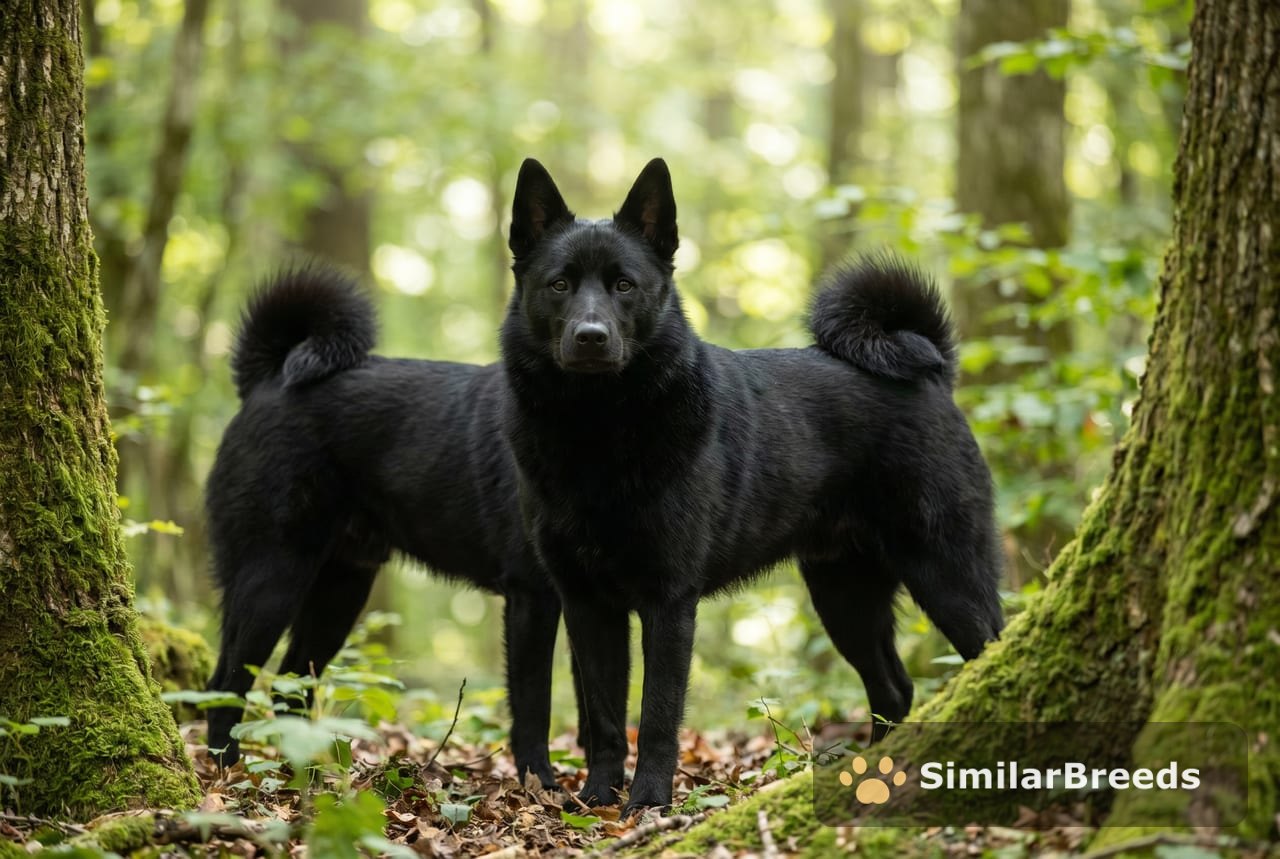
Purpose & Origin
The Black Norwegian Elkhound, known in Norway as the Norsk Elghund Sort or Svart Norsk Alghund, was bred to hunt large game across the snowbound landscape of Scandinavia. It was formally recognised as a breed distinct from the Grey Norwegian Elkhound in 1877, though selective breeding for the black colour had been underway earlier in the 19th century. Its main territory straddles the border between Norway and Sweden.
Despite looking like a black version of the better-known Grey Elkhound, Scandinavian breed experts consider the two dogs to be of different ancestry. The black coat was no accident: it makes the dog highly visible against snow, a practical advantage when hunters needed to track their dog through dense forest and white terrain. The breed is rare even inside Norway and virtually unknown elsewhere.
Temperament & Behaviour
This is a tough, independent northern dog. Morris noted it is more quarrelsome and less affectionate than the Grey Elkhound, and that assessment still holds. It bonds with its household but is not demonstrably sentimental about it. The breed is territorial and vocal, more so than its grey counterpart, which means it is a poor fit for apartment living or close urban neighbours.
Friendliness toward other dogs is low, and caution around other pets is warranted. With strangers it is more open than many Nordic spitz types, but it is not a pushover. Its high energy level and playfulness mean it needs genuine engagement, not just a walk around the block.
Activity & Training
Exercise requirements are moderate to high. This is a hunting dog built for endurance in cold, rough terrain, so it needs regular vigorous outdoor activity. The cold tolerance is exceptional; heat tolerance is poor, and owners in warm climates need to plan exercise around cooler parts of the day.
Trainability sits in the middle range. The Black Norwegian Elkhound is intelligent but characteristically independent, and it will not comply simply to please. Consistent, firm training from early on is necessary. It responds to clear boundaries and purpose-driven work better than repetitive obedience drills. Recall must be trained carefully given its hunting instincts.
Grooming
Grooming demands are relatively low for a northern spitz type. The coat is shorter and denser than the Grey Elkhound's, which means less frequent brushing is needed, though it will shed seasonally and regular combing during blowout periods prevents matting. Bathing can be infrequent as the coat repels dirt well. Nails, ears, and teeth follow standard maintenance.
Health
The Black Norwegian Elkhound is generally a hardy breed with a lifespan of 12 to 15 years. Known health concerns include hip dysplasia, hypothyroidism, and progressive retinal atrophy. As a rare breed with a limited gene pool, buyers should seek breeders who test for these conditions. The breed handles cold well by constitution but is susceptible to heat-related stress and should not be worked or exercised hard in warm conditions.
Why these breeds are similar
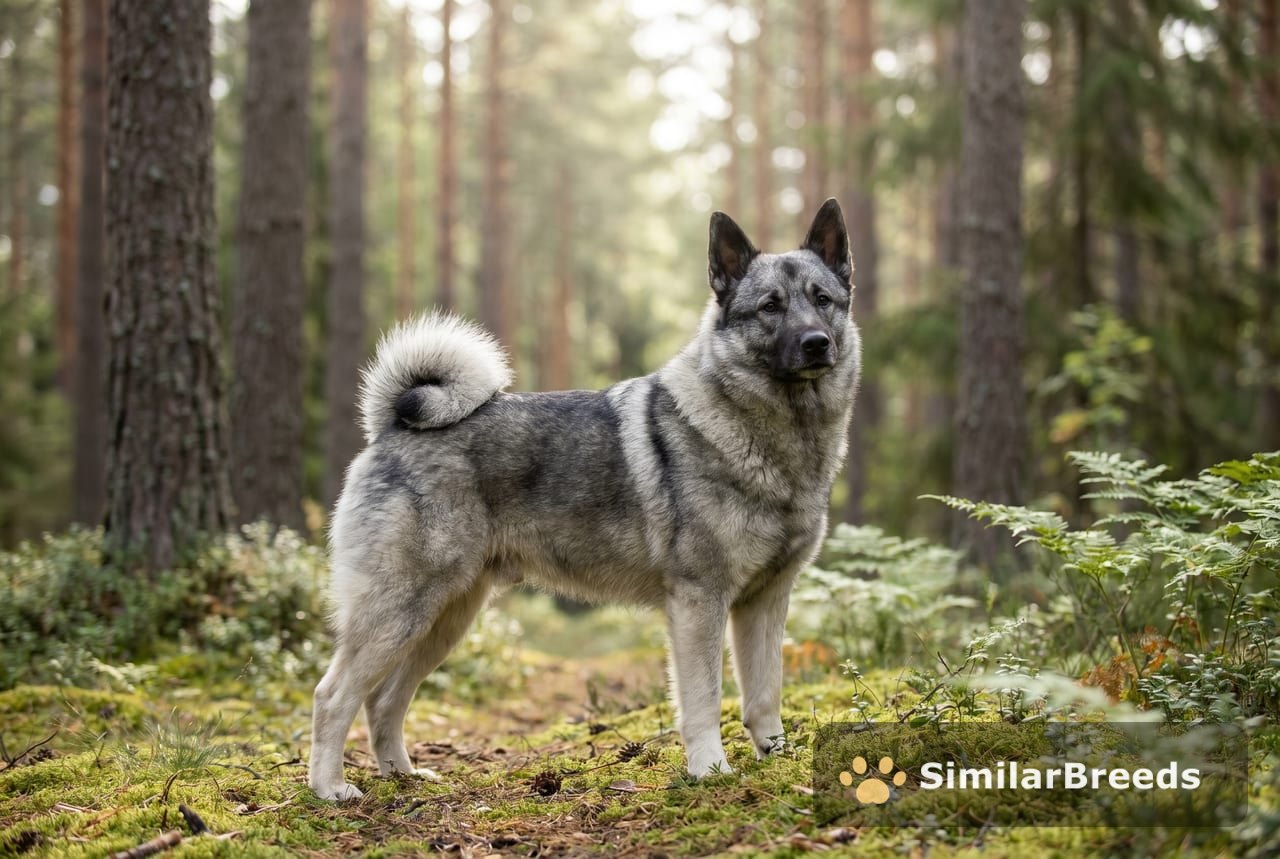
**Norwegian Elkhound (Grey)** is the closest relative and nearest equivalent. The two share the same spitz build, Norwegian hunting heritage, and general working temperament; the Black variety is smaller, shorter-coated, and somewhat more combative, but the functional and structural overlap is direct.
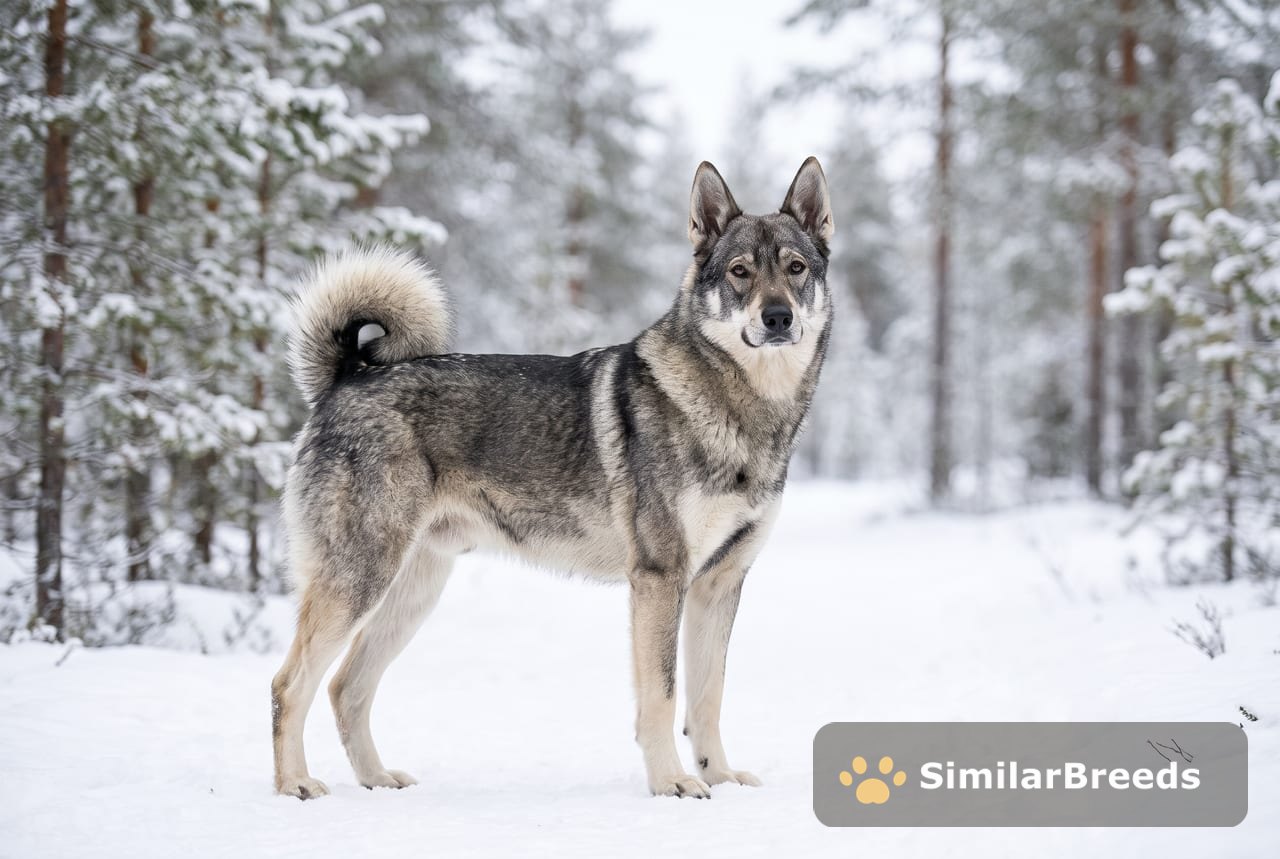
**Jämthund (Swedish Elkhound)** is the Swedish counterpart to both Elkhound varieties. It hunts the same large game across the same boreal terrain, shares the spitz type, and has a comparable independent temperament. It is larger, but the working purpose and regional origin are nearly identical.
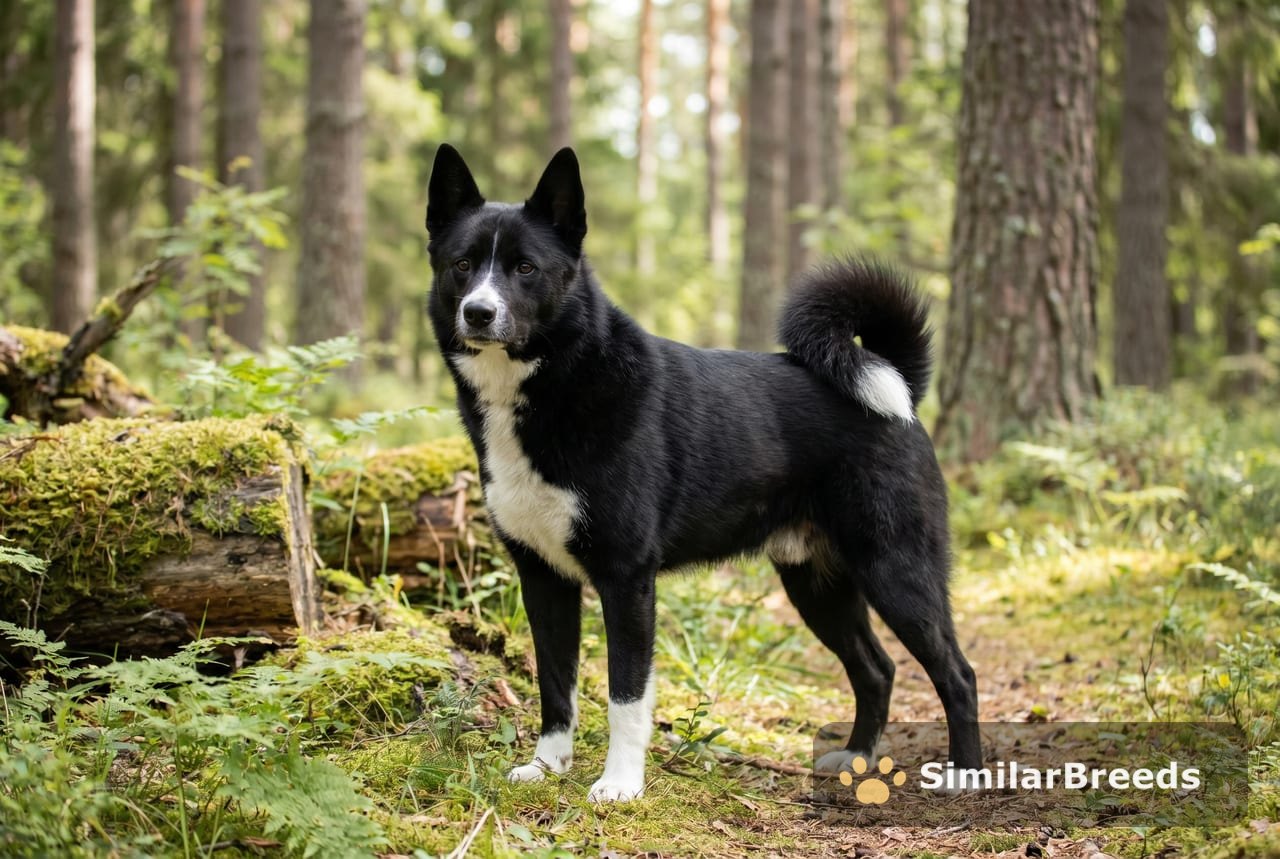
**Karelian Bear Dog** is another Nordic hunting spitz bred for large, dangerous game, bold enough to confront bear and moose. It shares the combativeness toward other dogs, the cold-climate adaptation, and the strong hunting drive. Both breeds demand an experienced handler.
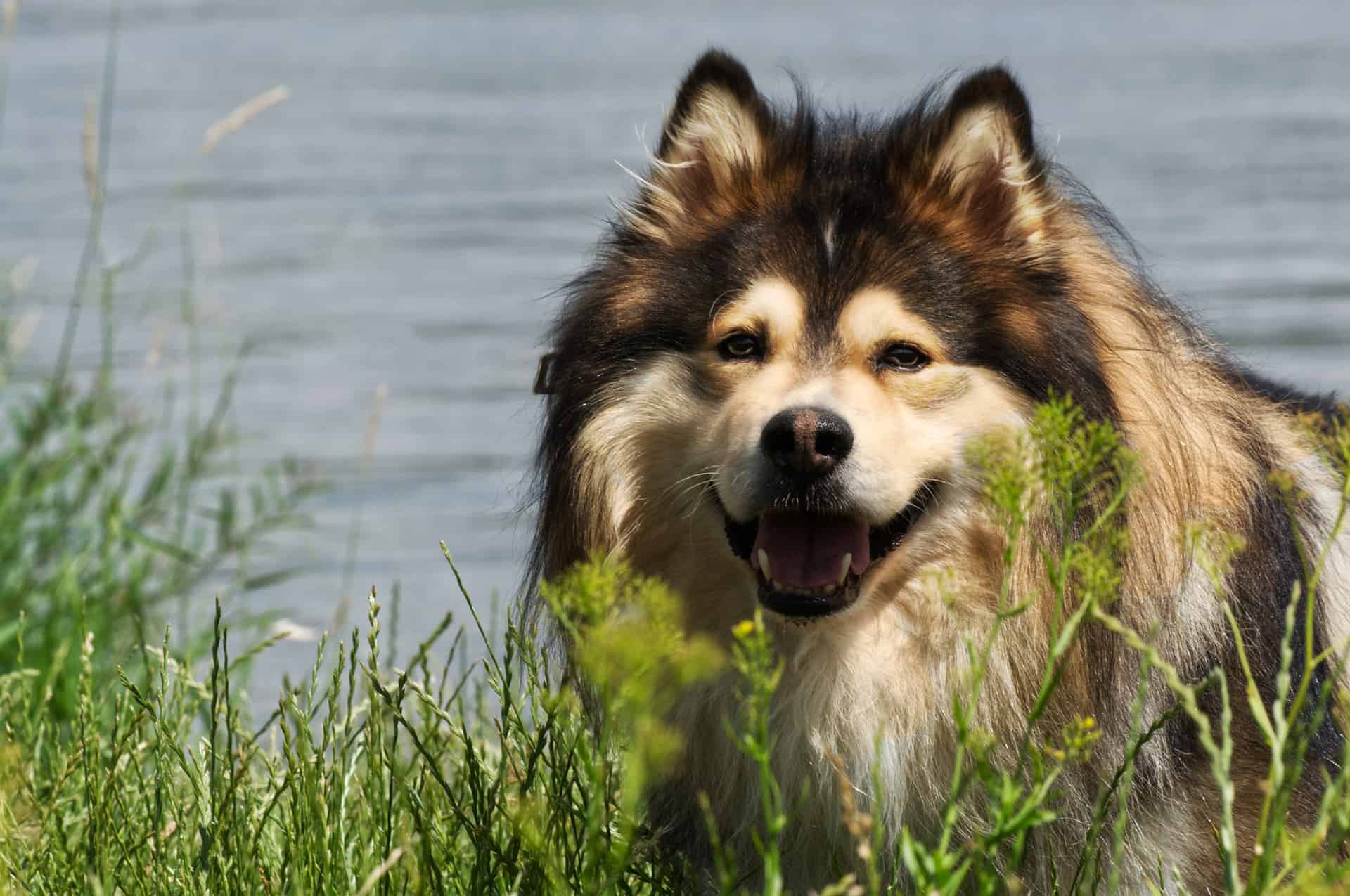
**Finnish Lapphund** is a softer comparison: it is a herding spitz from the same northern region, cold-hardy, with similar energy. It is more trainable and more dog-friendly than the Black Elkhound, but the spitz build, Nordic origin, and exercise needs place them in the same broad category for owners weighing northern breeds.
Trait ratings
- Energy level
- 4/5
- Exercise requirements
- 3/5
- Playfulness
- 4/5
- Affection level
- 3/5
- Friendliness toward dogs
- 2/5
- Friendliness toward other pets
- 2/5
- Friendliness toward strangers
- 4/5
- Ease of training
- 3/5
- Watchdog ability
- 3/5
- Protection ability
- 2/5
- Grooming requirements
- 2/5
- Cold tolerance
- 5/5
- Heat tolerance
- 2/5