Norwegian Hound (Dunker)
Also known as Norwegian Hound, Dunker, Dunkerstøver, Dunkerhund
From Norway
Purpose & Origin
The Norwegian Hound, known in Norway as the Dunkerstøver or Dunkerhund, was created in the early 19th century by Captain Wilhelm Conrad Dunker (1806-1860), a Norwegian military officer and dog breeder. Starting around 1820, Dunker crossed indigenous Norwegian scenthounds with imported Russian Harlequin Hounds to produce a dog with exceptional endurance and scenting ability suited to Norway's dense forests and demanding northern terrain.
The breed's primary quarry was rabbit and hare, tracked entirely by nose rather than sight. A brief experimental cross with the Hygenhound was attempted but abandoned by 1934. The breed was officially recognised by the FCI in 1954 and remains rare, with fewer than 200 puppies registered in Norway annually.
Temperament & Behaviour
The Dunker is confident, steady, and genuinely sociable. Morris describes it as "unusually quick to learn, reliable and trustworthy," which matches what owners report today: this is a hound that is warm with its family, patient with children, and not given to nervousness or aggression. It bonds closely with people, which is a double-edged quality - the breed dislikes long periods alone. The hunting instinct is strong, and the nose will override recall if a scent trail is active, so a secure environment matters. Small pets require careful introduction given the prey drive built into the breed from centuries of hare hunting.
Activity & Training
This is an active working hound built for sustained effort across rugged landscape. Daily exercise needs are substantial: long walks, running, or fieldwork. The breed does not suit apartment life or a sedentary household. On the training side, the Dunker is notably more receptive than many scenthounds - Morris specifically notes the breed is "unusually quick to learn," and contemporary sources echo this. It responds well to consistent, reward-based work. That said, recall in open areas requires real investment because scent drive is the breed's default mode. Early socialisation and leash manners matter.
Grooming
The coat is short, dense, and hard-textured. Upkeep is minimal: brushing two or three times a week with a bristle brush or hound glove keeps the coat in good condition. Seasonal shedding in spring and autumn is heavier and requires more frequent brushing during those periods. Ear checks are worth making regularly, as the long floppy ears can trap moisture.
Health
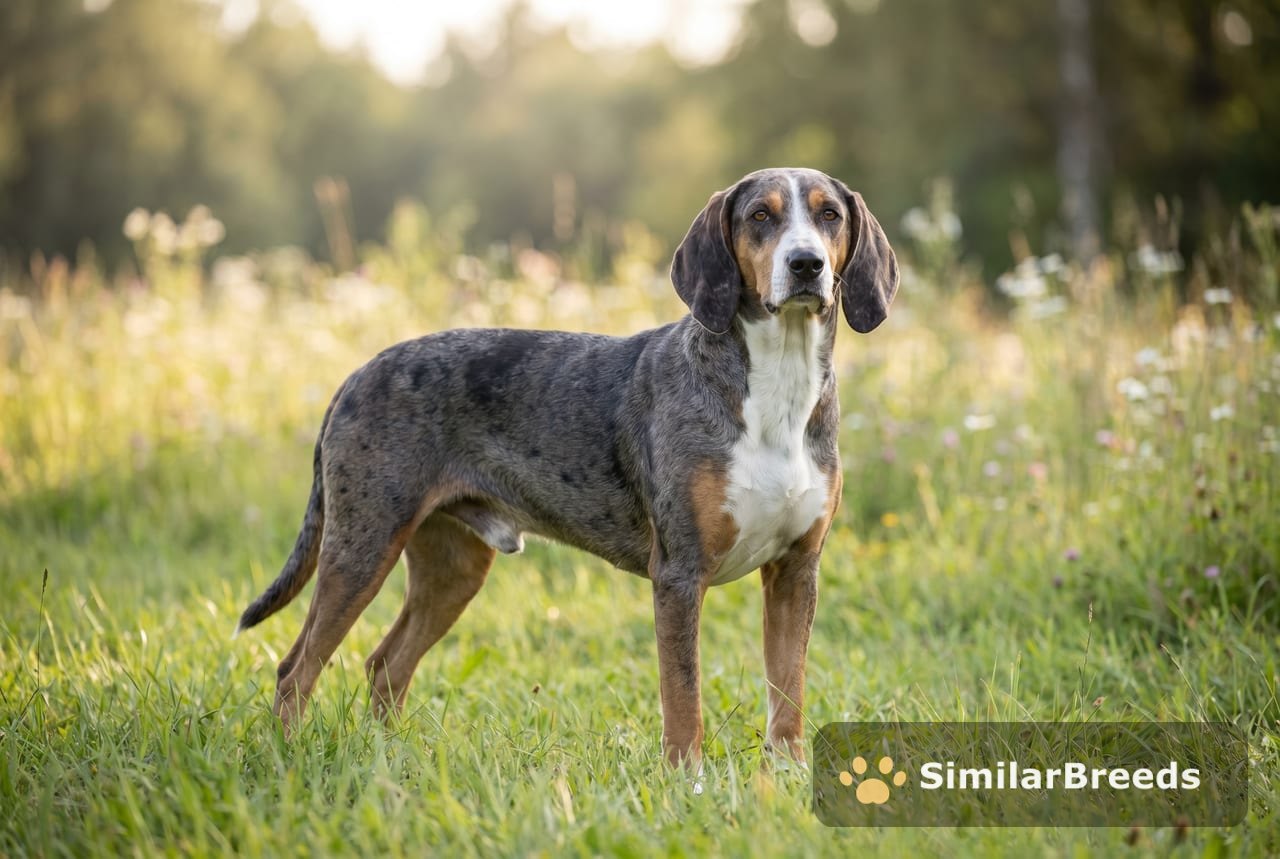
The Dunker is a generally sturdy breed with a lifespan of approximately 12 to 14 years. The small gene pool is the primary health concern. Known issues include hip dysplasia, epilepsy, hypothyroidism, and allergies. The blue-marbled coat pattern, inherited from the Russian Harlequin Hound, is linked to the merle gene; as with all merle-pattern breeds, breeding two merle-patterned dogs together risks producing deaf or visually impaired offspring, so responsible breeders avoid this pairing. Given the low registration numbers, finding health-tested breeding stock outside Norway takes effort.
Why these breeds are similar
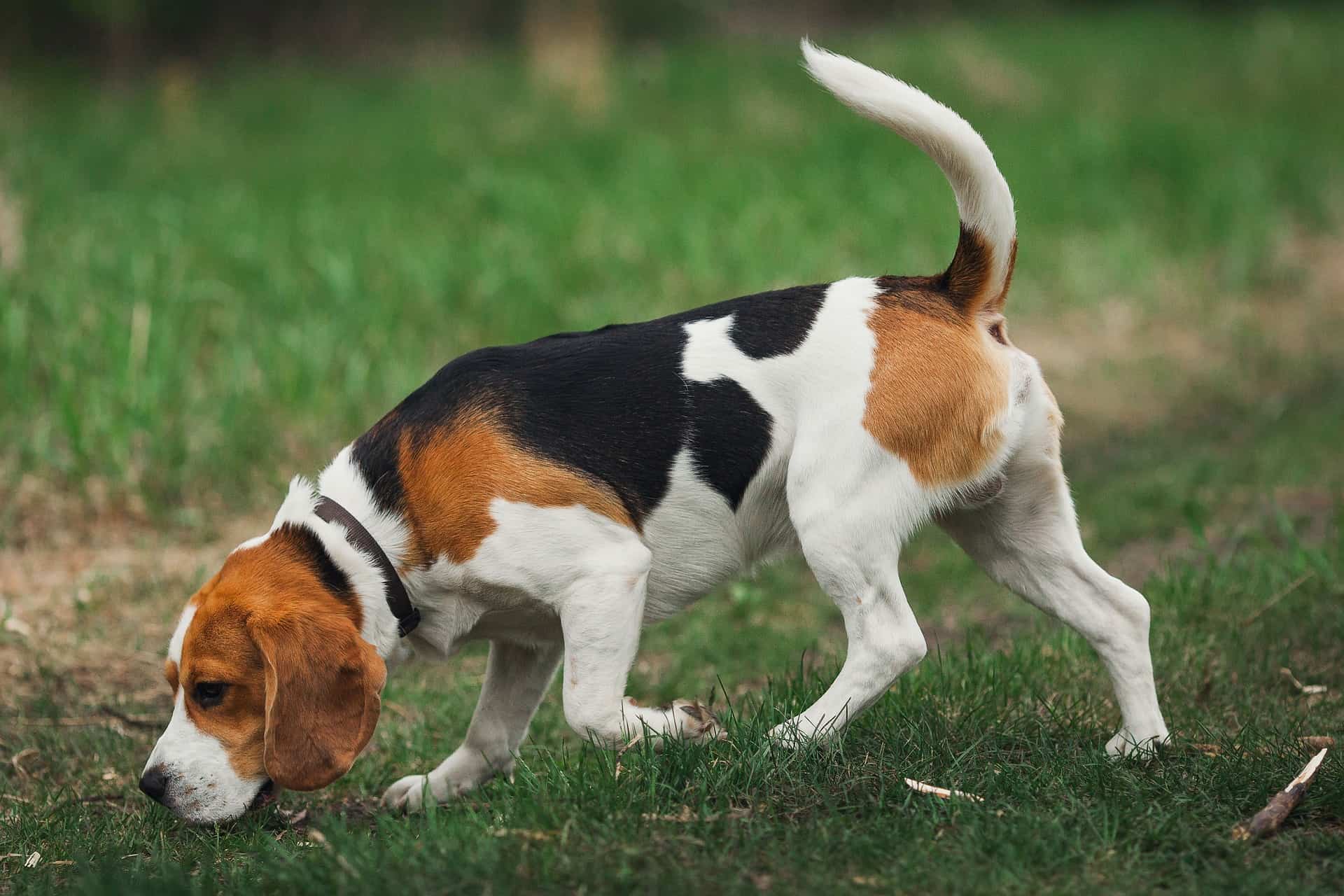
The **Beagle** shares the Dunker's core profile: a medium-sized scenthound bred specifically for hare hunting, with a short easy-care coat, a friendly and sociable character, and strong scent drive that demands a secure environment. Both breeds are pack-oriented, good with families, and require more daily exercise than their compact size might suggest.
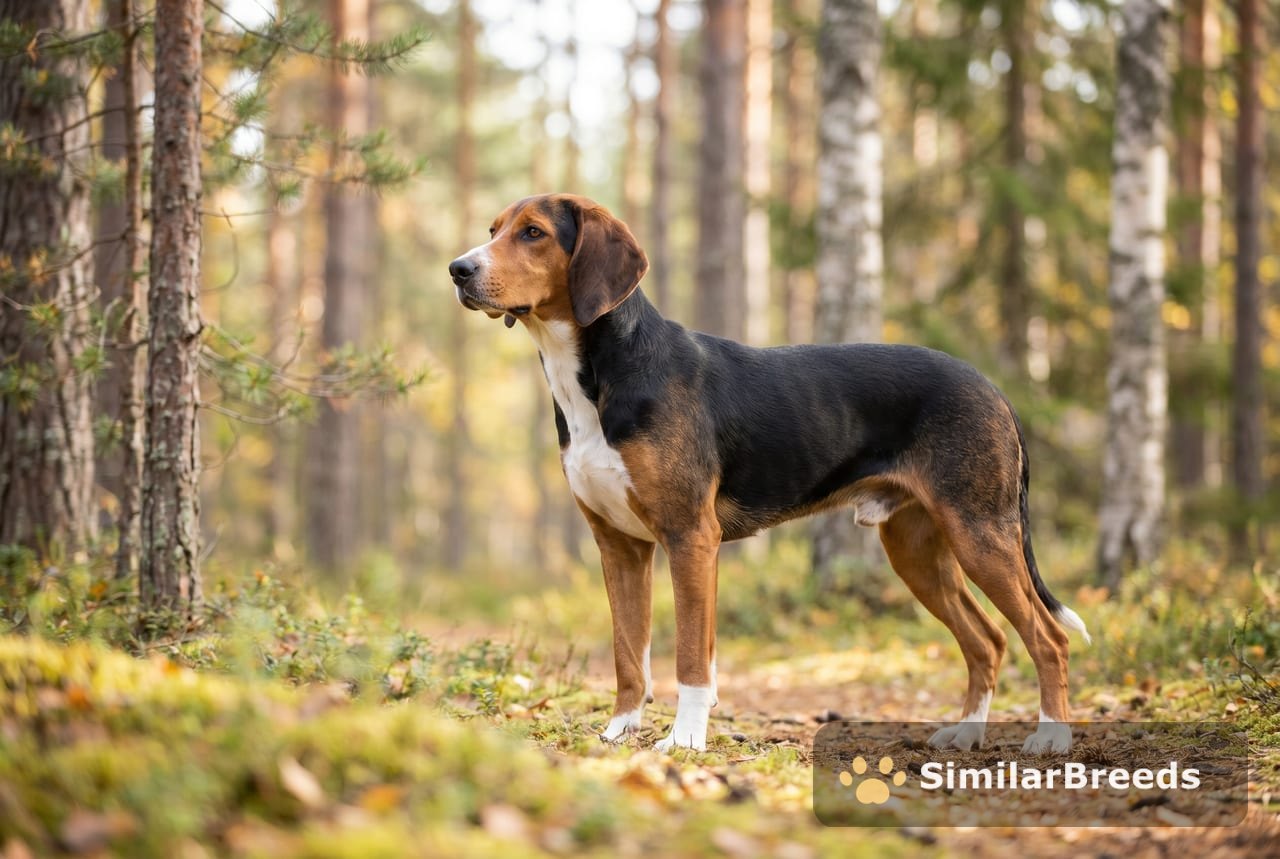
The **Finnish Hound** (Suomenajokoira) is a close parallel from the adjacent Scandinavian hunting tradition. Also developed in the 19th century as a dedicated hare and fox hound, it shares the Dunker's build, work ethic, and temperament - steady, trainable by hound standards, and built for endurance across forested northern terrain. The two breeds reflect the same regional hunting culture and similar selective priorities, making them near equivalents in function and character.