Purpose & Origin
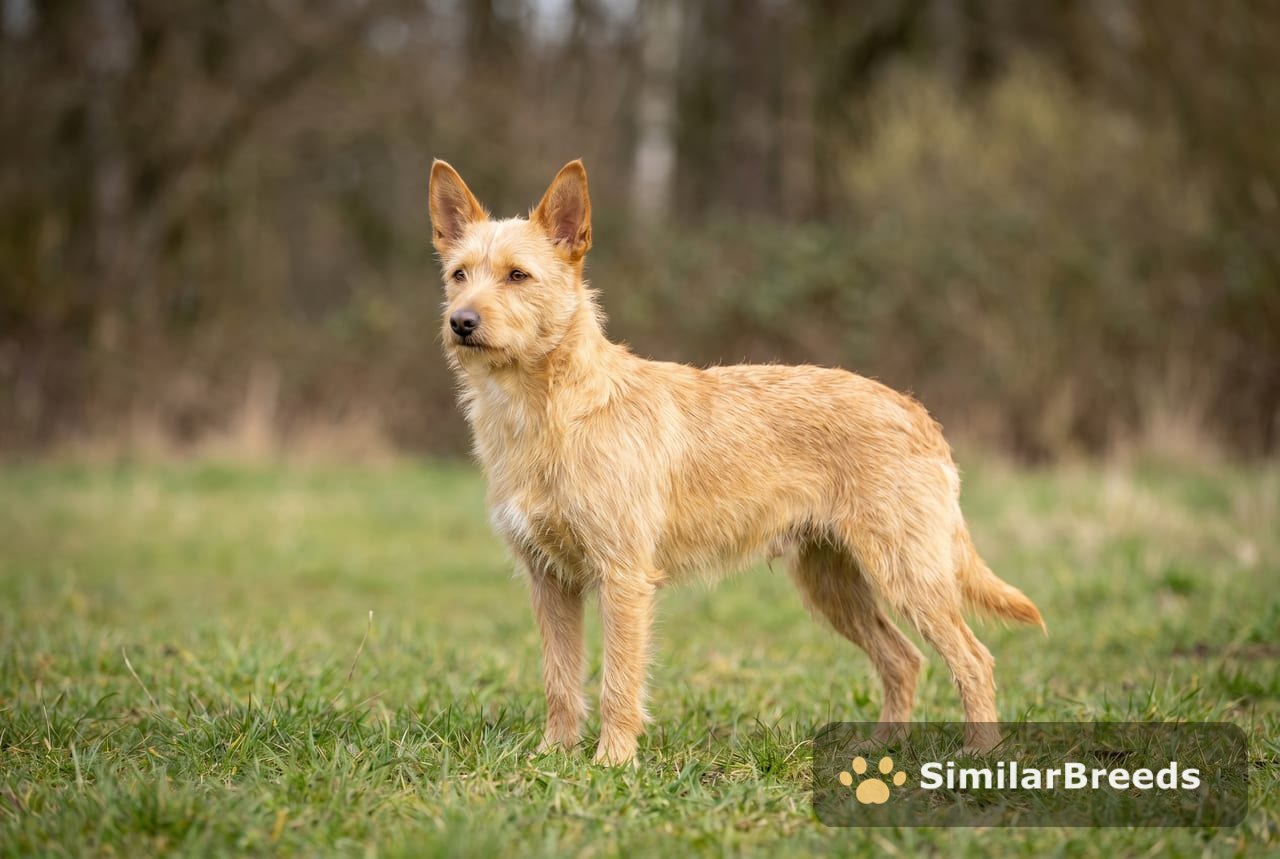
The Portuguese Podengo is one of Portugal's oldest native breeds, classified by the FCI as a primitive type and recognised in three size varieties: Grande (large), Medio (medium), and Pequeno (small). The breed's ancestry almost certainly traces back to ancient sighthound-type dogs brought to the Iberian Peninsula by Phoenician traders, a lineage it shares with the Ibizan Hound, Pharaoh Hound, and Cirneco dell'Etna.
The Grande was historically used to hunt deer, hare, and rabbit over open ground, working singly, in pairs, or in packs. The Medio, the most popular variety today, was developed for speed and manoeuvrability in rougher, more broken terrain and is the fastest of the three. The Pequeno was miniaturised further to go to earth after rabbits, functioning more like a terrier. All three share the same structural template: erect ears, lean build, wedge-shaped head, and two coat options, smooth-short or wirehaired-coarse.
Temperament & Behaviour
The Podengo is alert, energetic, and playful, with the watchdog instinct sitting at the top of its trait profile. It notices everything and will bark to announce it, making it a reliable sentinel. Affection toward familiar people is genuine but measured rather than demonstrative. The breed is notably sociable with other dogs, which reflects its pack-hunting heritage. It tends to be curious and friendly toward strangers rather than suspicious, though it remains watchful. Independence is a genuine feature of the character. This is not a breed that orbits its owner or seeks constant approval.
Activity & Training
Energy level is high and the Podengo needs meaningful daily exercise, though its exercise requirement is moderate rather than extreme. A good off-lead run in a securely fenced area suits it well. Its sighthound and scent-hound instincts mean recall off-lead in open spaces is unreliable without extensive conditioning. Trainability scores low, which is honest: the breed is intelligent but not biddable. It learns quickly when motivated but has no particular interest in repetitive obedience work. Positive, varied training sessions with clear rewards work better than drilling. Boredom produces destructive behaviour and persistent barking.
Grooming
Grooming requirement is low. Smooth-coated dogs need a weekly brush-through; wirehaired coats need brushing two or three times a week to prevent matting and occasional hand-stripping or trimming to maintain texture. Baths are only needed periodically. Ear checks and monthly nail trims round out routine care. Neither coat type is high-maintenance compared with longer-coated breeds.
Health
The Portuguese Podengo is a robust, primitively structured breed with few breed-specific disorders. Lifespan runs 12 to 15 years. Potential concerns include hip dysplasia, minor eye conditions, and skin sensitivities, but none dominate the breed's health picture the way heritable diseases do in more intensively selected working breeds. The long history of functional selection in Portugal, with minimal cosmetic modification, has kept the gene pool relatively sound.
Why these breeds are similar
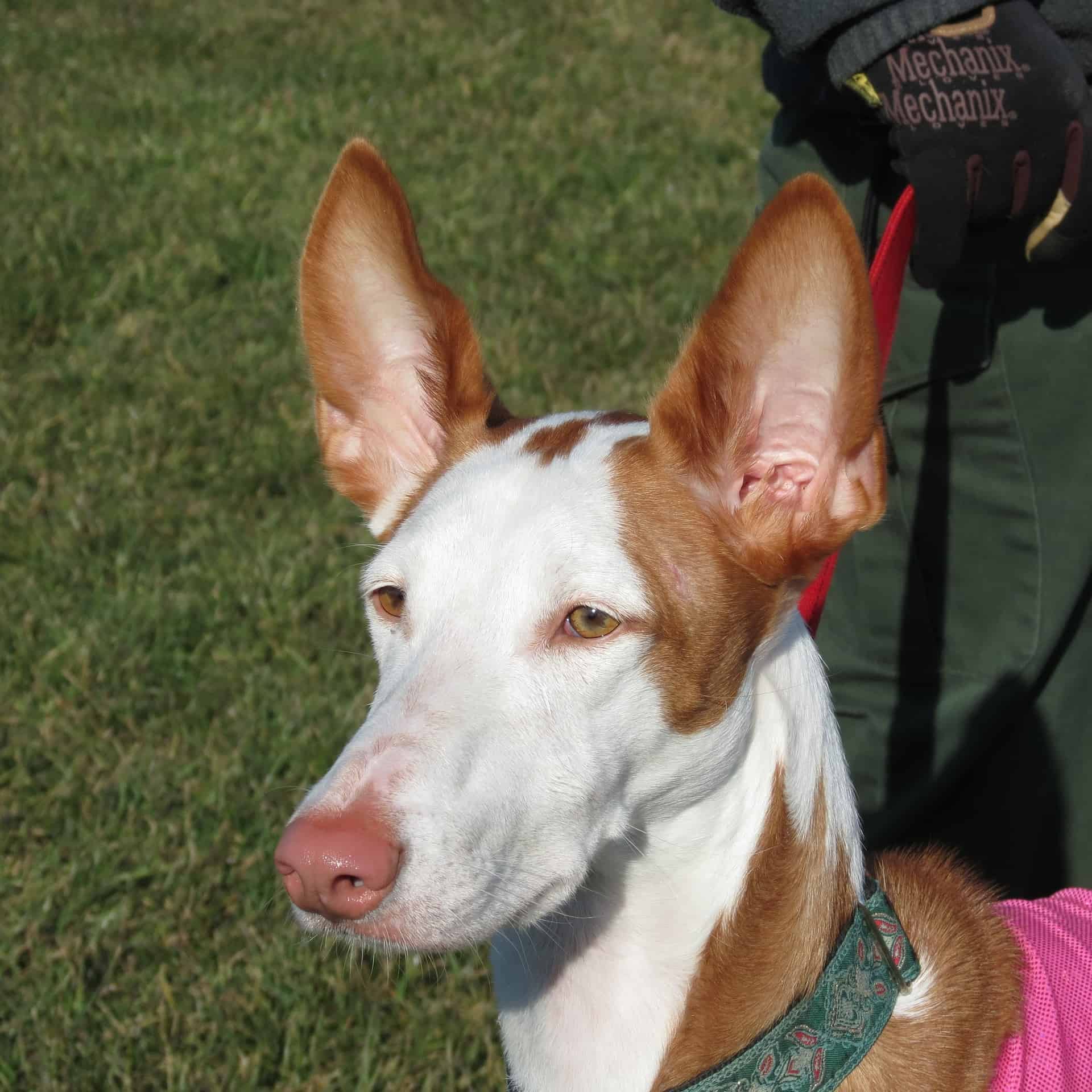
**Ibizan Hound** shares the same ancient Mediterranean primitive-type lineage and almost certainly descended from the same Phoenician trading-route dogs. Both are prick-eared, lean, dual-sensory hunters (sight and scent) with high energy, independent temperament, and the same wedge-faced silhouette. The Ibizan is simply larger and longer-legged.
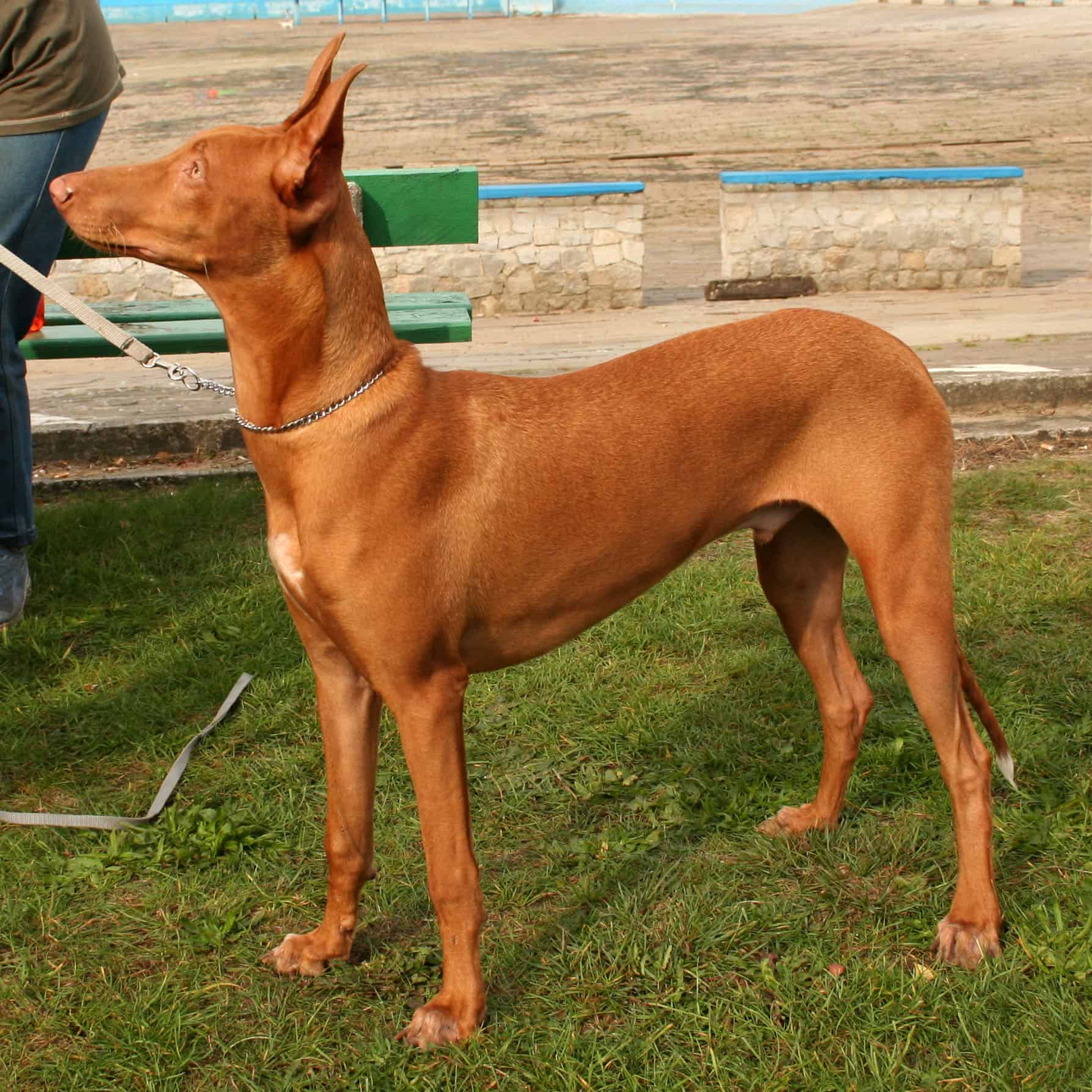
**Pharaoh Hound** is the closest visual and genetic parallel, another prick-eared Mediterranean rabbiter whose ancestors were distributed across the same trading routes. It is taller and more refined than the Medio Podengo but shares the alert, lively, moderately independent character and the same fundamental hunting style.
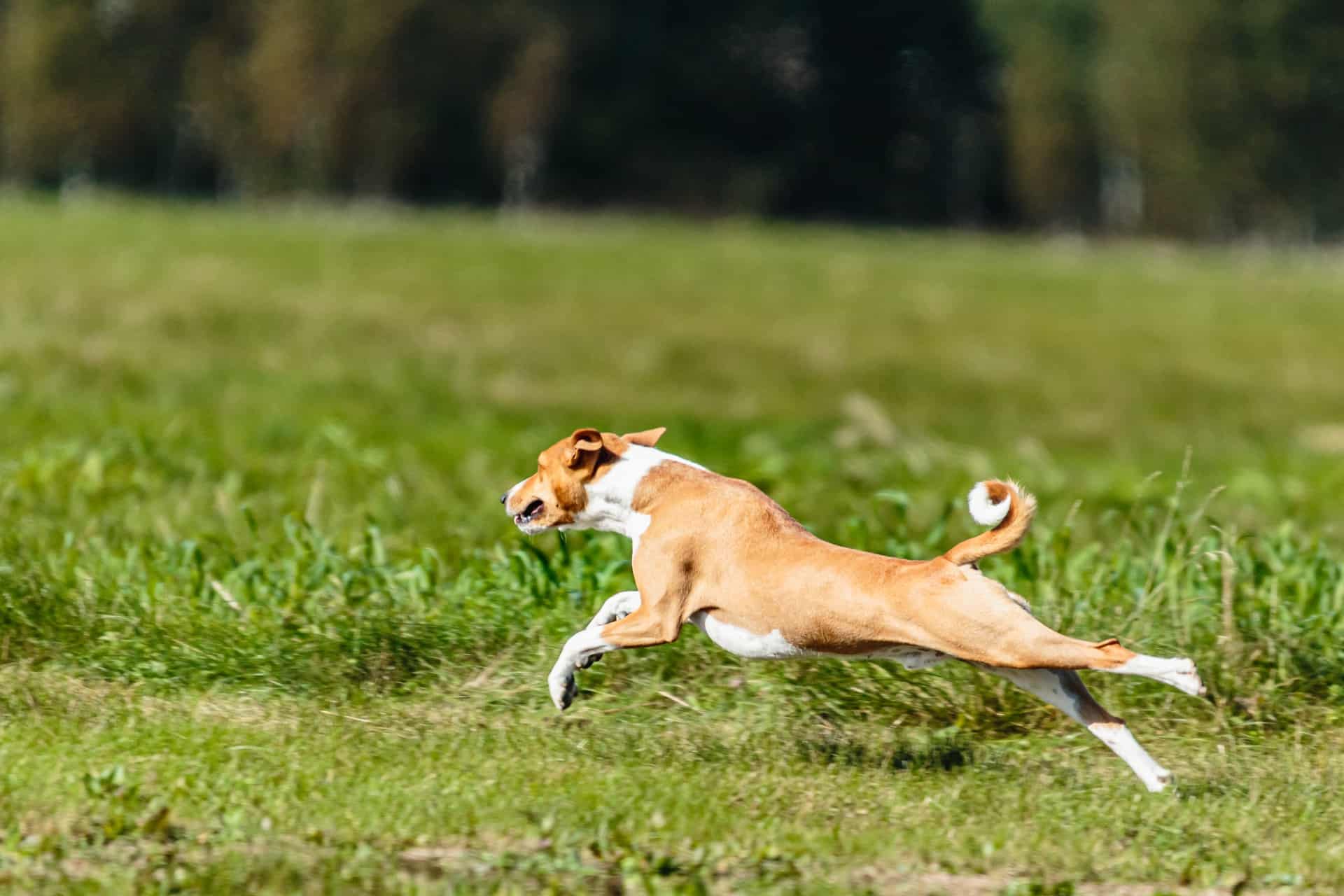
**Basenji** is included because of shared primitive-type traits: upright ears, lean frame, high independence, low trainability, and a watchful rather than effusive temperament. The Basenji comes from central Africa rather than the Mediterranean, so the ancestral connection is more distant, but the behavioural and structural overlap is real enough to make ownership experience comparable.
Trait ratings
- Energy level
- 4/5
- Exercise requirements
- 3/5
- Playfulness
- 4/5
- Affection level
- 3/5
- Friendliness toward dogs
- 5/5
- Friendliness toward other pets
- 4/5
- Friendliness toward strangers
- 4/5
- Ease of training
- 2/5
- Watchdog ability
- 5/5
- Protection ability
- 2/5
- Grooming requirements
- 2/5
- Cold tolerance
- 3/5
- Heat tolerance
- 4/5