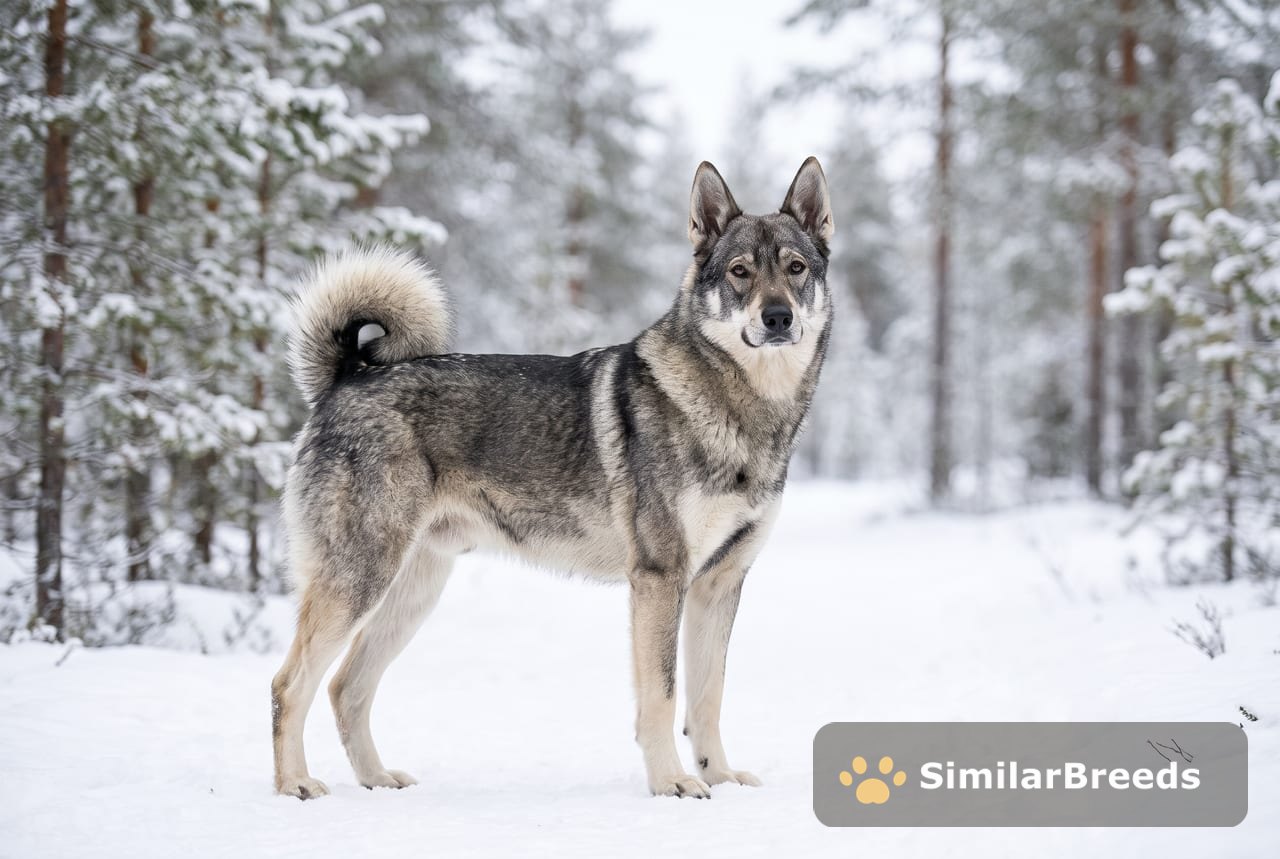
Purpose & Origin
The Russian-European Laika is a northern hunting spitz developed from crosses between old Finnish wolf-hunting dogs and Russian sheepdogs. For centuries this lineage was indistinguishable from the Karelian Bear Dog of Scandinavia. That changed in the 1940s when Soviet cynologists formally separated the Russian dogs from their Scandinavian counterparts.
The split was not merely administrative: breeders then pushed the Russian population toward greater size and aggression, reportedly crossing it with the Utchak Sheepdog and with the West Siberian Laika to sharpen its drive. The result is a dog built to locate and hold large game, including wolf, bear, and deer, in dense northern forest. "Laika" means "barker" in Russian, reflecting the core hunting technique: find the quarry, bay loudly, and hold it in place until the hunter arrives.
Temperament & Behaviour
This is not a casual companion breed. The Russian-European Laika bonds closely with its handler but carries deep wariness of strangers and a pronounced tendency toward dog aggression, traits deliberately amplified during the Soviet-era program. It is alert, reactive, and territorial. Without consistent early socialisation, inter-dog hostility can become a serious management problem. Prey drive toward small animals, including cats and poultry, is strong. Within a trusted family it is loyal and affectionate, but its character demands an experienced owner. It is not suited to apartment life or households that want a relaxed house dog.
Activity & Training
Exercise requirements are high. Shaped by generations of all-day hunts, this dog needs at minimum an hour of vigorous daily activity plus space to move freely. Leashed suburban walks will not satisfy it. Training is feasible because the dog is intelligent and handler-focused, but the independence of a hunting spitz means commands must be reinforced reliably from puppyhood. Obedience work should begin early and stay consistent. The breed responds to firm, fair handling. Hunting work or tracking activities channel its instincts productively and strengthen the handler bond.
Grooming
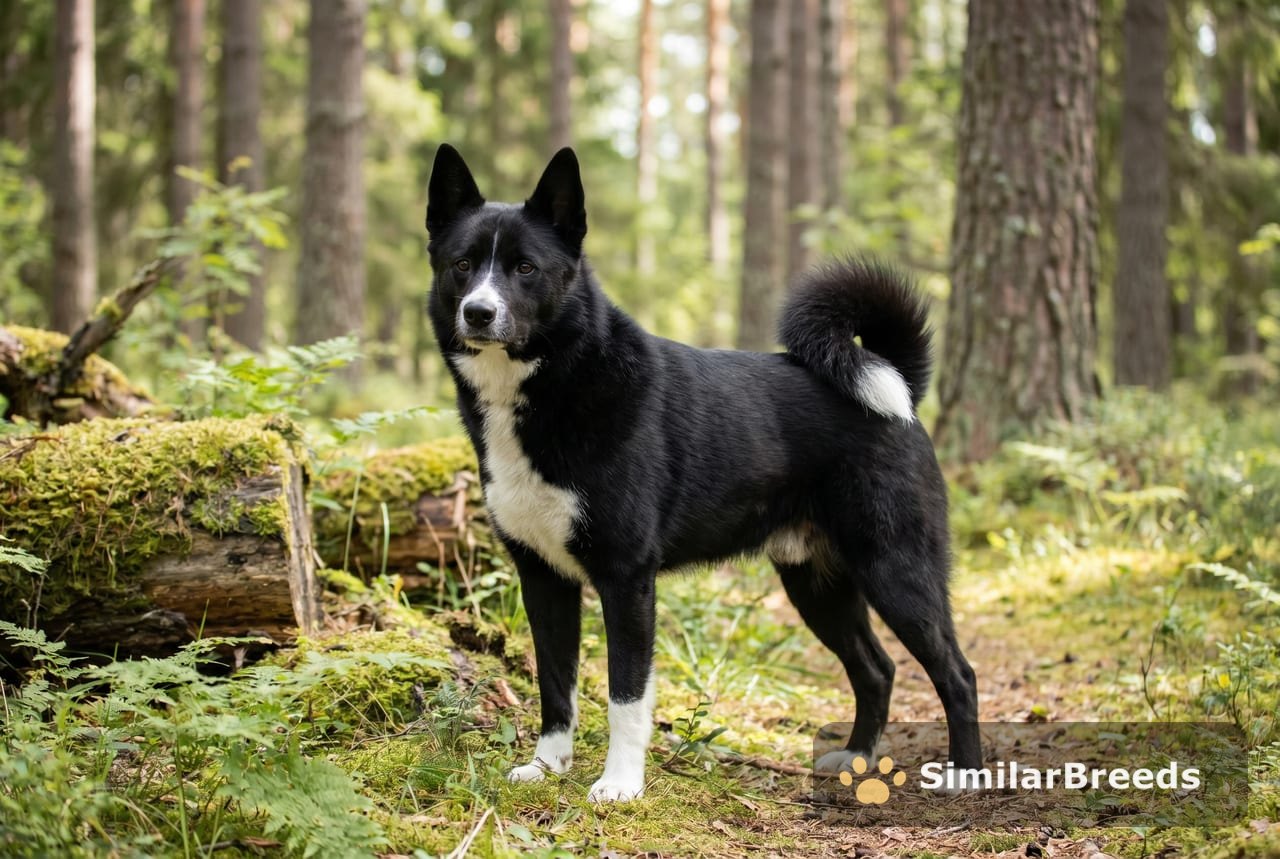
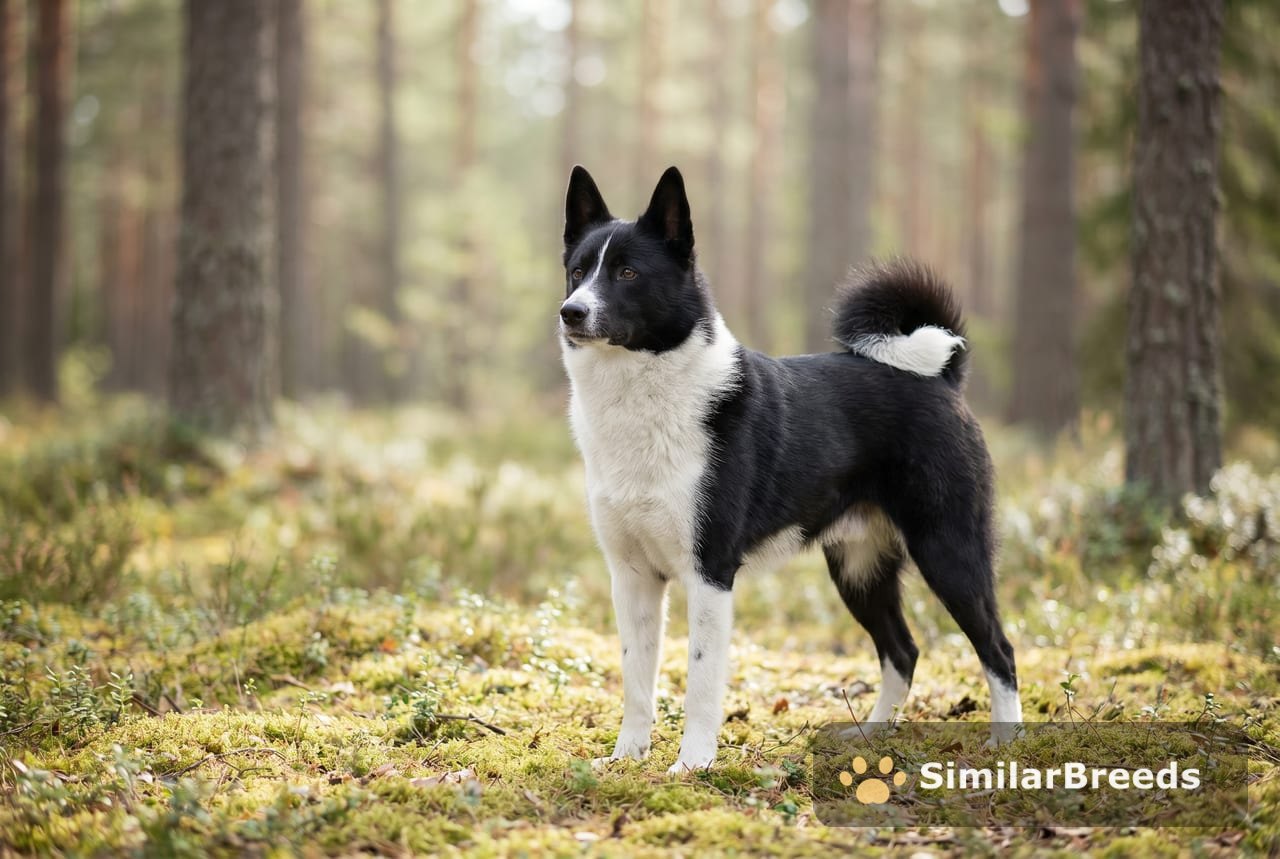
The coat is a classic double-layered northern spitz coat: a dense, soft undercoat beneath a straight, coarse outer coat, predominantly black and white with variation only in the proportion of each colour. Shedding is heavy, particularly during seasonal coat blows in spring and autumn, and brushing several times a week is necessary to manage loose hair and prevent matting. Bathing is needed only when the dog is genuinely dirty. Outside of shedding periods maintenance is moderate.
Health
The Russian-European Laika is generally hardy, with the constitution typical of working dogs selected for function over many generations. Lifespan is roughly 10 to 12 years. The main conditions to monitor are musculoskeletal, particularly hip and elbow dysplasia. No unusual hereditary diseases are well documented, but the breed's rarity outside Russia means health data from large populations is limited. Keeping the dog lean and well exercised is the primary health management tool.
Why these breeds are similar
**East Siberian Laika** and **West Siberian Laika** are the closest relatives within the Laika family, sharing spitz structure, double coat, barking-hunt technique, and FCI Group 5 classification. The West Siberian Laika was used in the Russian-European's Soviet-era refinement, making the connection direct.
**Karelian Bear Dog** is the Scandinavian branch of the same original population, separated in the 1940s. The two breeds share near-identical type, black-and-white colouring, and large-game hunting purpose, diverging mainly in the Russian line's greater size and aggression.
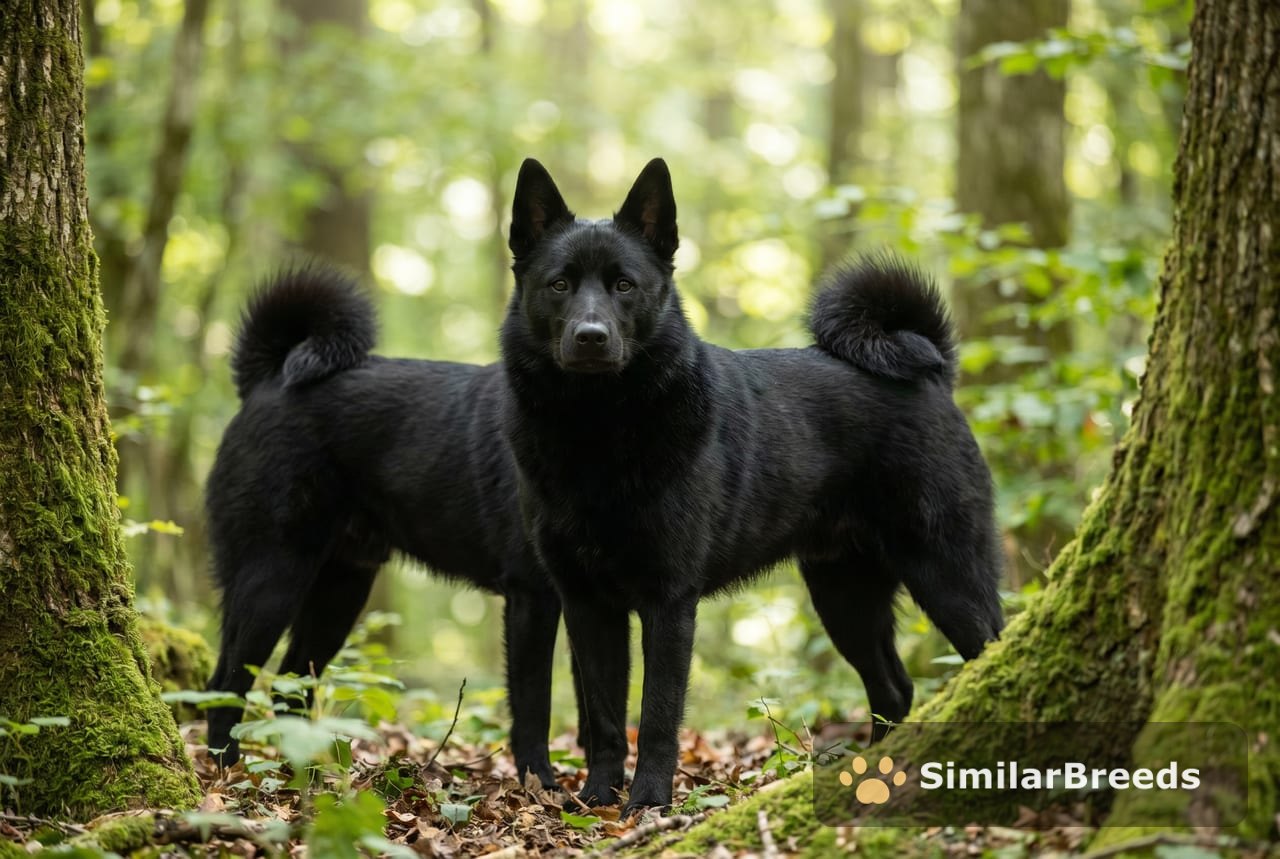
**Norwegian Elkhound (Black)** and **Jamthund (Swedish Elkhound)** are Scandinavian spitz hunting dogs used on large game in northern forest. They share upright ears, a dense northern coat, and the same vocal hold-and-bay hunting style, developed independently of the Laika lineage.