Whippet
From Great Britain
Purpose & Origin
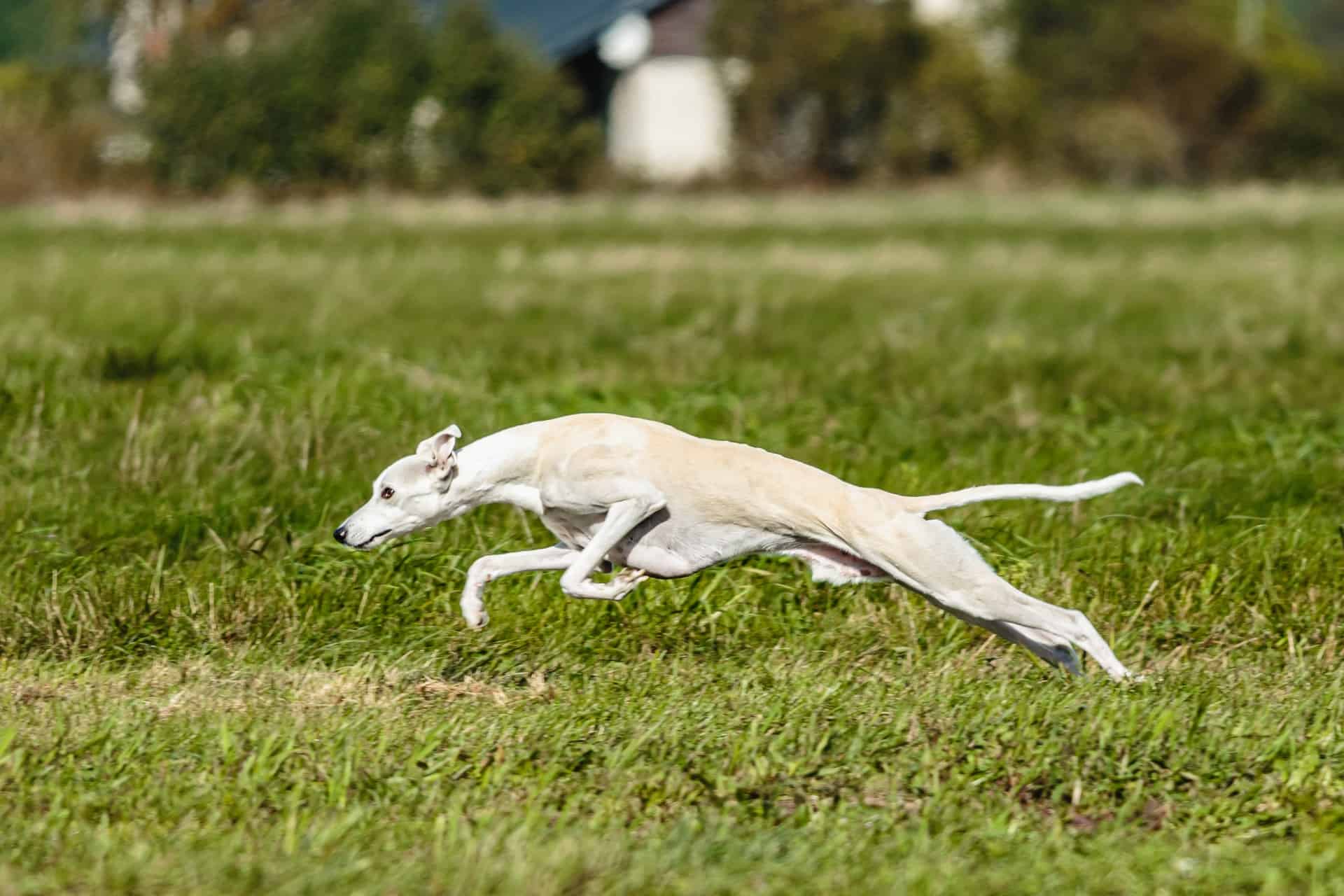
The Whippet is a medium-sized English sighthound with working-class roots. Its ancestors were small Greyhounds crossed with even smaller dogs, kept by peasants in the 1700s for poaching rabbits and competing in "snap dog" contests, where bets were placed on which dog could catch the most rabbits before they escaped a ring. Ratting terrier crosses likely added quickness and drive.
The breed's real shaping came with the Industrial Revolution: rural workers flooded into mining towns, brought their dogs along, and, lacking rabbits, found the dogs would race just as keenly toward a waved rag. Rag racing became the coal miners' sport, and the Whippet earned the nickname "the poor man's race horse." Recognised officially in 1888, subsequent crosses with the Italian Greyhound refined its elegant outline. Today it is the most widely kept of all the sighthound breeds, competing in lure coursing and racing while serving equally well as a show dog and companion.
Temperament & Behaviour
Among the true sighthounds, the Whippet sits at the gentle, sociable end of the spectrum. It is affectionate and thoroughly devoted to its family, calm and quiet indoors, and notably tolerant with children. It gets along readily with other dogs and is reasonably accepting of other pets, though its coursing instincts mean small animals outside the household may register as quarry. It is reserved rather than unfriendly with strangers, and its attentiveness makes it a decent watchdog, though it has no real guarding inclination. The breed is physically and mentally sensitive; rough handling or harsh corrections are counterproductive and will damage the relationship. It responds to gentle, consistent handling.
Activity & Training
Exercise needs are moderate rather than extreme. A good daily run or brisk long walk satisfies the Whippet; it does not demand hours of relentless activity and will settle comfortably in an apartment provided it gets that daily outlet. Off-lead exercise must be in a securely fenced area because a Whippet at full speed, chasing something, is essentially unreachable. Training is manageable but requires patience: the breed is not stubborn in the terrier sense, but sighthounds think independently and bore quickly with repetition. Positive, reward-based methods work well; punitive training does not.
Grooming
Grooming is about as minimal as it gets. The coat is extremely short and fine, sheds lightly, and carries virtually no "doggy" odour. A quick wipe-down is usually all that is needed. The trade-off for that easy coat is cold sensitivity: the Whippet has negligible body fat and almost no insulating undercoat, so it needs a warm, padded bed indoors and should wear a coat in cold weather. It dislikes the cold intensely.
Health
The Whippet is a generally healthy, long-lived breed with a lifespan of 12 to 15 years. There are no major breed-wide concerns documented; deafness and some eye defects appear occasionally. Two practical points matter for owners: the breed is sensitive to barbiturate anaesthesia and should be flagged as such to any vet before surgery, and its thin skin makes it prone to lacerations that may need attention.
Why these breeds are similar
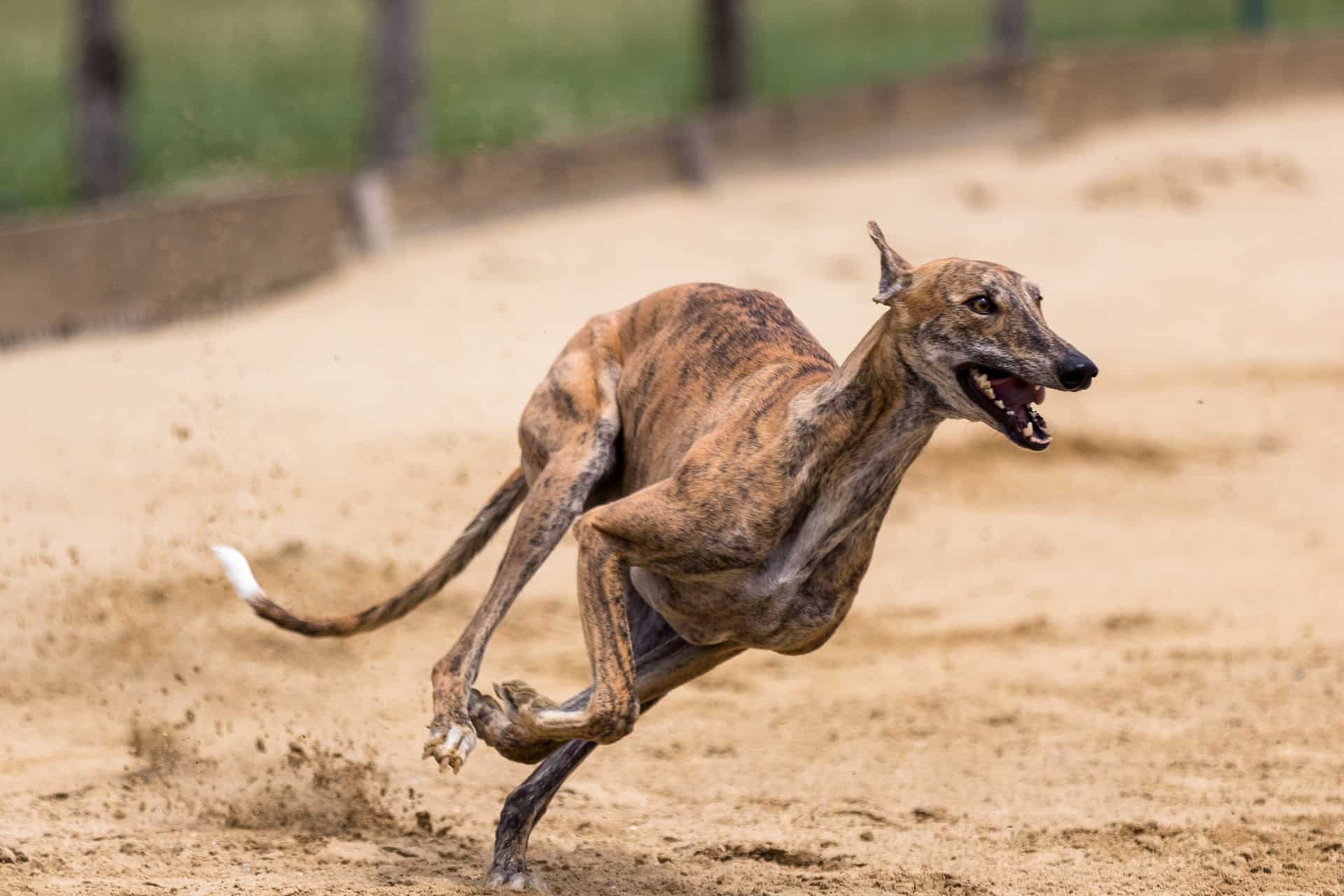
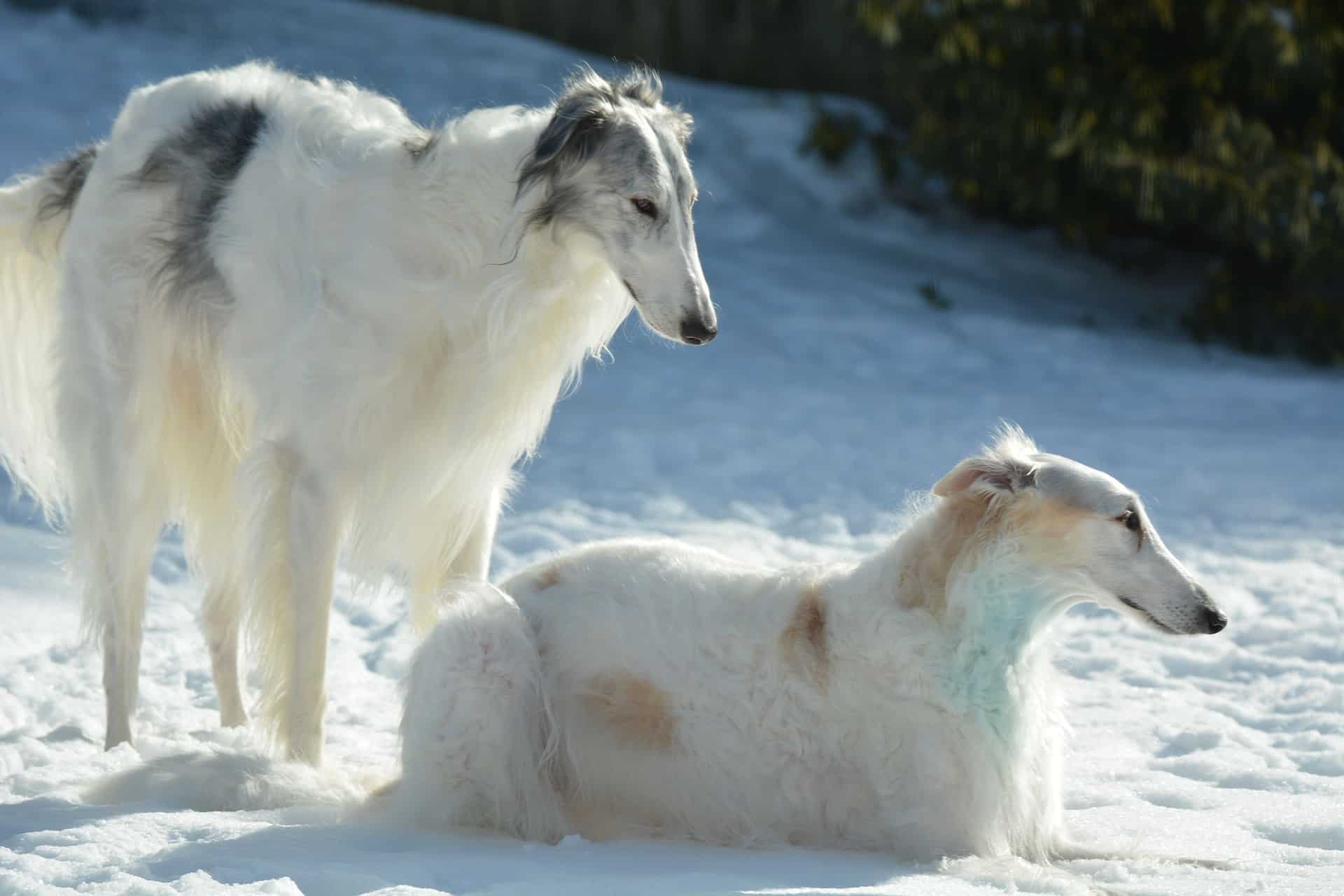
The Greyhound is the Whippet's direct ancestor and closest relative, larger and faster but built on the same lean, deep-chested sighthound frame and bred for the same purpose of coursing by sight. The Borzoi shares the sighthound silhouette and the same aloof-yet-gentle temperament, scaled up considerably and dressed in a long, silky coat.
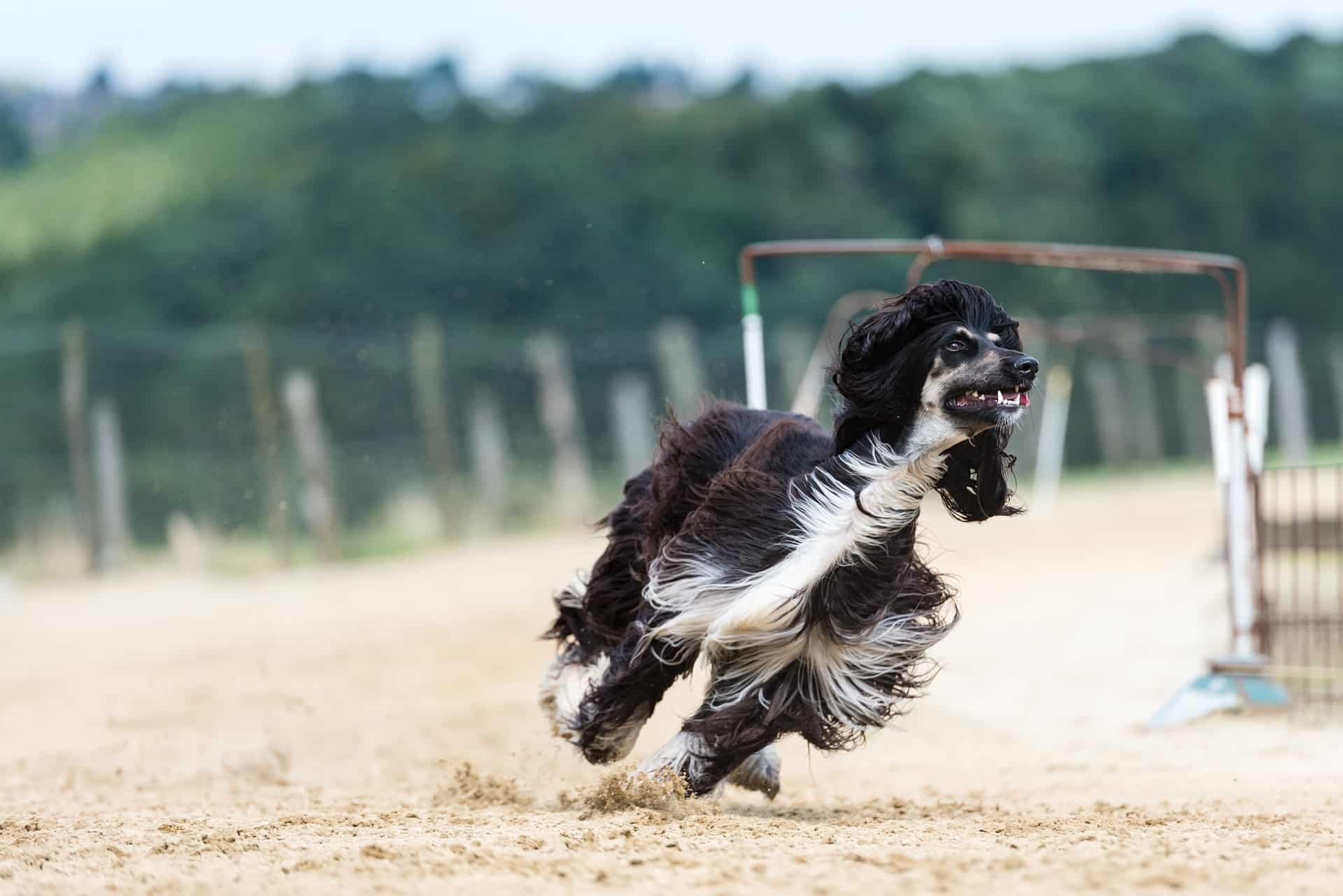
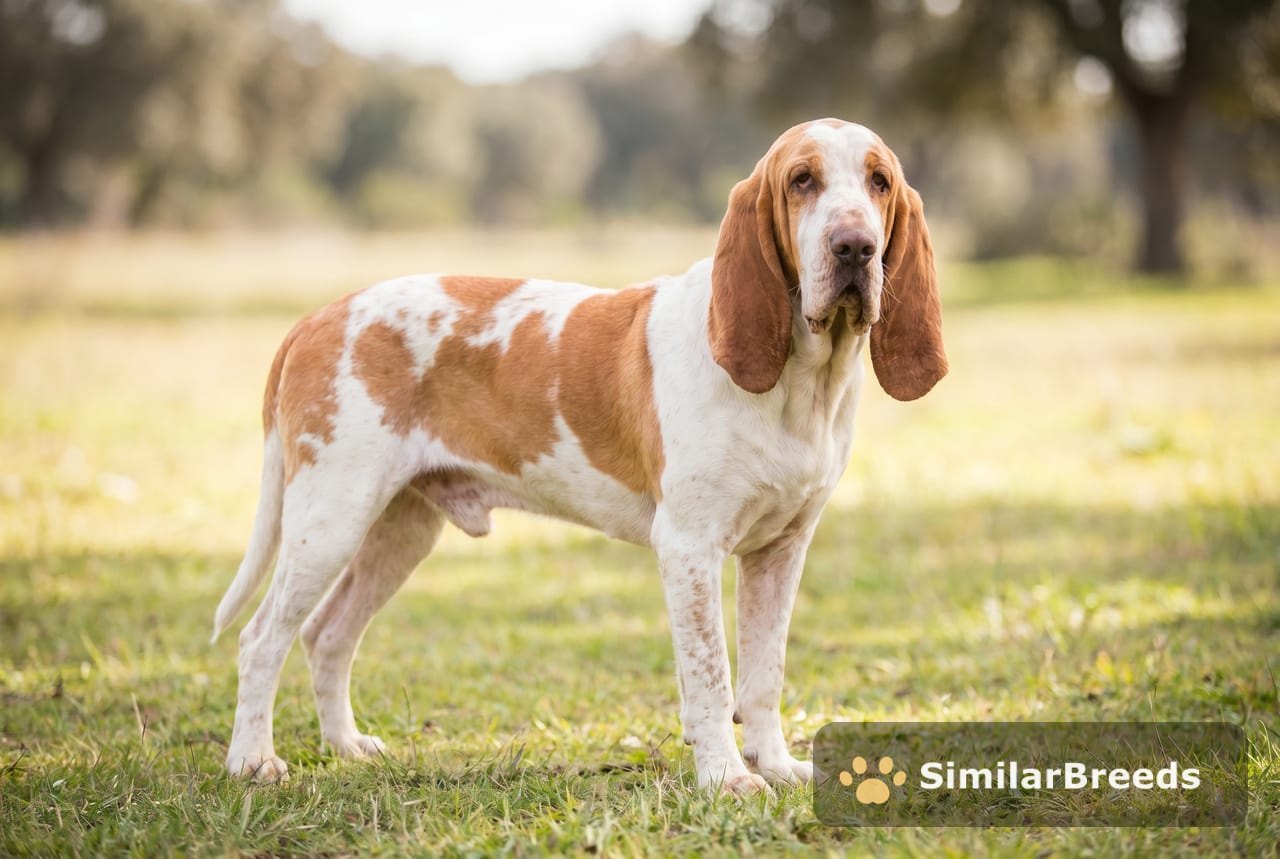
The Afghan Hound is another large, ancient sighthound bred to course game across open terrain; it brings the same independence and turn of speed but with a dramatically different coat and a somewhat more aloof personality. The Spanish Hound (Sabueso Español) is the outlier here, a scent hound rather than a sighthound, linked by its lean, athletic build and its history as a hunting dog, though its working style and temperament differ noticeably from the others.
Trait ratings
- Energy level
- 3/5
- Exercise requirements
- 3/5
- Playfulness
- 3/5
- Affection level
- 4/5
- Friendliness toward dogs
- 5/5
- Friendliness toward other pets
- 4/5
- Friendliness toward strangers
- 3/5
- Ease of training
- 3/5
- Watchdog ability
- 4/5
- Protection ability
- 1/5
- Grooming requirements
- 1/5
- Cold tolerance
- 1/5
- Heat tolerance
- 3/5