Purpose & Origin
The Black Russian Terrier is a purpose-built military dog, not a working breed that found its way into service but one designed from scratch to serve it. After the Second World War, the Soviet military needed robust working dogs in large numbers and found its native stock inadequate. Imported German breeds, particularly a Giant Schnauzer named Roy whelped in 1947, became the foundation of a breeding programme at the state Red Star kennels.
Roy was crossed with Airedale Terriers, Rottweilers, and Moscow Water Dogs, and the all-black offspring were grouped and bred selectively for working ability across the harshest conditions. By 1957 the programme had produced dogs stable enough to move into family breeding situations.
Their duties were demanding: border patrol, mine and explosive detection, supply transport, sledge pulling, and recovering wounded soldiers in extreme cold. The FCI registered a breed standard in 1968 and granted full recognition in 1984. The AKC placed the breed in its Working Group in 2004.
Temperament & Behaviour
Calm, self-assured, and intensely loyal to its household: the BRT is not warm with strangers and makes no apology for it. Its watchdog and protection scores are both at the ceiling, and that is not incidental. This is a dog that was bred to work alongside soldiers independently, and it carries that gravity into home life. It stays physically close to its people indoors, is gentle with children in the family, and tolerates smaller housemates reasonably well.
It can be difficult with unfamiliar dominant dogs. The independence that made it useful in military operations also means it will push back if it decides a task is not worth doing, so handlers who mistake its composure for easy compliance will find out otherwise.
Activity & Training
The BRT's exercise requirement is moderate rather than relentless, but it needs structured work, not just a long walk. Obedience and agility training satisfy its need for mental engagement, and without that outlet the breed's stubborn streak becomes more pronounced. It is a quiet dog indoors and does not bark without cause, which suits urban or suburban life provided the activity quota is met. Early socialisation with strangers and other dogs matters a great deal given the breed's reserved temperament and strong protective instincts. Training should be consistent and firm; the BRT learns fast but it also notices quickly when a handler lacks authority.
Grooming
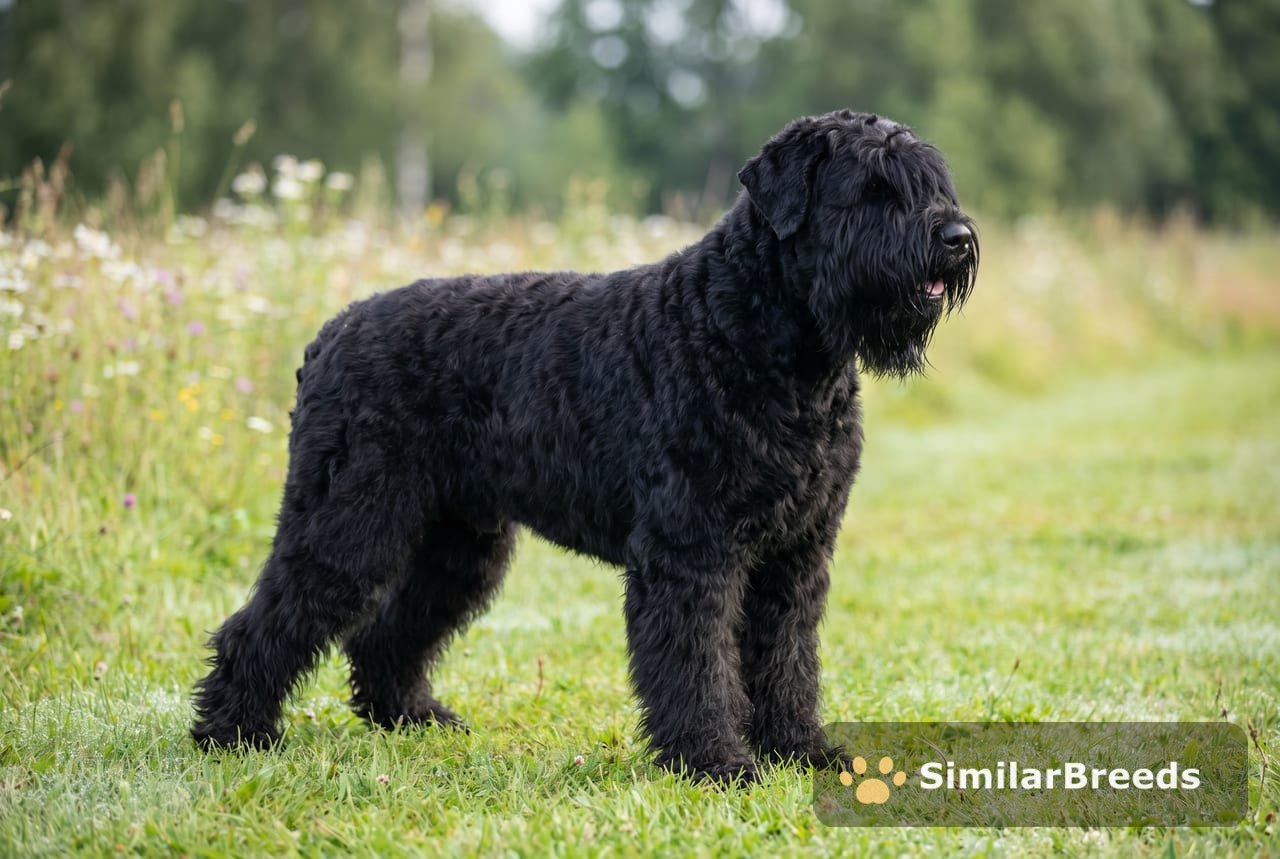
The coat is dense, slightly wavy, and tousled in appearance. It does not shed heavily, but it is not low-maintenance either. Thorough combing once or twice a week prevents matting, and the coat needs trimming every six to eight weeks to stay manageable. Show presentation keeps the coat looking natural rather than sculpted. The breed's cold tolerance is high, which is a direct consequence of that dense coat, but the same coat makes heat a genuine problem and the dog should not be exercised hard in warm weather.
Health
The main concerns recorded are hip and elbow dysplasia, both common in large working breeds of this build. Hyperuricosuria and, less commonly, progressive retinal atrophy and juvenile laryngeal paralysis and polyneuropathy are also noted. Cardiac screening is recommended alongside hip, elbow, eye, and HU testing. Life expectancy is around ten to eleven years.
Why these breeds are similar
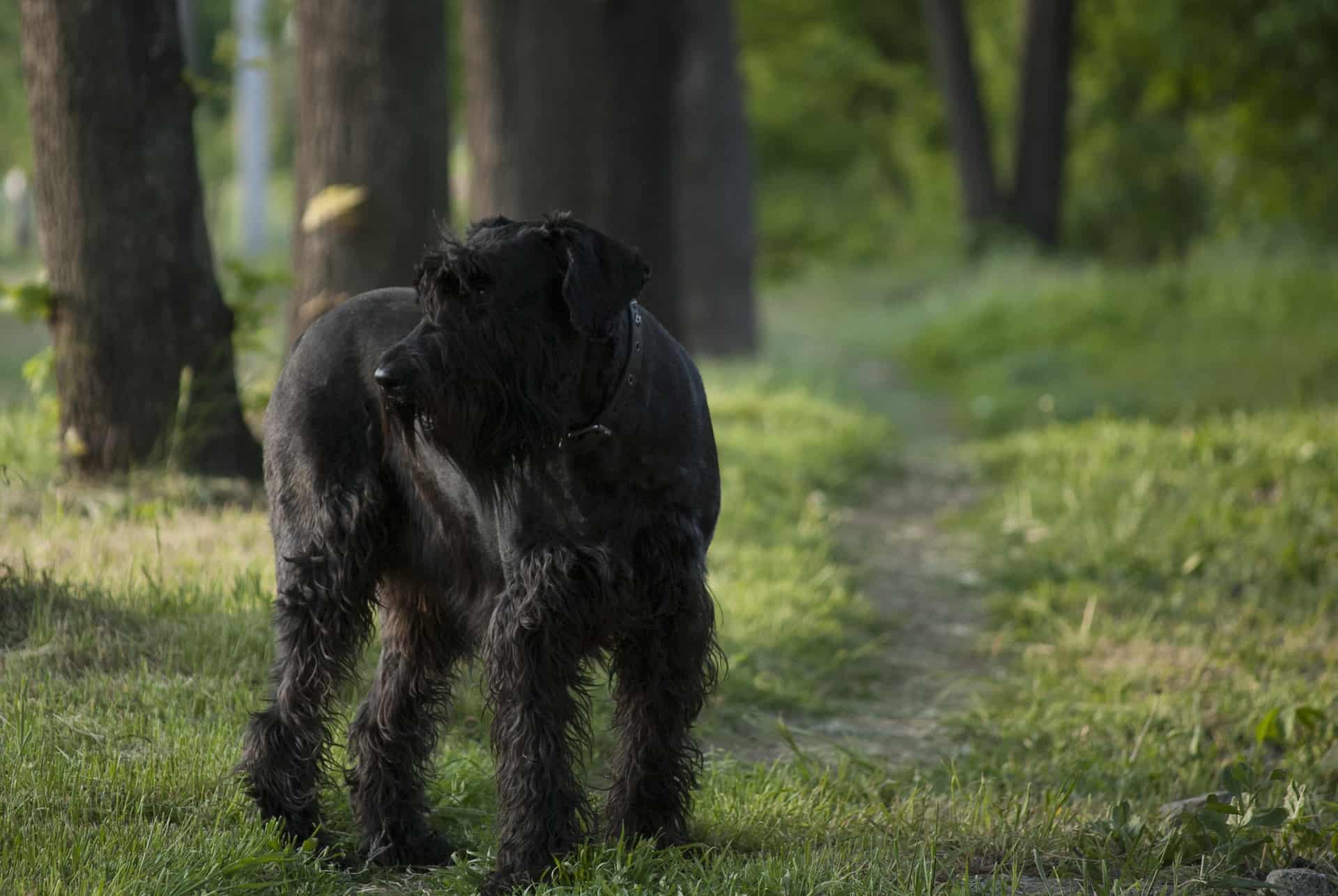
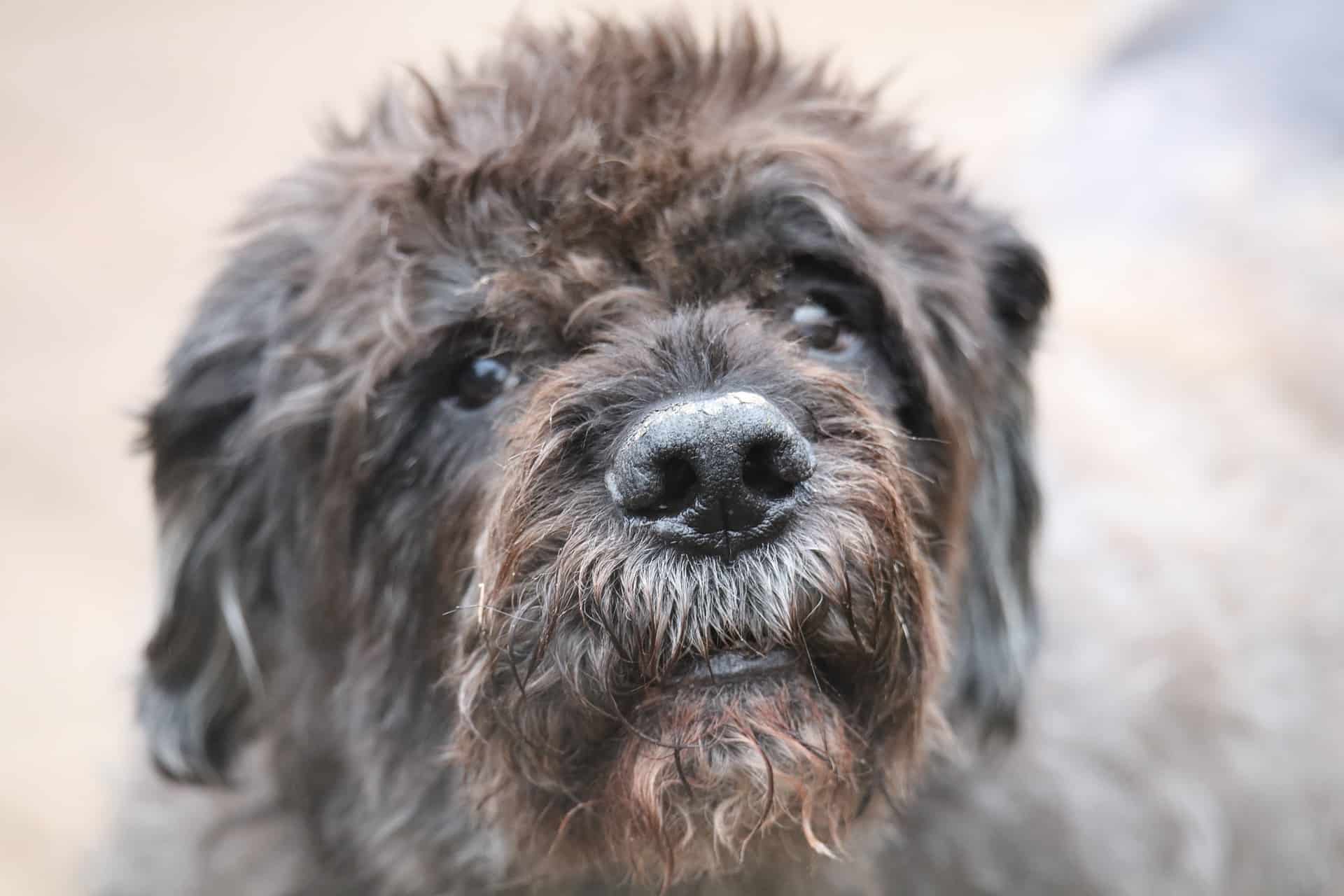
The Giant Schnauzer is the BRT's most direct ancestor and remains its closest parallel: same large, black, wire-coated frame, same watchdog seriousness, same demand for an experienced owner. The Bouvier des Flandres shares the profile of a heavy-coated European working dog with a guarding temperament, a strong will, and a need for purposeful exercise rather than mere mileage.
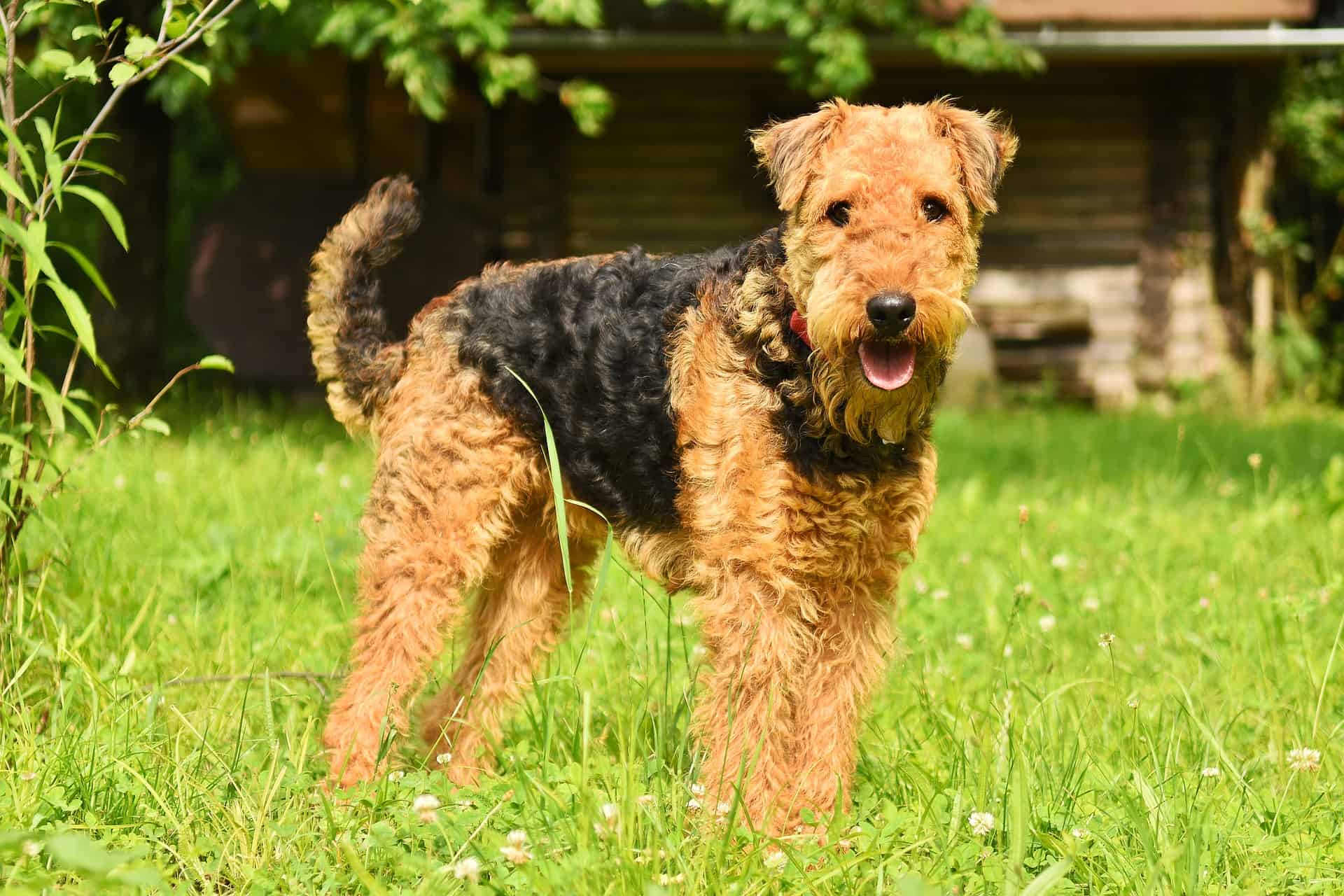
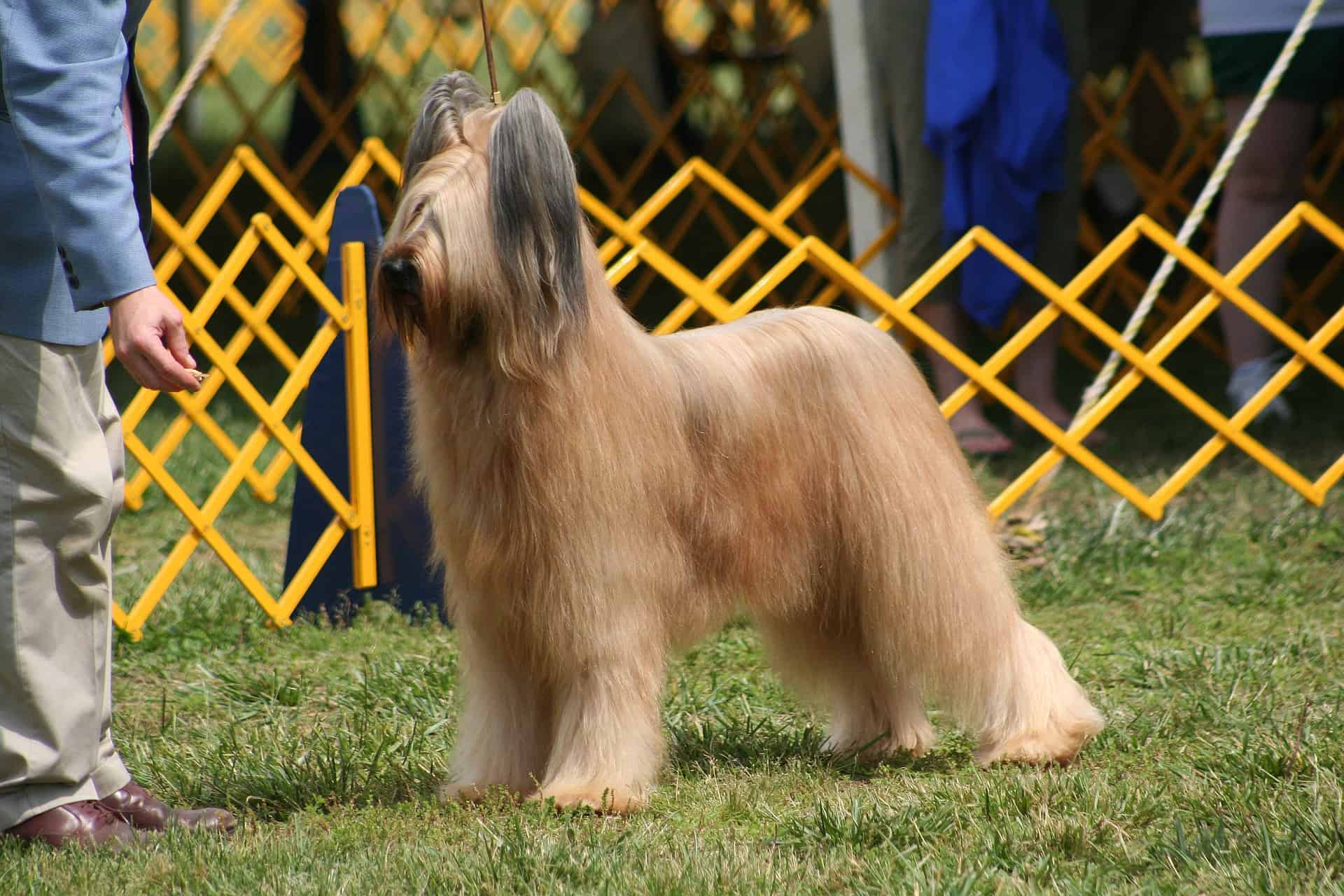
The Airedale Terrier is one of the BRT's founding breeds and passes on the rough coat, the working versatility, and the stubborn streak, though the Airedale runs considerably smaller. The Briard connects through the same combination of loyalty, wariness toward strangers, and a dense coat bred for cold European conditions, with similar protection instincts underpinning an affectionate family dog.
Trait ratings
- Energy level
- 2/5
- Exercise requirements
- 3/5
- Playfulness
- 2/5
- Affection level
- 4/5
- Friendliness toward dogs
- 3/5
- Friendliness toward other pets
- 4/5
- Friendliness toward strangers
- 1/5
- Ease of training
- 3/5
- Watchdog ability
- 5/5
- Protection ability
- 5/5
- Grooming requirements
- 3/5
- Cold tolerance
- 4/5
- Heat tolerance
- 2/5