English Foxhound
From Great Britain
Purpose & Origin
The English Foxhound is one of the oldest purpose-bred dogs in existence, with pedigrees recorded since the late 1700s, a longer continuous lineage than almost any other breed. Its origins are not precisely documented, but by around 1750 a group of English sportsmen had begun developing a hound that could track a faint fox scent at speed and sustain a chase across miles of open country, all while a mounted field kept pace.
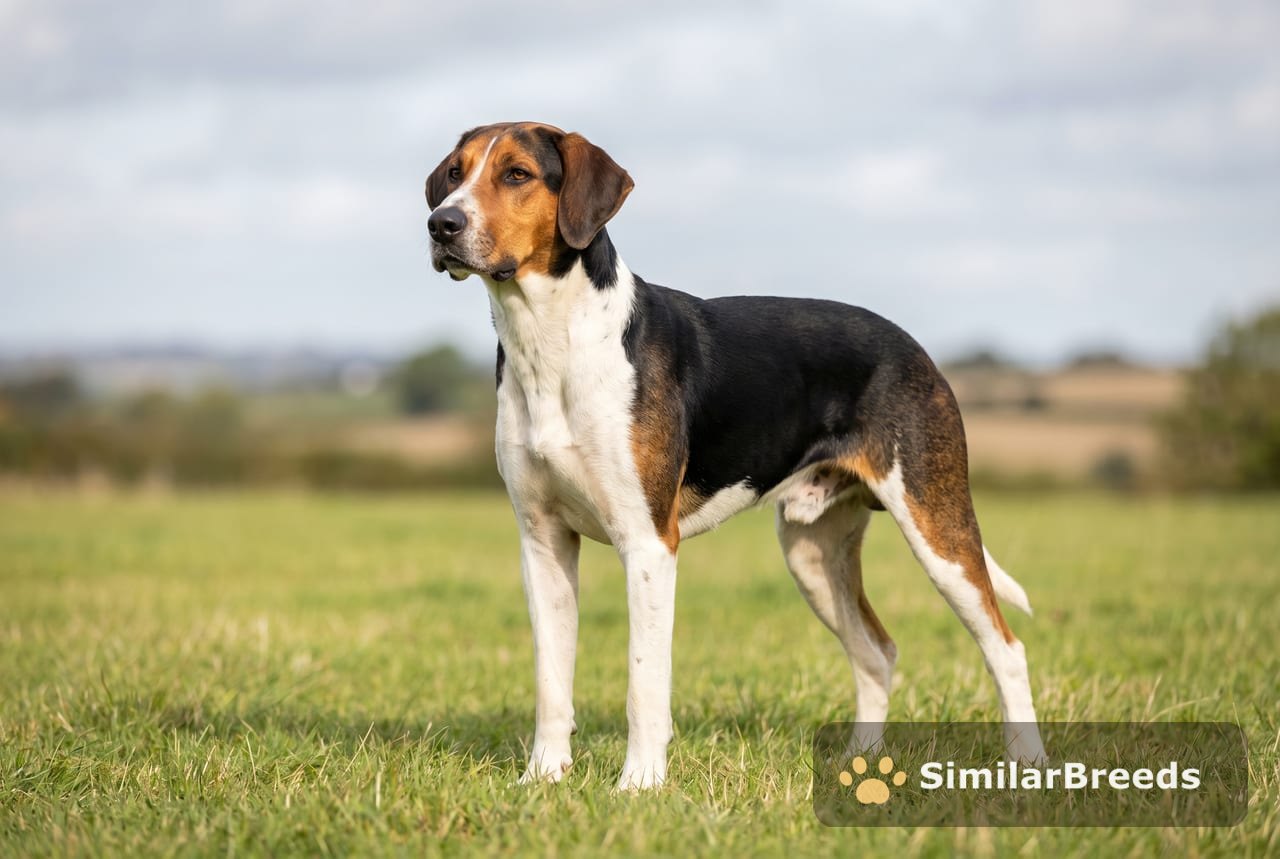
Foxhunting became a ceremony of the wealthy, and the Masters of Foxhounds who managed the packs took breeding seriously, selecting not just for nose and stamina but for appearance. Pack uniformity mattered: most hounds carried the black saddle over a tan body with white points.
By the late 1800s, 140 registered packs were running in England, each with around 50 hounds. The breed came to America in the same century, where it was eventually crossed with local dogs to produce what became the American Foxhound.
Temperament & Behaviour
The English Foxhound was bred to run in company, and that pack background shows in its temperament. It is tolerant, amiable, and gentle with other dogs, children, and even horses. It is not a demonstrative breed, and most individuals are reserved with strangers, but it is not suspicious or sharp. Left without canine or human company it does poorly, baying loudly and becoming restless.
It is a scenthound at heart: give it an interesting smell and its focus narrows completely. City living is a poor match. It is not a breed that craves affection in obvious ways, but it is steady and good-natured, and it settles well into a household that gives it enough exercise and companionship.
Activity & Training
Exercise is non-negotiable. This is a dog built to run for hours, and a long daily jog on leash or an extended hike in a safe enclosed area is the minimum, not the ideal. The energy level is high and the exercise requirement matches it.
Training is the harder side of ownership: the English Foxhound scores low on ease of training, not because it is dim but because it is pack-oriented and scent-driven rather than people-pleasing. It responds to patient, consistent work, but recall off-leash in open country is unreliable. The breed is not well suited to first-time owners unless those owners are committed to structured daily exercise and have realistic expectations about compliance.
Grooming
Grooming is almost no work at all. The short, dense coat needs only occasional brushing to stay tidy, and the breed does not require trimming or professional coat care. This is one of the lowest-maintenance coats in the hound world.
Health
The English Foxhound is a generally robust breed with a lifespan of roughly 10 to 13 years. Hip dysplasia and renal disease are occasionally seen, and hip screening is worth doing in breeding stock. No major inherited conditions are flagged as widespread concerns.
Why these breeds are similar
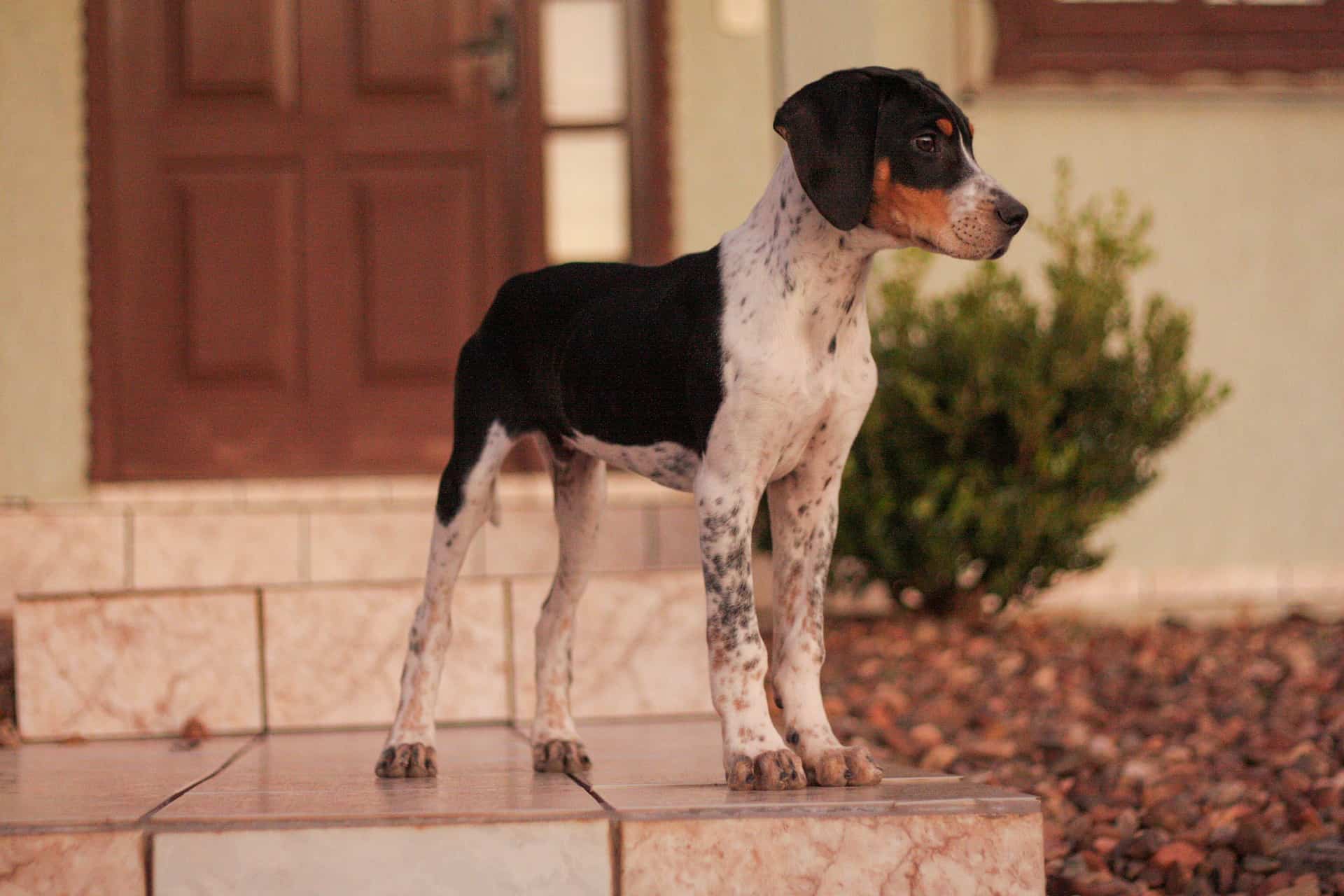
The **American Foxhound** is the most direct relation, descended from English Foxhounds brought to the colonies and selectively crossed over generations into a slightly lighter, longer-legged variant. The two breeds share the same original job, the same pack instincts, and nearly identical temperament and exercise demands.
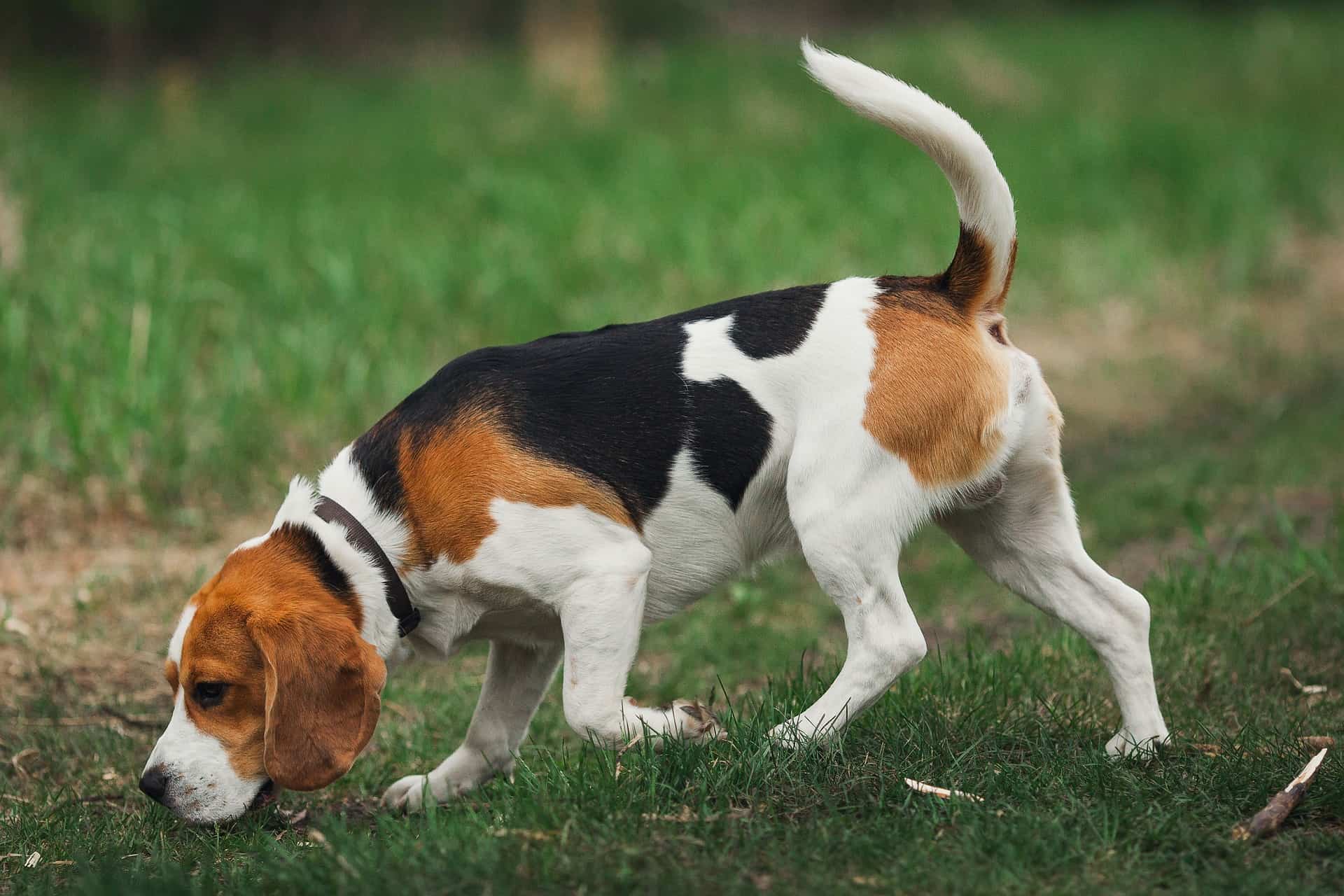
The **Beagle** is a smaller scenthound from the same British hunting tradition, bred for a similar purpose on rabbit and hare rather than fox. It carries the same strong nose, the same pack sociability, and the same selective deafness when a scent trail is underway.
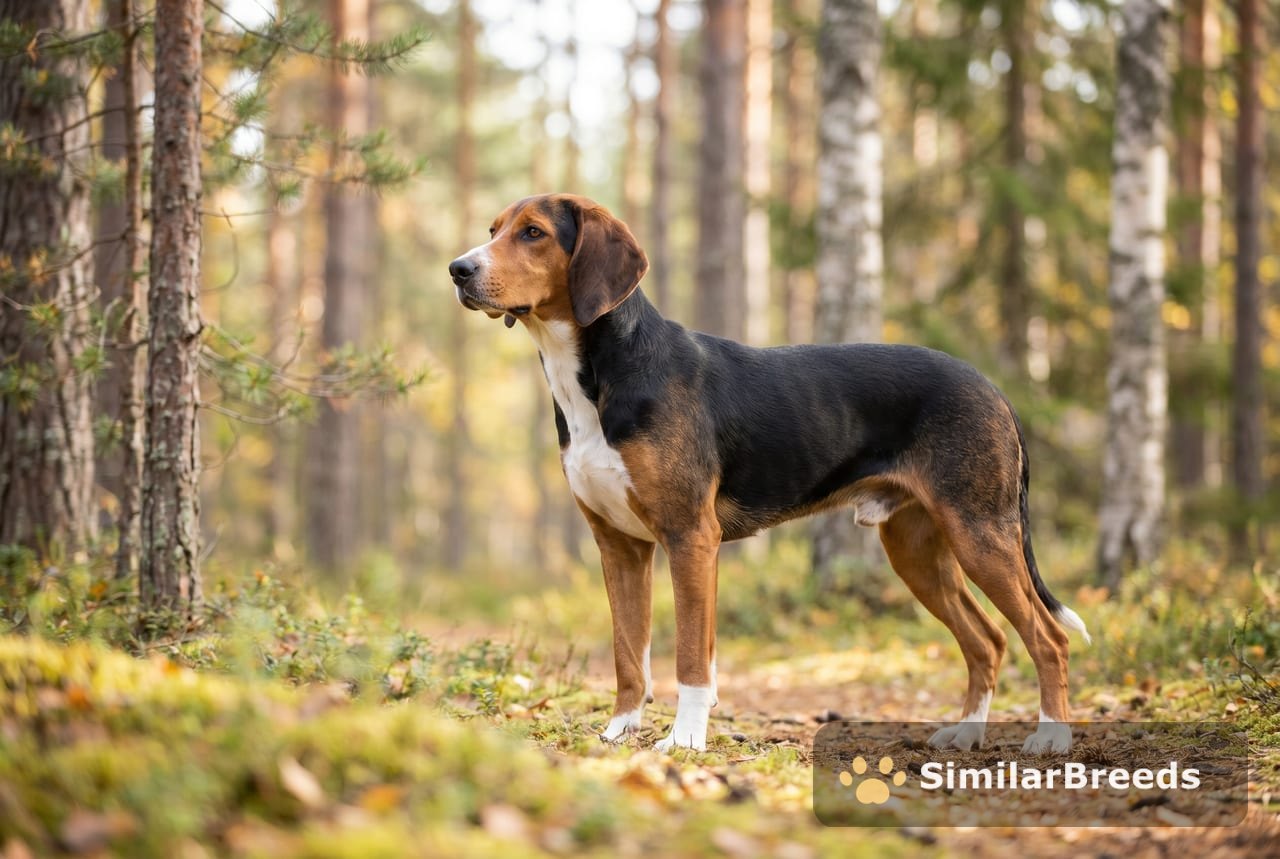
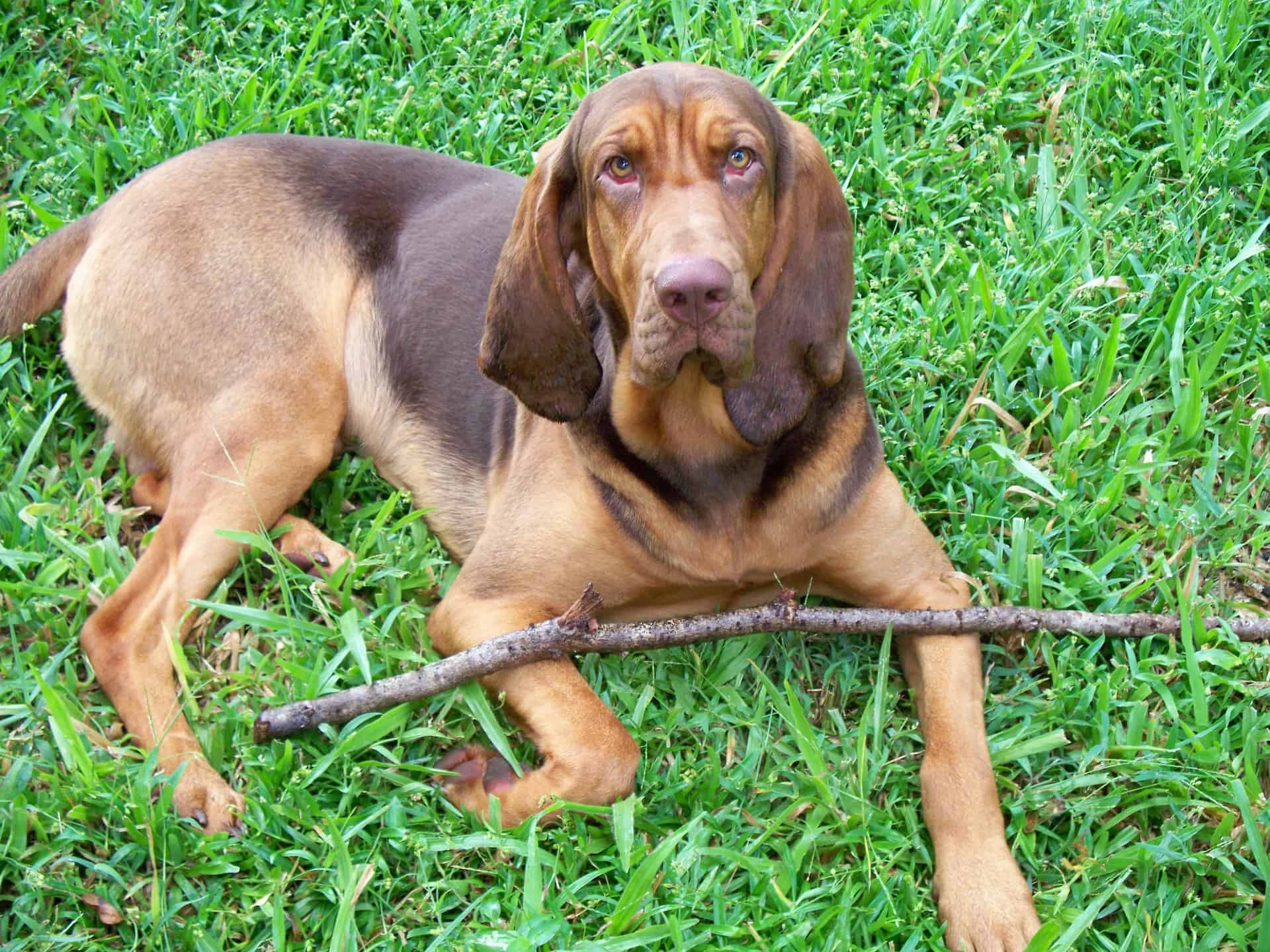
The **Finnish Hound** is a Scandinavian scenthound developed for similar work in rougher terrain: a pack-capable, driven, high-energy trailing dog with a comparable build and the same honest, uncomplicated temperament. The **Bloodhound** represents the extreme end of the nose: a far larger and more powerful scenthound, but one that shares the English Foxhound's deep pack roots, its single-minded trailing instinct, and its gentle, tolerant nature around people and other dogs.
Trait ratings
- Energy level
- 4/5
- Exercise requirements
- 4/5
- Playfulness
- 3/5
- Affection level
- 3/5
- Friendliness toward dogs
- 5/5
- Friendliness toward other pets
- 3/5
- Friendliness toward strangers
- 4/5
- Ease of training
- 2/5
- Watchdog ability
- 4/5
- Protection ability
- 1/5
- Grooming requirements
- 1/5
- Cold tolerance
- 3/5
- Heat tolerance
- 3/5