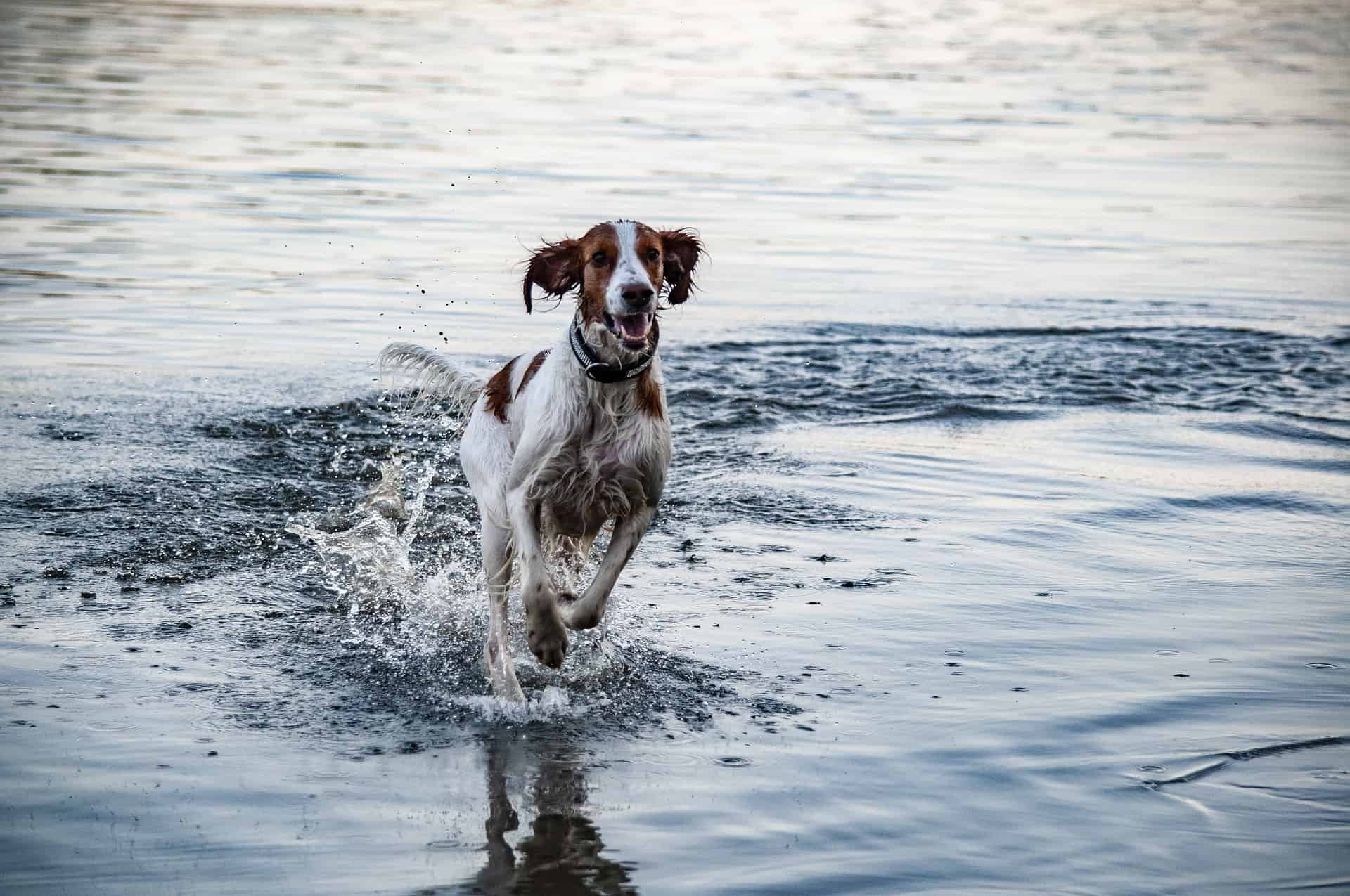
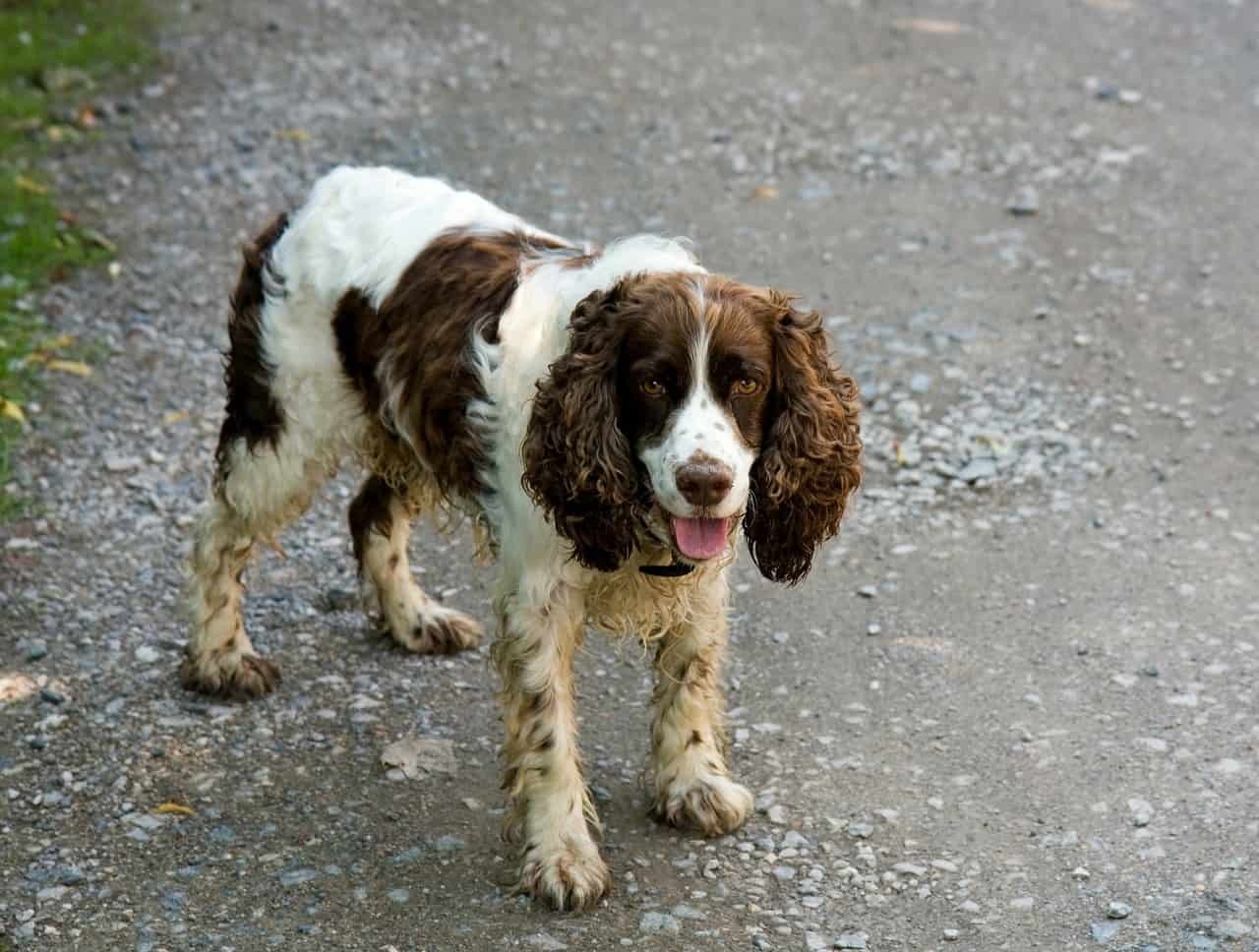
English Springer Spaniel
From Great Britain
Purpose & Origin
The English Springer Spaniel is a land spaniel bred for one specific task: flushing birds from cover so they could be taken by falcon, net, or later by shotgun. References to "springing" spaniels go back to the late 1500s, though distinct, purposefully bred strains did not appear until around 1800. Among the most influential early lines were those kept by the Duke of Norfolk, whose dogs shaped the breed so thoroughly that Springers were briefly called Norfolk Spaniels.
The name changed to Springer Spaniel in 1900, and the English Kennel Club recognised it as a breed distinct from the Cocker Spaniel in 1902. The separation mattered because the two had long been size variants of the same stock, with the larger dogs becoming Springers and the smaller ones Cockers. The Springer found steady favour as a versatile gundog capable of ranging wide, flushing reliably, and retrieving to hand.
Temperament & Behaviour
The Springer is one of the more genuinely cheerful dogs in the gundog group, enthusiastic in everything it does and openly affectionate with family. It tolerates other pets well and greets most strangers warmly, making it an easy-going household companion under normal circumstances. The caveat is that enthusiasm without an outlet tips quickly into boisterousness. A Springer that is under-exercised is not a calmer Springer; it is a louder, pushier one. Given sufficient activity it settles well indoors and is notably easy to train, responding reliably to consistent handling.
Activity & Training
With an exercise requirement that sits firmly on the higher end, the Springer is not a twice-around-the-block breed. Daily outings of real length, ideally off-lead in open ground, are the baseline. Hunting satisfies both the physical and mental sides at once, but a long field walk combined with a structured training session achieves much the same result. Obedience training is straightforward given the breed's eagerness and strong handler focus, and puzzle work or nose games add useful mental load on days when distance is limited.
Grooming
The Springer's coat is medium in length with feathering on the ears, chest, belly, and legs, and it needs brushing or combing one to two times per week to prevent matting in those feathered areas. Beyond weekly maintenance, the coat needs clipping and scissoring every two to three months. Field-bred dogs typically carry less coat than show-bred ones, which reduces the upkeep somewhat. Ear health deserves regular attention given the breed's pendulous ears and history of ear problems.
Health
The Springer's documented concerns include hip dysplasia, elbow dysplasia, and progressive retinal atrophy, with otitis externa (ear infection) listed as a major recurring issue. Phosphofructokinase deficiency is a metabolic condition seen in the breed with a DNA test available, as is DNA testing for PRA. Less common findings include seizures, rage syndrome, and gastric torsion. Lifespan runs from 10 to 14 years. Buyers should ask for hip, elbow, eye, and knee clearances alongside relevant DNA panels.
Why these breeds are similar
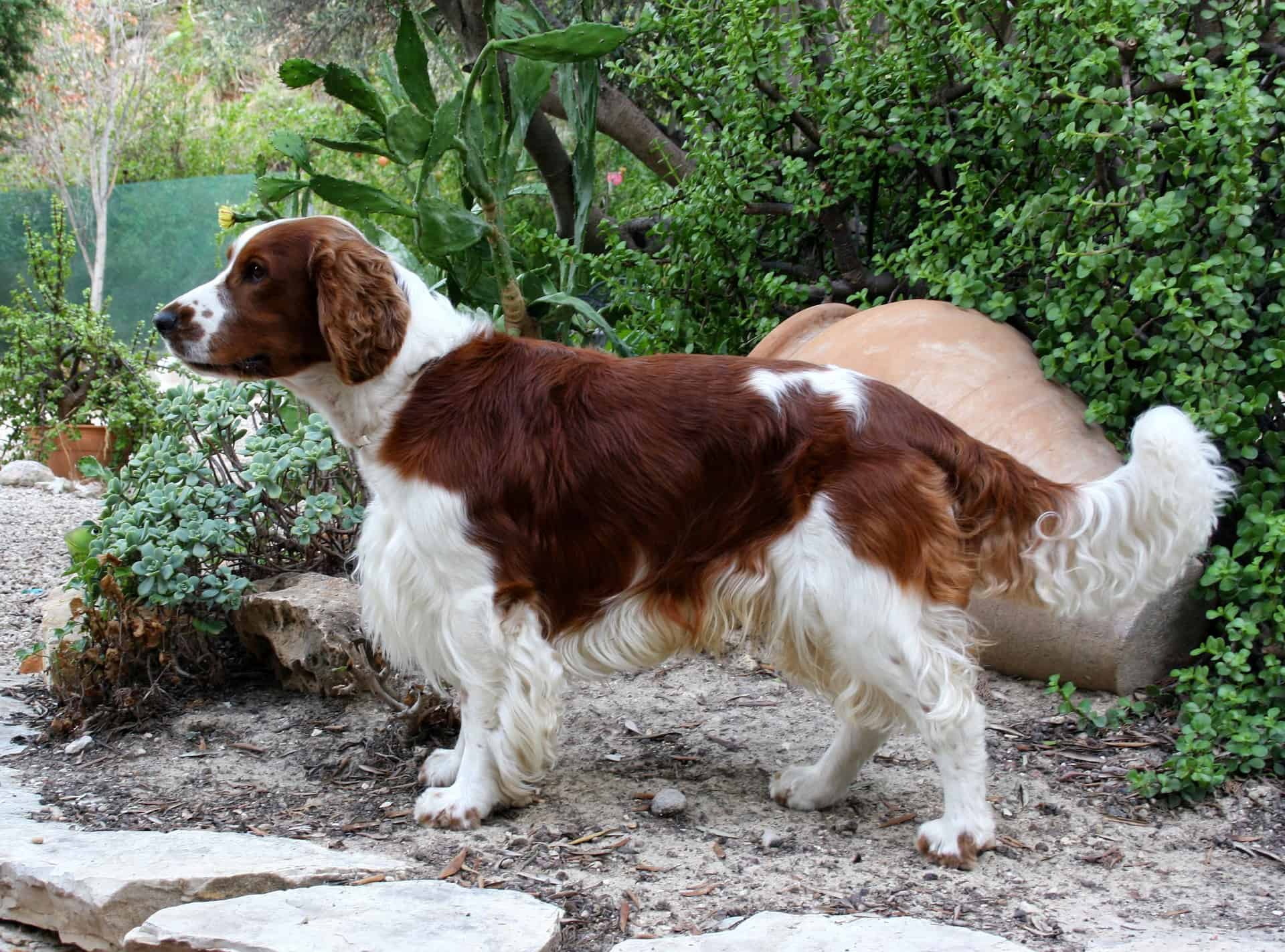
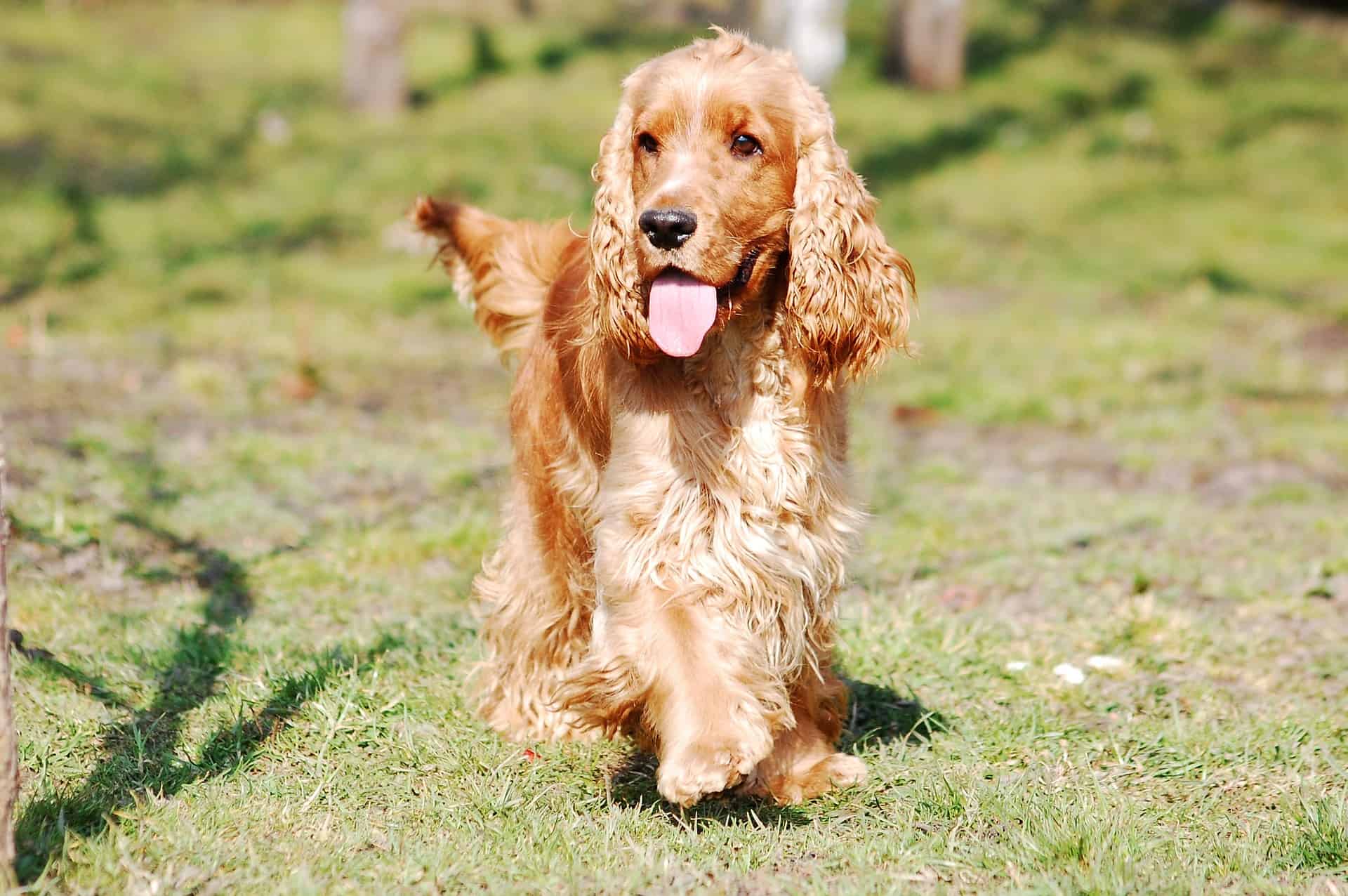
The Welsh Springer Spaniel is the closest relative, a slightly smaller, exclusively red-and-white flushing spaniel from Wales with the same springing purpose and the same instinct to hunt close and retrieve. The English Cocker Spaniel shares the same ancestral stock, differing mainly in size; the two were formally separated only in the early twentieth century and still share the characteristic spaniel eagerness and trainability.
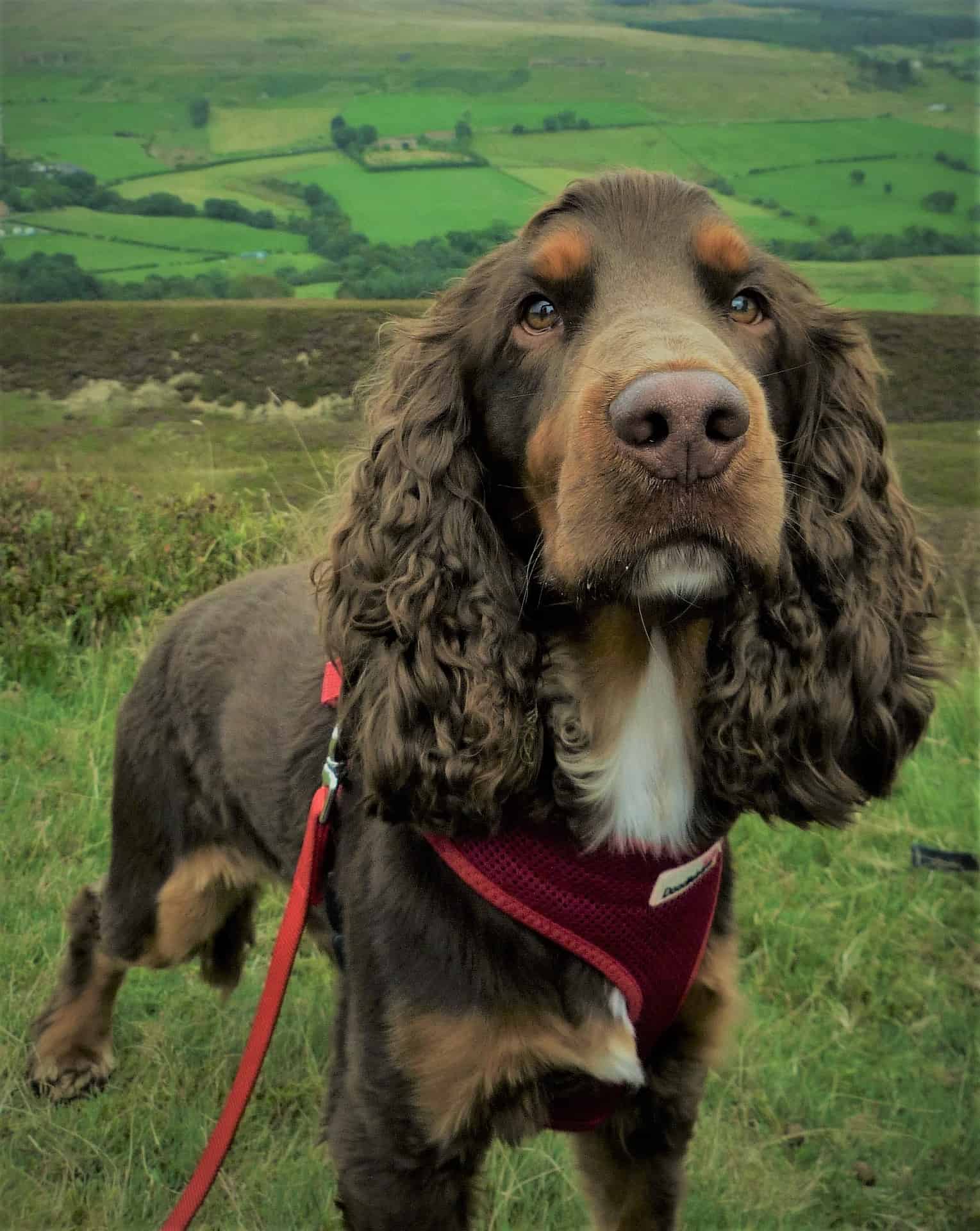
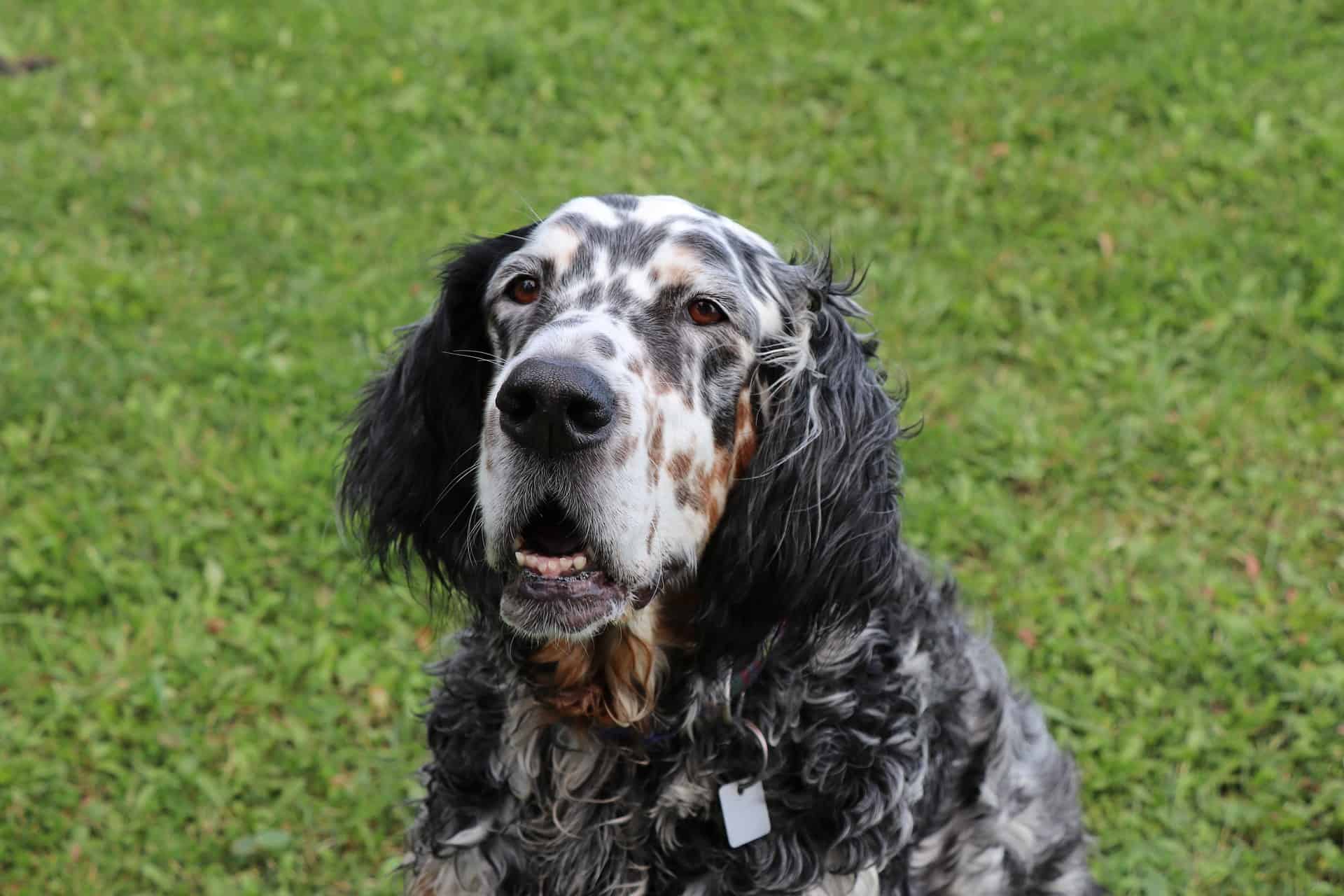
The Field Spaniel is another direct cousin from the English land-spaniel group, built lower and heavier but bred for the same flushing role in dense cover. The English Setter and Irish Red and White Setter are included not as spaniel cousins but as fellow bird-dog partners from the British Isles, both bred to locate and indicate upland game, and both carrying that combination of high energy, affectionate temperament, and moderate trainability that defines the broader gundog type.
Trait ratings
- Energy level
- 3/5
- Exercise requirements
- 4/5
- Playfulness
- 4/5
- Affection level
- 5/5
- Friendliness toward dogs
- 3/5
- Friendliness toward other pets
- 5/5
- Friendliness toward strangers
- 4/5
- Ease of training
- 5/5
- Watchdog ability
- 4/5
- Protection ability
- 2/5
- Grooming requirements
- 4/5
- Cold tolerance
- 3/5
- Heat tolerance
- 3/5