Estonian Hound
From Estonia
Purpose & Origin
The Estonian Hound is the only pedigree breed native to Estonia and the country's national dog. Hunters in the early 20th century needed a compact, stamina-driven hound suited to dense Baltic forests and cold winters. The large local hounds were too cumbersome, so breeders crossed them with Beagles, small Swiss scenthounds, and English Foxhounds to reduce size while retaining scenting ability and endurance. The quarry was fox and hare. By 1954 the breed had an official standard.
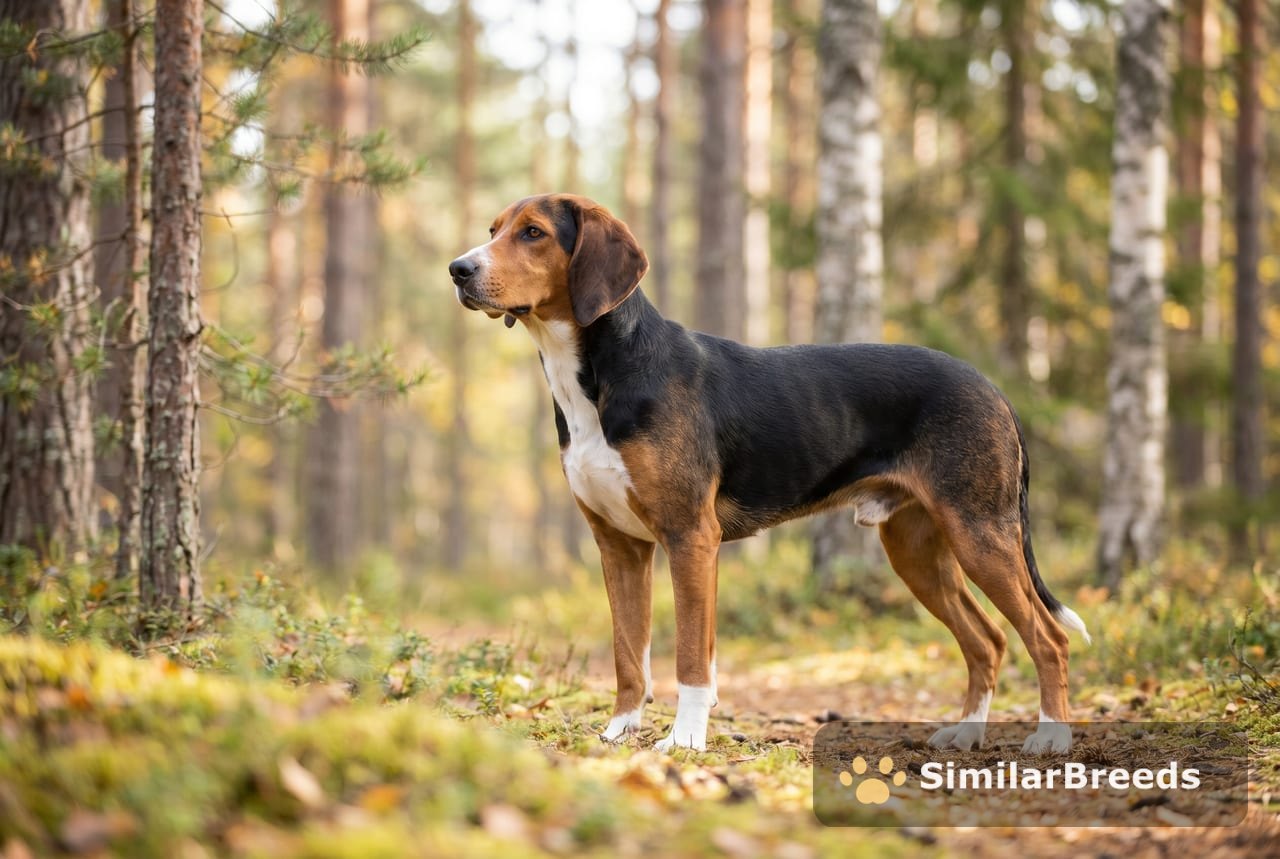
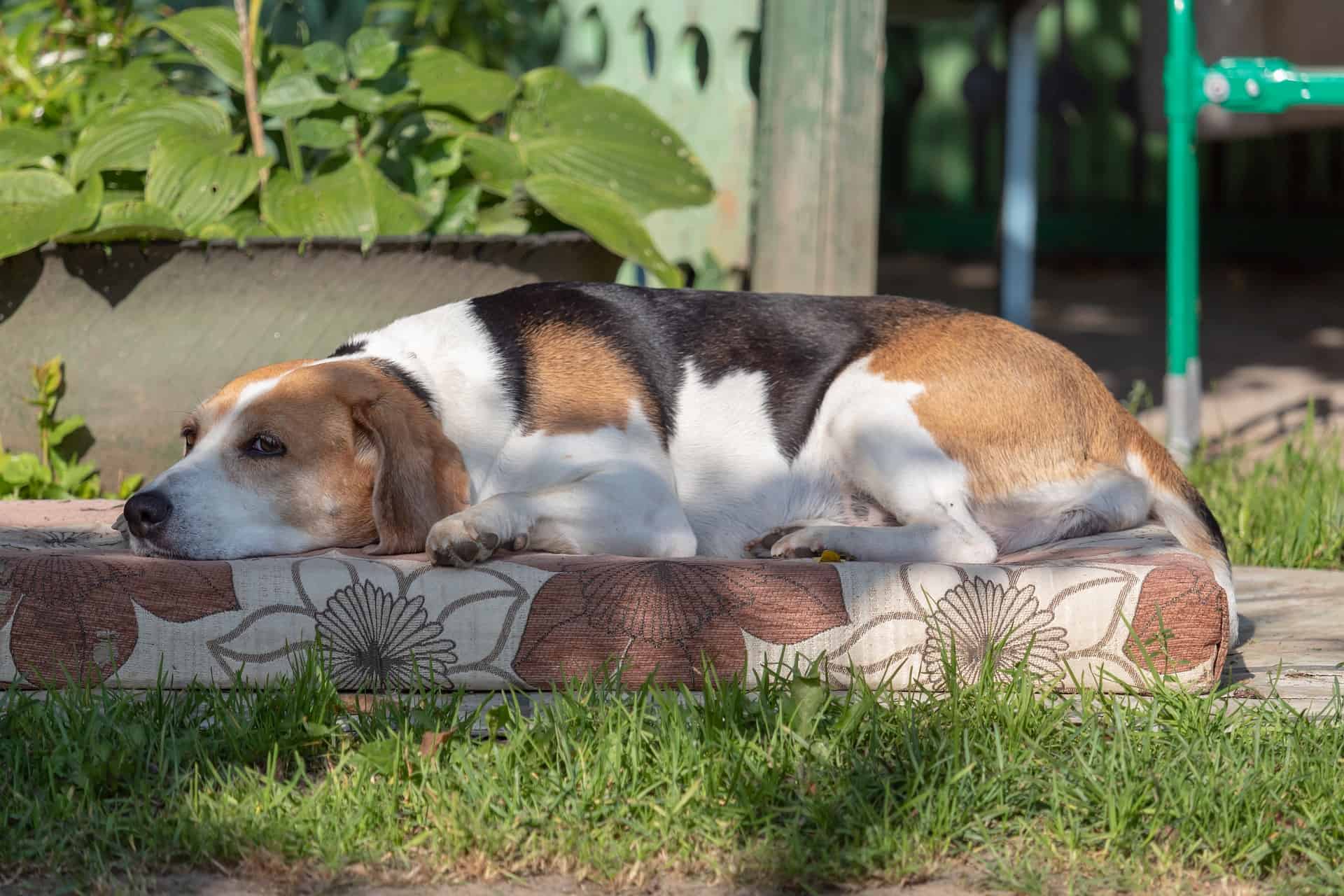
Also known as the Estland Hound or Gontchaja Estonskaja, it stands 18 to 21 inches (46 to 53 cm) and weighs roughly 33 to 44 pounds. The coat is predominantly black with tan extremities and white markings. The breed has spread into Russia but remains little known outside eastern Europe.
Temperament & Behaviour
The Estonian Hound is an even-tempered, sociable dog. It bonds closely with its family, is gentle with children, and gets along readily with other dogs, which fits its pack-hunting background. Like most scenthounds, it will pursue a scent trail with single-minded focus, so a secure outdoor space is a practical necessity. It can be vocal when it picks up a scent or is left alone for long periods. With adequate exercise and company it settles well indoors and has historically served a secondary role as a house guard.
Activity & Training
This breed was built to work all day in demanding terrain. Daily runs or long walks are the baseline. Off-leash time in a fenced area suits it best, and nose work or tracking games provide useful mental stimulation.
Training is straightforward with patience and consistency. The Estonian Hound is intelligent and willing, though hound independence means it can disengage when something interesting is on the wind. Positive reinforcement works better than repetitive drills. Recall deserves focused training early, given the scent drive.
Grooming
The short, dense coat is low maintenance. A weekly brush with a rubber mitt or bristle brush is sufficient. Bathing a few times a year handles most situations. Ear hygiene is the most important routine task: the drop ears restrict airflow, making moisture accumulation a recurring issue. Weekly ear cleaning prevents infections. Nails should be trimmed every three to four weeks.
Health
The Estonian Hound is a robust breed with a lifespan of 12 to 15 years. No breed-specific hereditary conditions are well documented, reflecting limited study outside eastern Europe. The conditions occasionally mentioned, hip dysplasia, progressive retinal atrophy, and hypothyroidism, are general hound concerns rather than established breed predispositions. Ear infections are the most practically common problem and are largely preventable through regular cleaning.
Why these breeds are similar
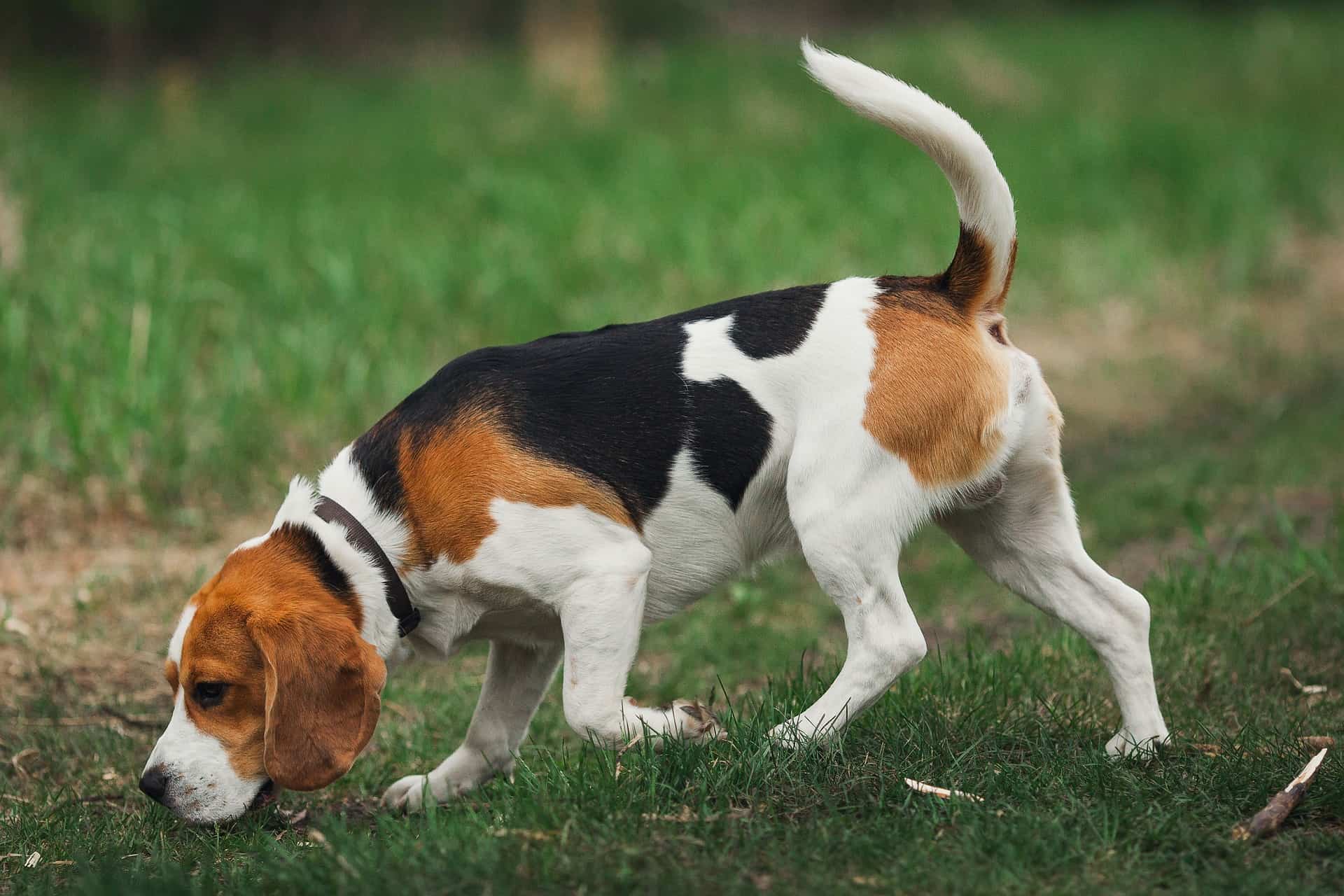
**Beagle:** The Beagle was one of the foundation breeds used to create the Estonian Hound, and the physical resemblance is direct. Both are compact, black-and-tan scenthounds built for fox and hare hunting at a pace humans can follow on foot. Temperament parallels are equally close: sociable, pack-oriented, and scent-driven.
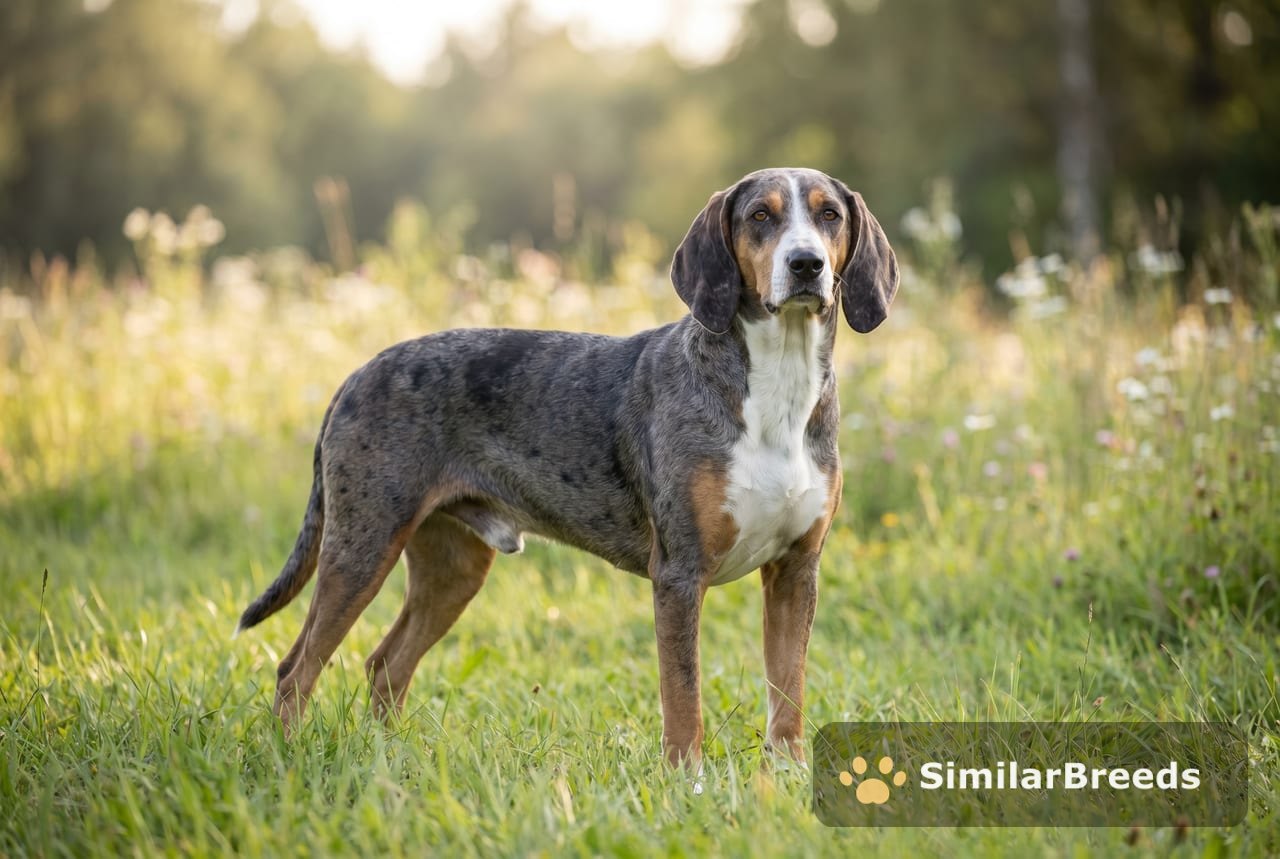
**Norwegian Hound (Dunker):** The Dunker shares the Baltic-Scandinavian hound tradition and was developed for the same core purpose, hunting hare through northern forests. Both breeds are mid-sized, short-coated, and tricolour. The Dunker is somewhat larger, but the working profile and exercise needs align closely.
**Finnish Hound:** The most geographically and functionally proximate breed on the list. Also an FCI Group 6 scenthound from the Nordic-Baltic region, developed for fox and hare in dense forest. It is noticeably larger but shares the same work ethic, pack-friendly temperament, and short tricolour coat. The Finnish Hound was cited among the breed influences used in creating the Estonian Hound.