Purpose & Origin
The Lapponian Herder, known in Finland as the Lapinporokoira, was created in the mid-20th century as a deliberate upgrade on the older northern reindeer-herding dogs. Breeders in southern Finland crossed the Finnish Lapphund with German Shepherd Dogs and working Collies, aiming to retain the cold-weather hardiness of spitz breeds while adding the tight manoeuvring instincts of European sheepdogs. The result is a dog said to be capable of covering 60 miles in a day, and a working tool valued enough that herders claimed one dog equalled five men.
The breed nearly vanished when motorized snowmobiles replaced dogs in reindeer work during the mid-20th century. A rescue effort by the Finnish Kennel Club chairman led to an official breed standard in 1966, and numbers recovered quickly through the late 1960s. The breed is now FCI-recognized under Group 5 (Spitz and primitive types) and sits on the AKC Foundation Stock Service.
Temperament & Behaviour
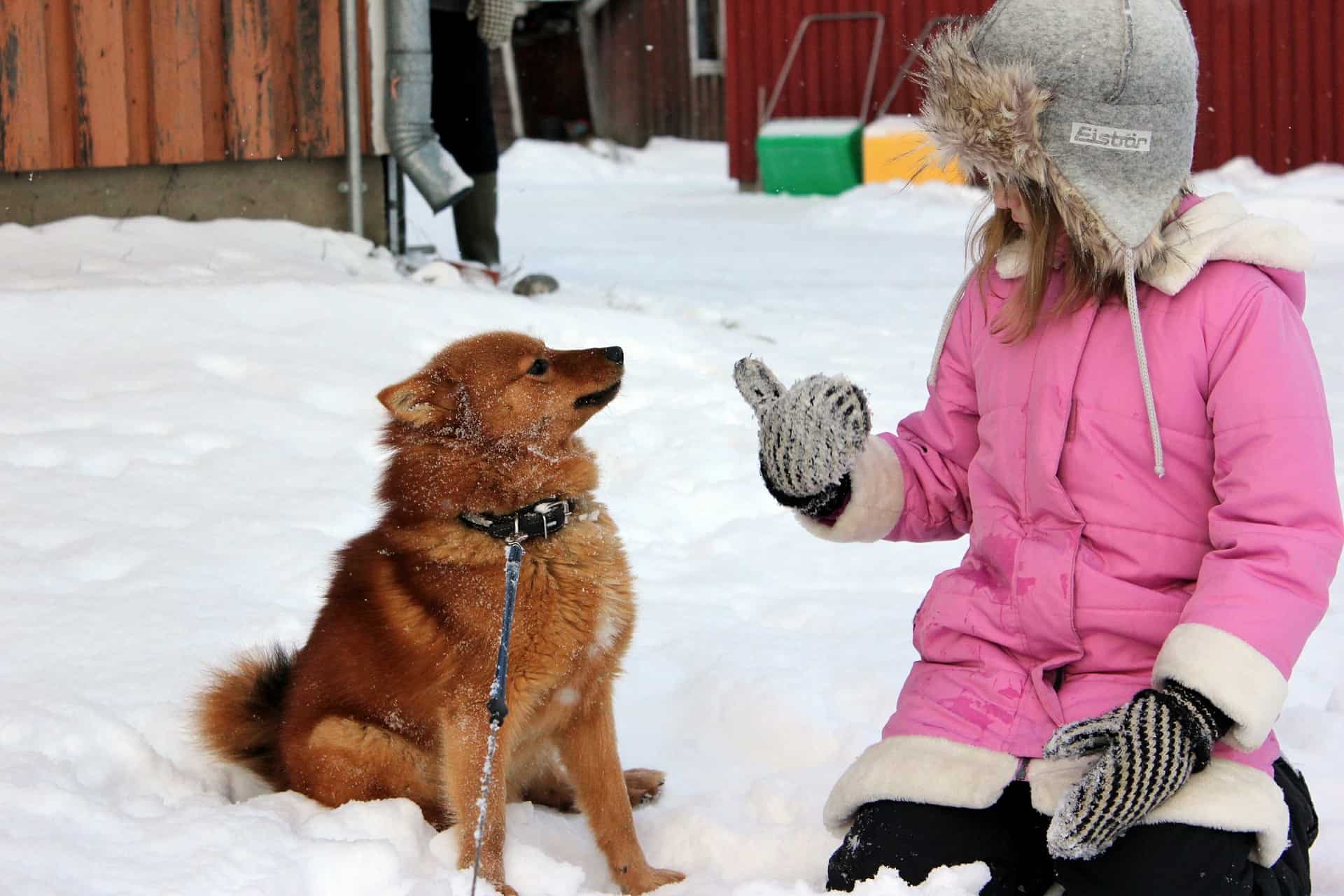
The Lapponian Herder is calm and even-tempered without being sluggish. It is friendly with its family and notably good with children, but it does not warm to strangers immediately, preferring to observe before accepting. This watchful quality is a working legacy: a good reindeer dog had to be alert to predators and responsive to the herder, not distracted by every passerby. Barking is used purposefully rather than obsessively.
The breed bonds closely with people and does not thrive in isolation. It is intelligent and willing, but the spitz heritage means it thinks for itself. It responds well to firm, consistent handling rather than harsh correction.
Activity & Training
This is a genuinely active breed. It was bred to work all day across open tundra, and it needs a substantial daily outlet, long walks, running, or active play in a secured space. A garden stroll is not enough. Mental stimulation matters too: herding instincts translate well into dog sports such as agility, obedience, and tracking.
Training goes smoothly when it is consistent and reward-based. The breed is intelligent and picks up commands readily. Harsh or repetitive drilling tends to produce resistance, so varied, positive sessions work best. Early socialization is important to ensure the natural wariness of strangers stays proportionate.
Grooming
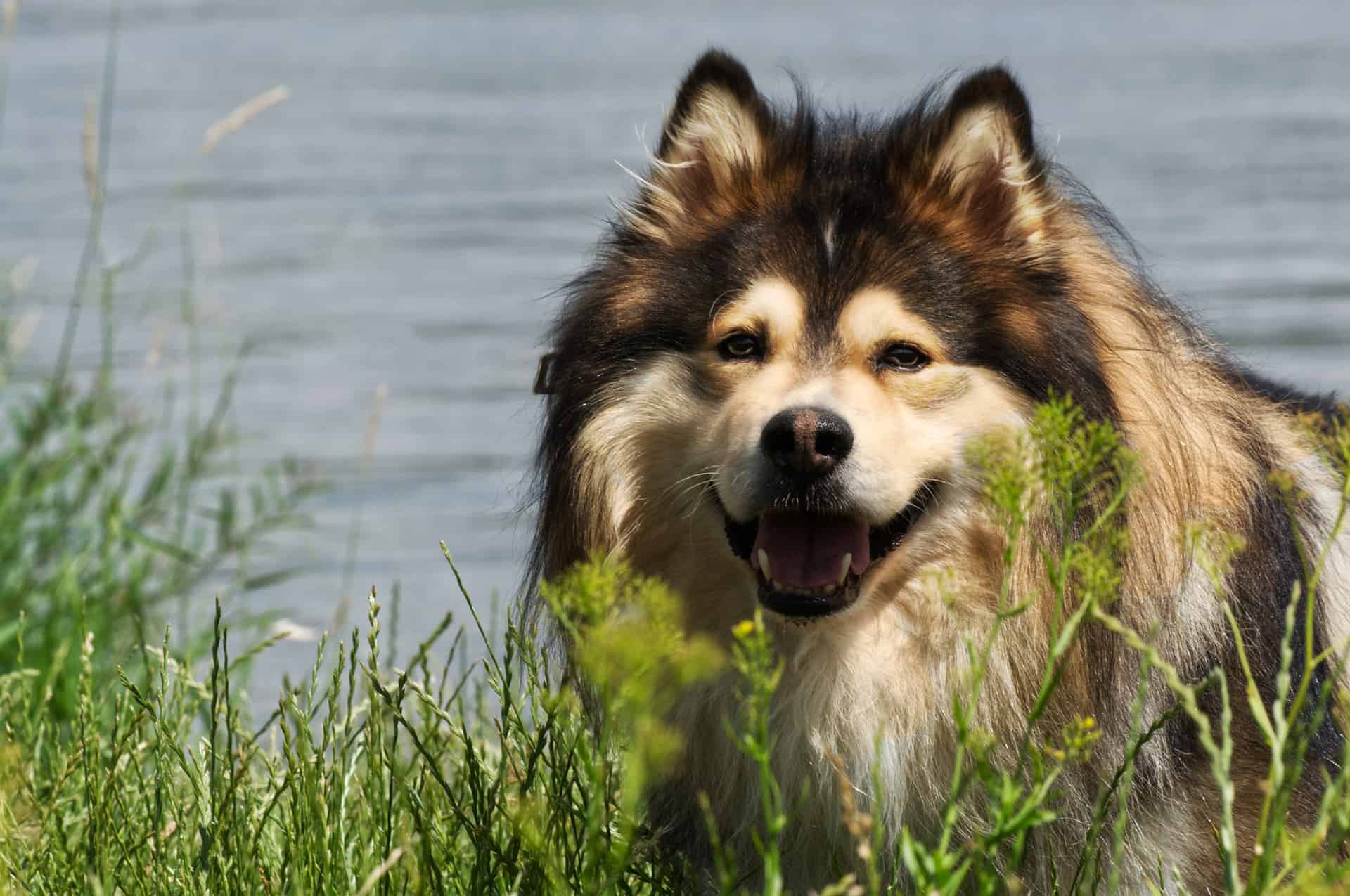
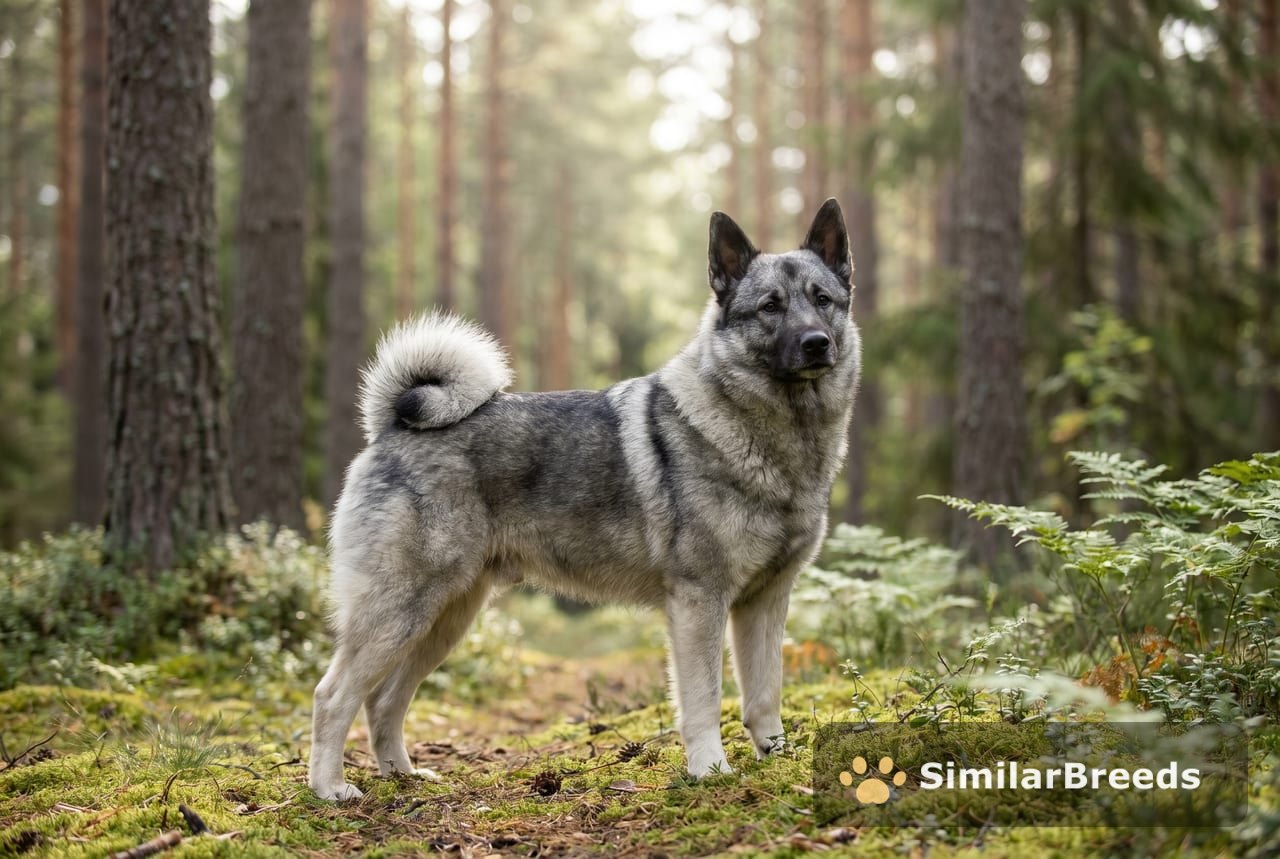
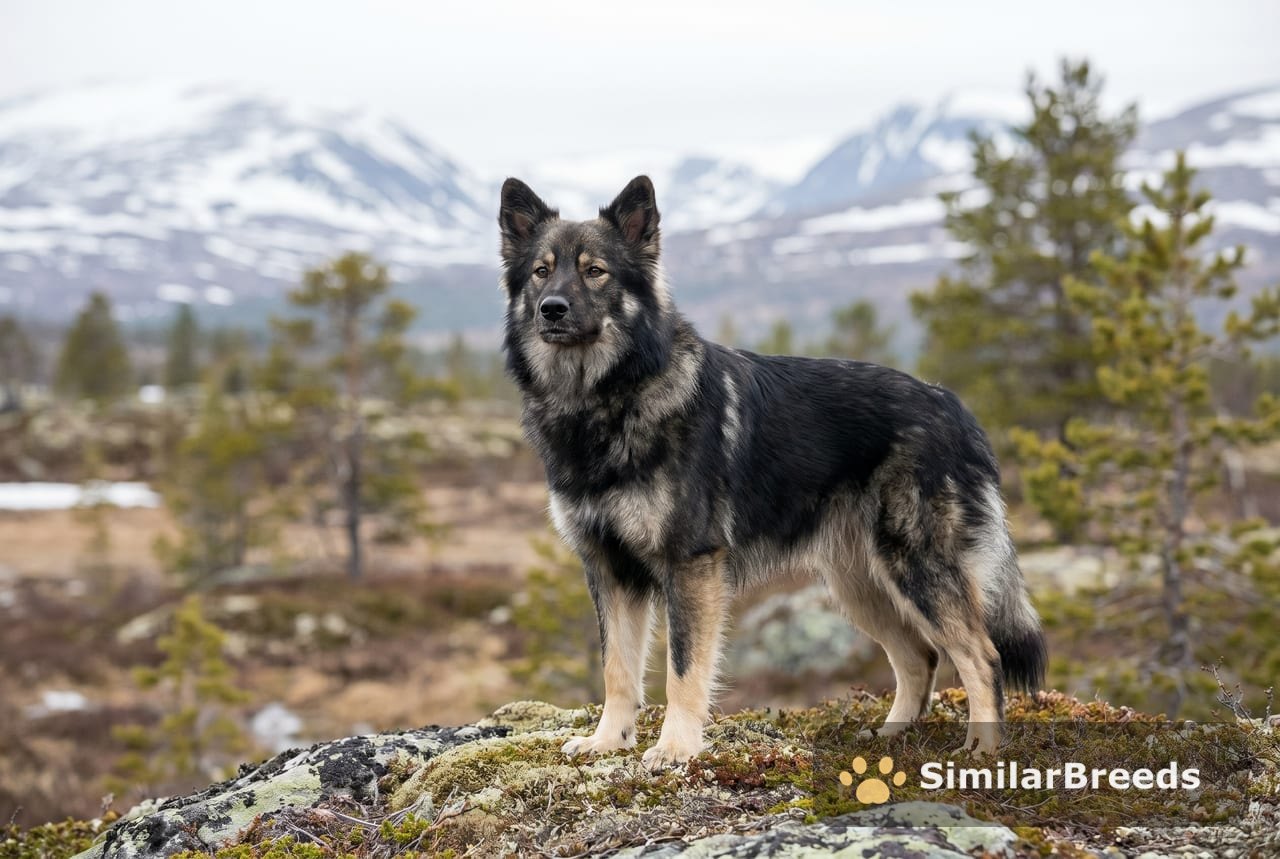
The Lapponian Herder has a dense double coat, straight and medium in length, with a thick undercoat suited to Arctic conditions. Day-to-day, once-weekly brushing keeps the coat in order. The challenge comes with seasonal shedding, when the undercoat blows out heavily and daily brushing with a slicker brush, deshedding tool, and metal comb becomes necessary to prevent matting and remove loose fur efficiently. Coat colours include black with tan extremities, solid black, and white with dark shading.
Ears are worth monitoring: the breed can be prone to ear infections, so regular checks and keeping ears dry after water exposure is sensible routine care.
Health
The Lapponian Herder is a generally healthy breed with a lifespan of 12 to 15 years. Hip dysplasia is the main hereditary concern, as it is with most medium-to-large herding breeds, so parents should be health-tested before breeding. No breed-specific conditions beyond that and ear health appear to be well established in current literature. The breed's working origins mean it was selected for physical soundness, which contributes to its robust constitution.
Why these breeds are similar
**Finnish Lapphund** is the closest relative: it is one of the founding breeds of the Lapponian Herder, shares the same Sami reindeer-herding heritage, and has a similar double coat and calm-but-active temperament. The key difference is the Lapphund's rounder spitz build and curled tail versus the Lapponian Herder's longer legs, flatter body, and hanging tail inherited from its sheepdog crosses.
**Finnish Spitz** overlaps in origin country and spitz type, sharing pricked ears and a double coat suited to northern conditions. It was bred for hunting birds rather than herding, giving it a more independent and vocally driven personality.
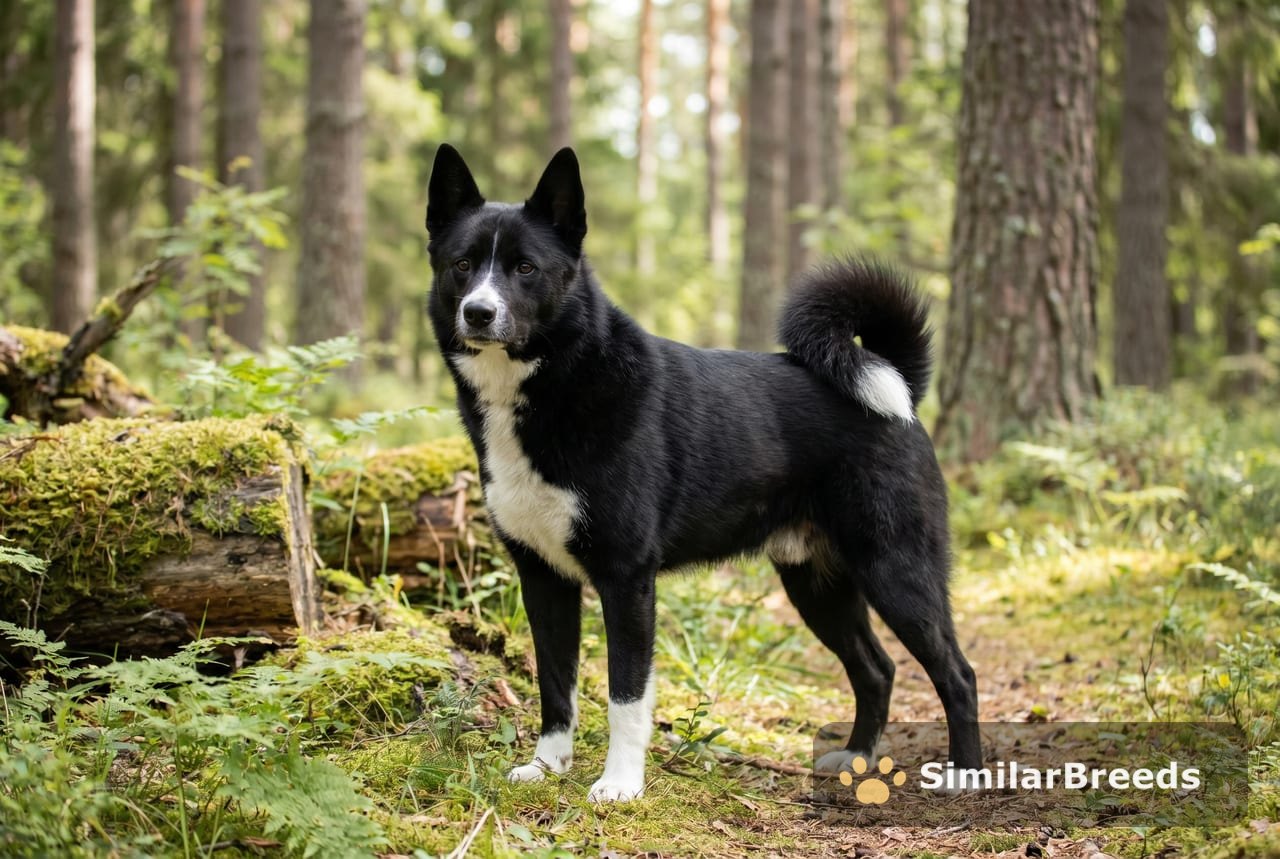
**Karelian Bear Dog** is another Finnish working spitz bred for demanding outdoor conditions. It shares the tough constitution and high energy but is considerably more assertive and was developed for big-game hunting, making it a more demanding dog to keep.
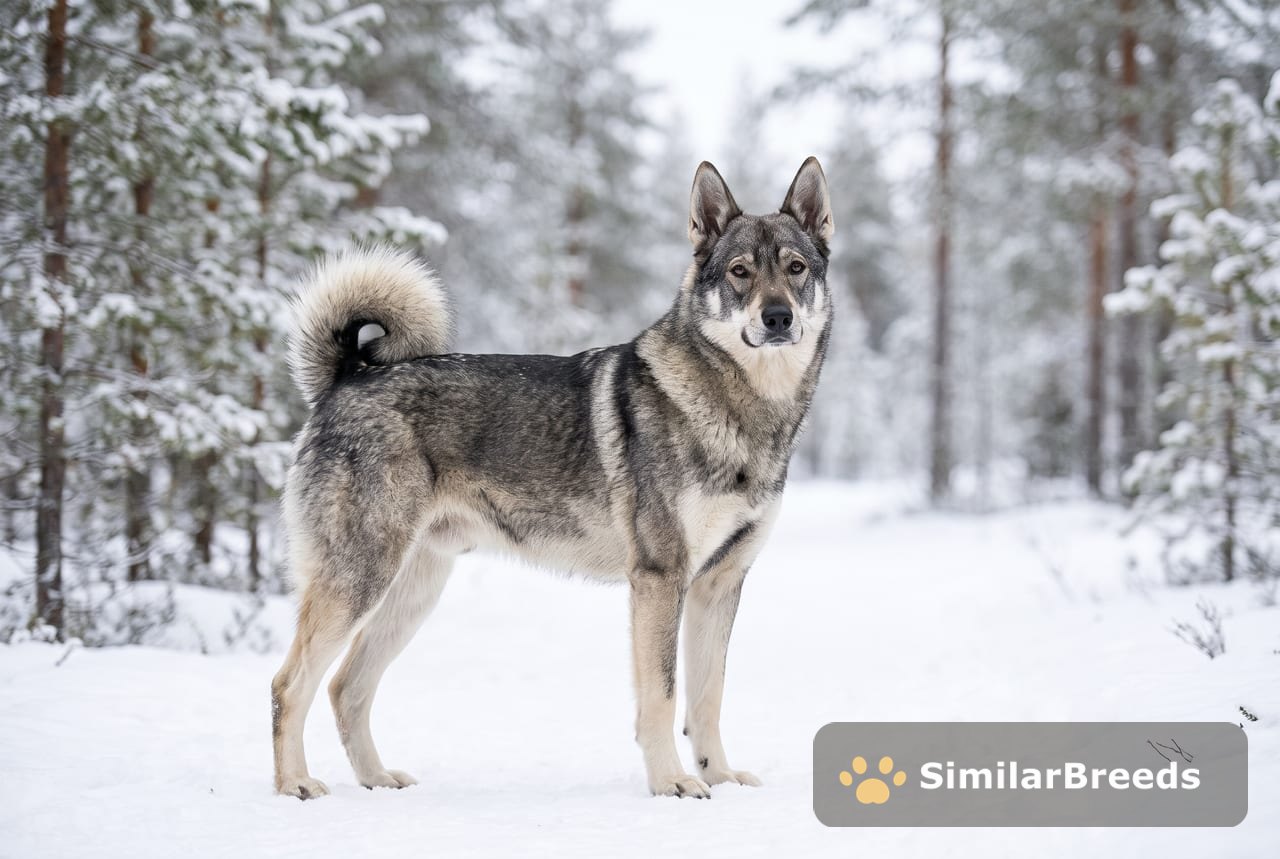
**Jämthund (Swedish Elkhound)** is a large northern spitz bred in Sweden for moose hunting. It shares the Lapponian Herder's build, stamina, and thick coat for cold climates, though it is bigger and more prey-focused.
**Norwegian Elkhound (Grey)** is the most widely known Nordic hunting spitz. Similar in size and double-coat type to the Lapponian Herder, it is energetic, independent, and vocal, with a herding and hunting background common to Scandinavian working dogs.