Purpose & Origin
The Toy Manchester Terrier traces its roots to England's Black and Tan Terrier, a breed prized for rat-killing since the sixteenth century. Working-class Manchester was the breed's real crucible, where rat-killing contests and dog racing were popular pastimes. Crossings between the Black and Tan Terrier and the Whippet produced a more versatile dog, and by about 1860 this type was recognized as the Manchester Terrier. The Italian Greyhound likely entered the mix at some point, which helps explain the breed's wide size variation.
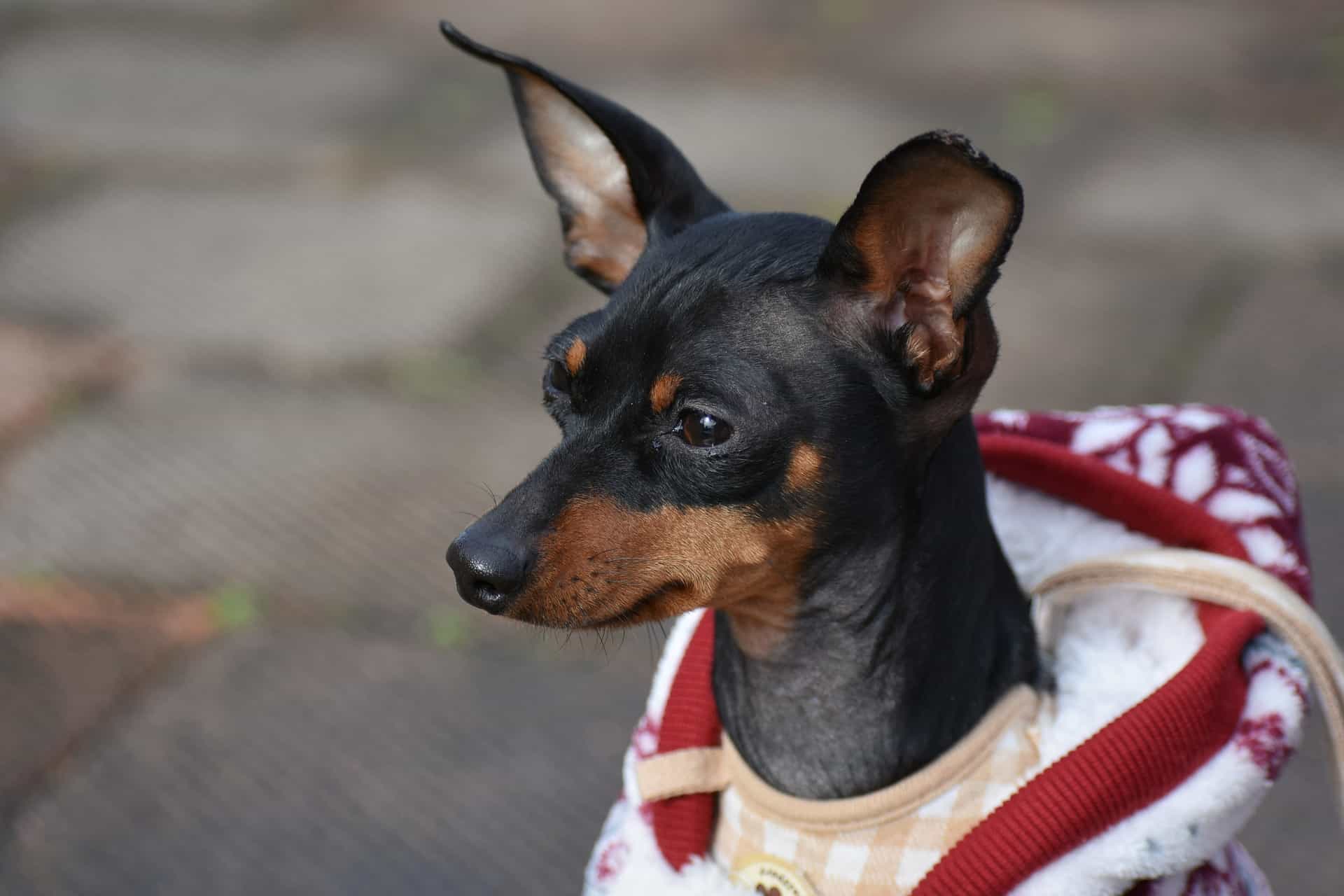
A toy variety was already described in an 1881 standard, but early enthusiasm for miniaturization led breeders too far, producing frail specimens. Breeders corrected course and settled on a small but sturdy toy version, generally under 12 pounds. The AKC treated the Standard and Toy as separate interbreeding breeds until 1959, when both became varieties of one breed. One notable distinction: unlike the Standard, the Toy's ears are never cropped.
Temperament & Behaviour
Despite its small size, the Toy Manchester is still a terrier, with the scrappiness and hunting drive that implies. It is playful and affectionate with its own people, but it keeps strangers at arm's length, often showing reserve that can tip into timidity. Small pets and quick-moving animals will trigger the chase instinct, and this dog is not reliably friendly with other dogs.
As a watchdog it is exceptional, alert and vocal, though its protection ability is naturally limited by its size. What sets it apart from many terriers is a genuine sensitivity: it is among the gentler, more biddable members of the group, though that sensitivity means it does not respond well to harsh handling.
Activity & Training
Exercise requirements are modest. A daily walk and indoor play sessions are enough for this breed, though it genuinely enjoys a romp in a safe, fenced yard. Cold weather is a real problem: with its fine, close coat and minimal body fat, the Toy Manchester feels the chill quickly and needs a warm bed and, in winter, a coat outdoors. Training is another matter. The ease-of-training score is low, reflecting the breed's independent streak. It is smart enough to learn quickly but not always inclined to comply. Consistent, reward-based sessions kept short tend to work better than prolonged drilling.
Grooming
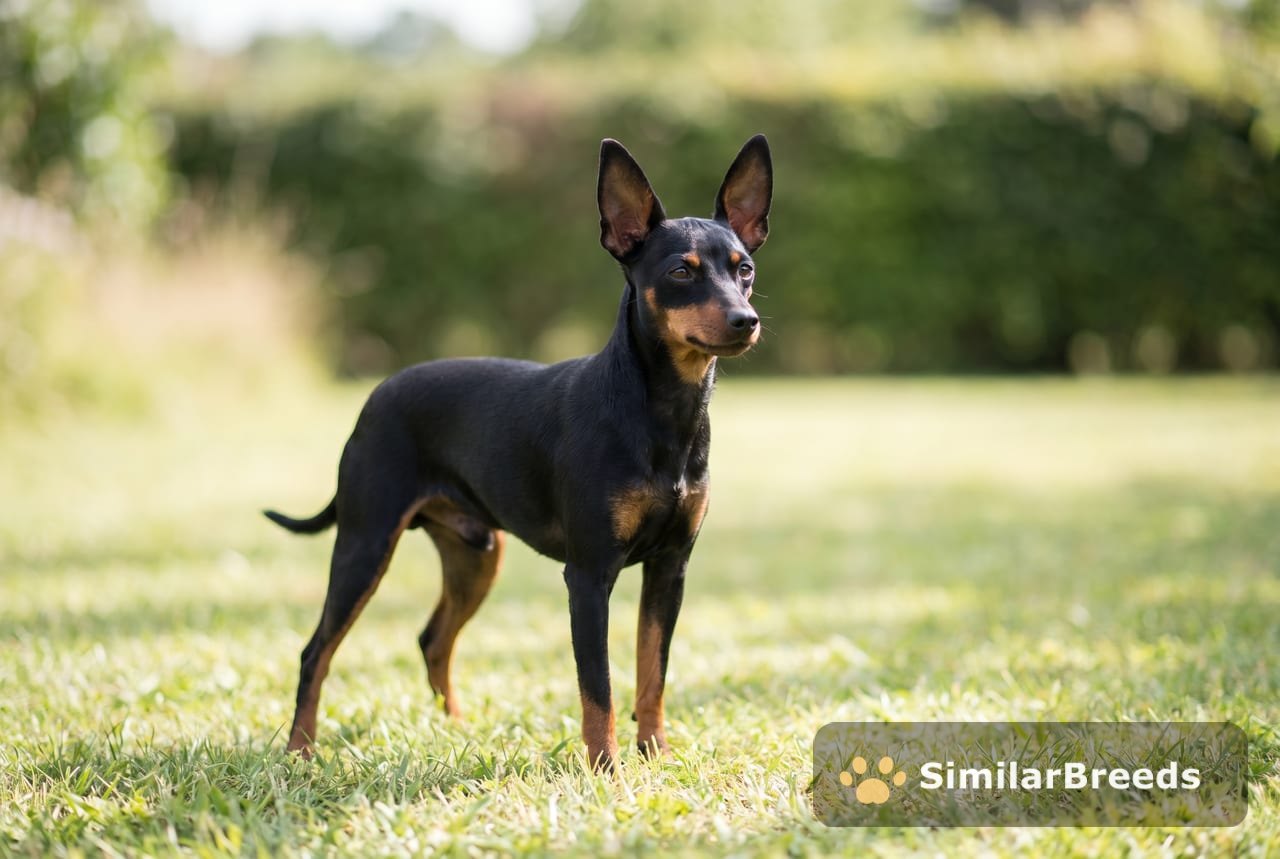
Coat care is about as low-maintenance as it gets. The smooth, tight black-and-tan coat needs nothing more than an occasional brush to remove loose hair and a wipe-down to keep the tan markings clean. Bathing is infrequent. No trimming, no professional grooming appointments. The coat does offer almost no insulation, which loops back to the cold-sensitivity issue.
Health
The Toy Manchester is a long-lived breed, with a typical lifespan of 14 to 16 years. Minor concerns include von Willebrand's disease and cardiomyopathy. Conditions seen occasionally include Legg-Perthes disease, hypothyroidism, deafness, progressive retinal atrophy, and patellar luxation. Recommended health screens cover eyes, hips, and DNA testing for von Willebrand's disease.
Why these breeds are similar
The **Manchester Terrier (Standard)** is the obvious first comparison: the Toy is literally a size variety of the same breed, sharing identical history, coat, coloring, and character. The **English Toy Terrier** is so closely related that it is considered the same dog under a different name in many countries, a direct parallel development from the same Black and Tan Terrier stock.
The **Miniature Pinscher** is not a Manchester descendant but arrives at a strikingly similar look through independent German development, with the same sleek black-and-tan coat, similar build, and alert, energetic temperament. The **Russian Toy** rounds out the group as another fine-boned, smooth-coated toy breed with terrier-like alertness and a strong bond with its owner, sharing the Toy Manchester's sensitivity and reserved attitude toward strangers.
Trait ratings
- Energy level
- 4/5
- Exercise requirements
- 1/5
- Playfulness
- 4/5
- Affection level
- 4/5
- Friendliness toward dogs
- 1/5
- Friendliness toward other pets
- 2/5
- Friendliness toward strangers
- 1/5
- Ease of training
- 1/5
- Watchdog ability
- 5/5
- Protection ability
- 1/5
- Grooming requirements
- 1/5
- Cold tolerance
- 1/5
- Heat tolerance
- 4/5