Miniature Pinscher
From Germany
Purpose & Origin
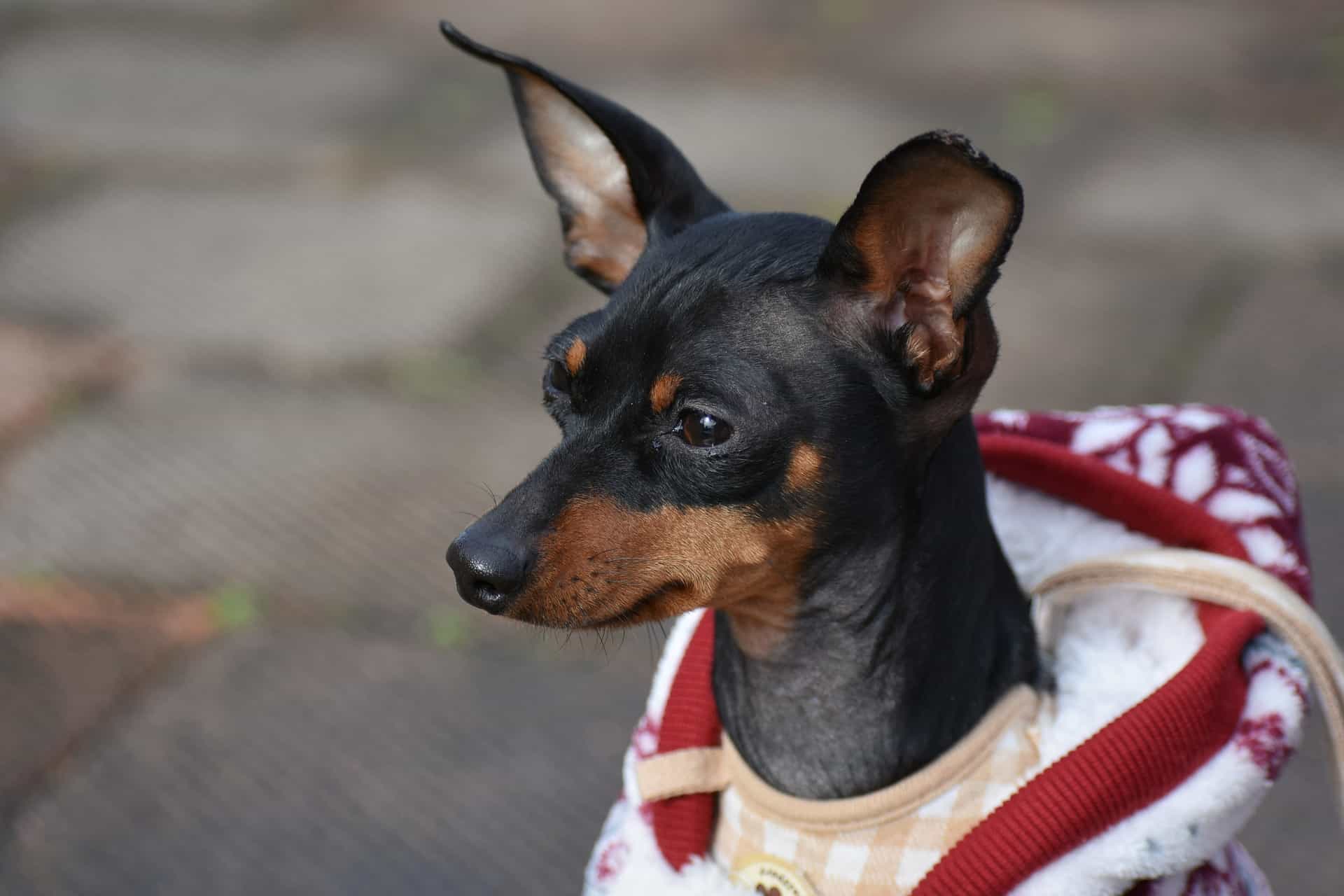
The Miniature Pinscher is not a shrunken Doberman. It is the older of the two breeds, with paintings from the seventeenth century depicting a cat-sized red dog of clear Min Pin type. The breed most likely came from crossing a small short-haired German Pinscher with the Dachshund and Italian Greyhound, and the influence of all three ancestors is still visible today: the sturdy build and black-and-tan markings from the Pinscher, the fearlessness and rich red coloration from the Dachshund, and the elegance and lively gait from the Italian Greyhound.
By the early 1800s it was bred as a distinct type called the Reh Pinscher, named for the small red roe deer it resembled. A brief craze for breeding ever-tinier specimens in the late 1800s produced unhealthy, structurally poor dogs, but breeders corrected course around 1900 and returned the emphasis to soundness. The breed became a show-ring star in pre-WWI Germany, later gained a foothold in America, and earned AKC recognition in 1929. It carries the nickname "King of Toys."
Temperament & Behaviour
The Min Pin is one of the most energetic dogs alive, in any size class. It is ceaselessly busy, intensely curious, and utterly bold about everything, including dogs three times its size. The terrier ancestry comes through in a stubborn independence that makes it quick to act on its own judgment and slow to defer to yours. It can be scrappy with other dogs and will readily chase smaller animals, so multi-pet households require careful management. With strangers it is noticeably reserved, though not shrinking; it makes a surprisingly effective watchdog for its size. With its own family it is affectionate and playful, though not especially soft or clingy.
Activity & Training
Despite its energy level, the Min Pin is compact enough that its daily exercise quota can be met indoors through active play sessions, though outdoor time is welcome when the weather cooperates. Cold weather is genuinely a problem for this thin-coated, low-body-fat dog; it chills quickly and should not be left outside in low temperatures.
Training is the harder part. Ease of training scores at the bottom of the scale, and that is an honest read: the Min Pin is independent, easily bored, and unlikely to find repetitive obedience drills rewarding. Short sessions, high-value rewards, and a patient handler who does not confuse firmness with harshness get the furthest. This is not a beginner's dog.
Grooming
Coat maintenance is about as low as it gets. The short, smooth coat needs only occasional brushing to clear dead hair and keep it looking tight. No trimming, no stripping, no professional grooming cycle required. Routine care covers nails, ears, and teeth.
Health
The Min Pin lives 12 to 14 years. The source lists no major concerns. Minor issues include Legg-Perthes disease, cervical disk problems, patellar luxation, hypothyroidism, heart defects, and MPS VI. Progressive retinal atrophy appears occasionally. Responsible breeders test knees and may screen hips, eyes, and DNA for MPS.
Why these breeds are similar
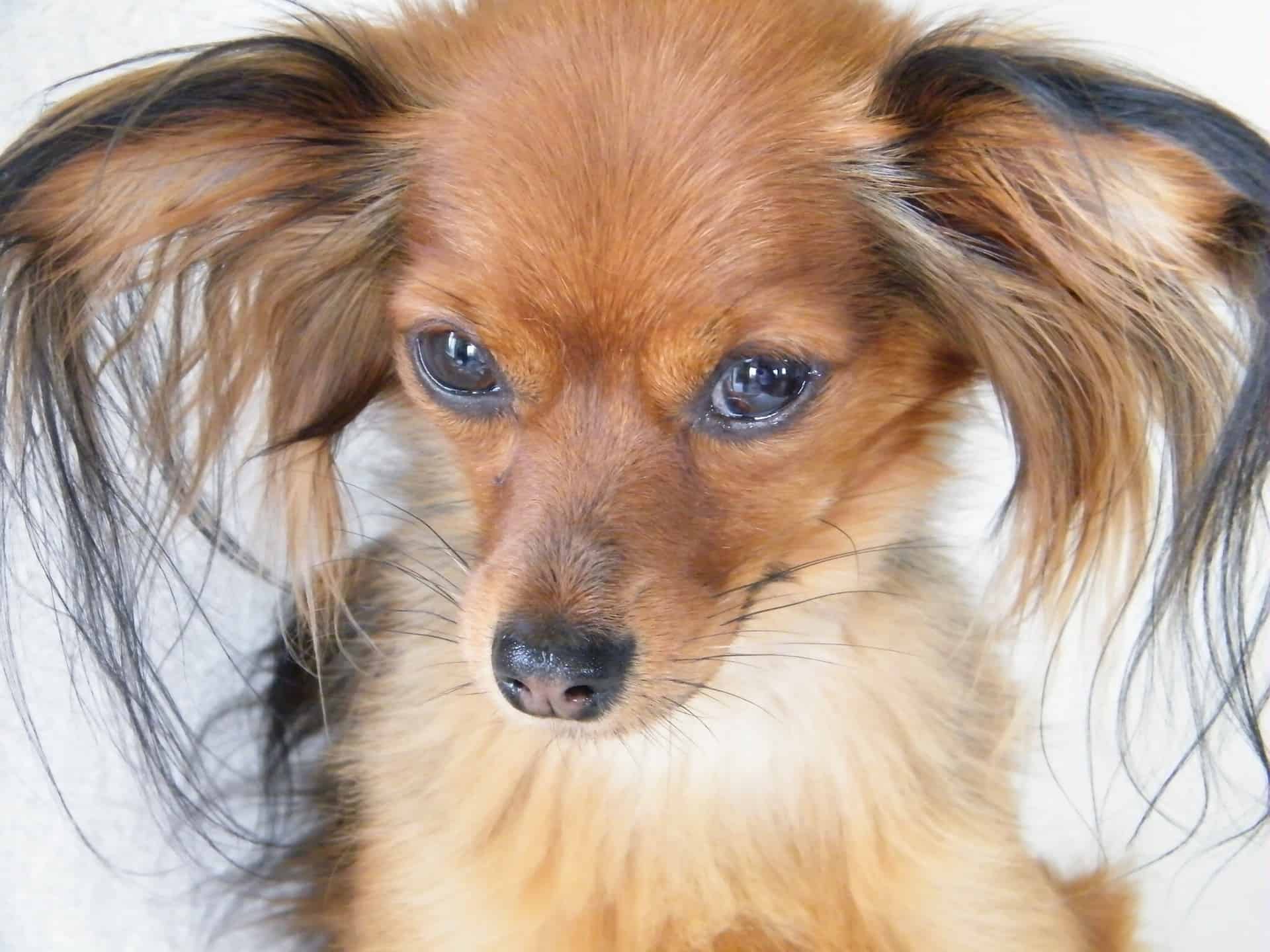
The Russian Toy is the closest parallel: another small, lively, thin-coated European toy with sharp watchdog instincts, a spirited rather than lapdog temperament, and a frame that suggests refinement over robustness. Both share a common need for warmth and an owner who does not mistake "toy" for "easy."
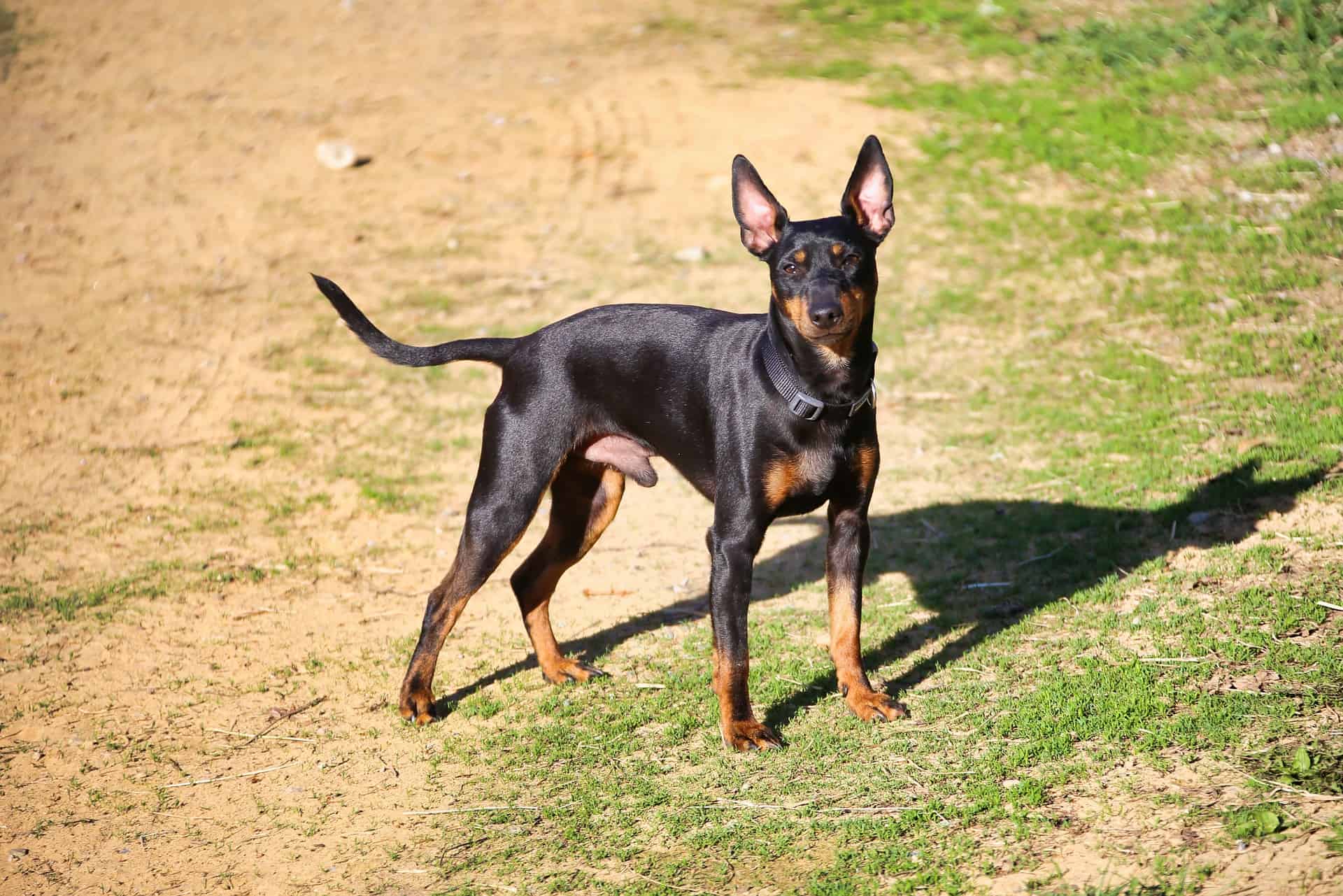
The English Toy Terrier overlaps on ancestry and attitude. It descends from the same small-terrier-meets-sight-hound lineage, carries the same black-and-tan pattern, and has the same wired, alert quality that makes both breeds excellent watchdogs despite their size.
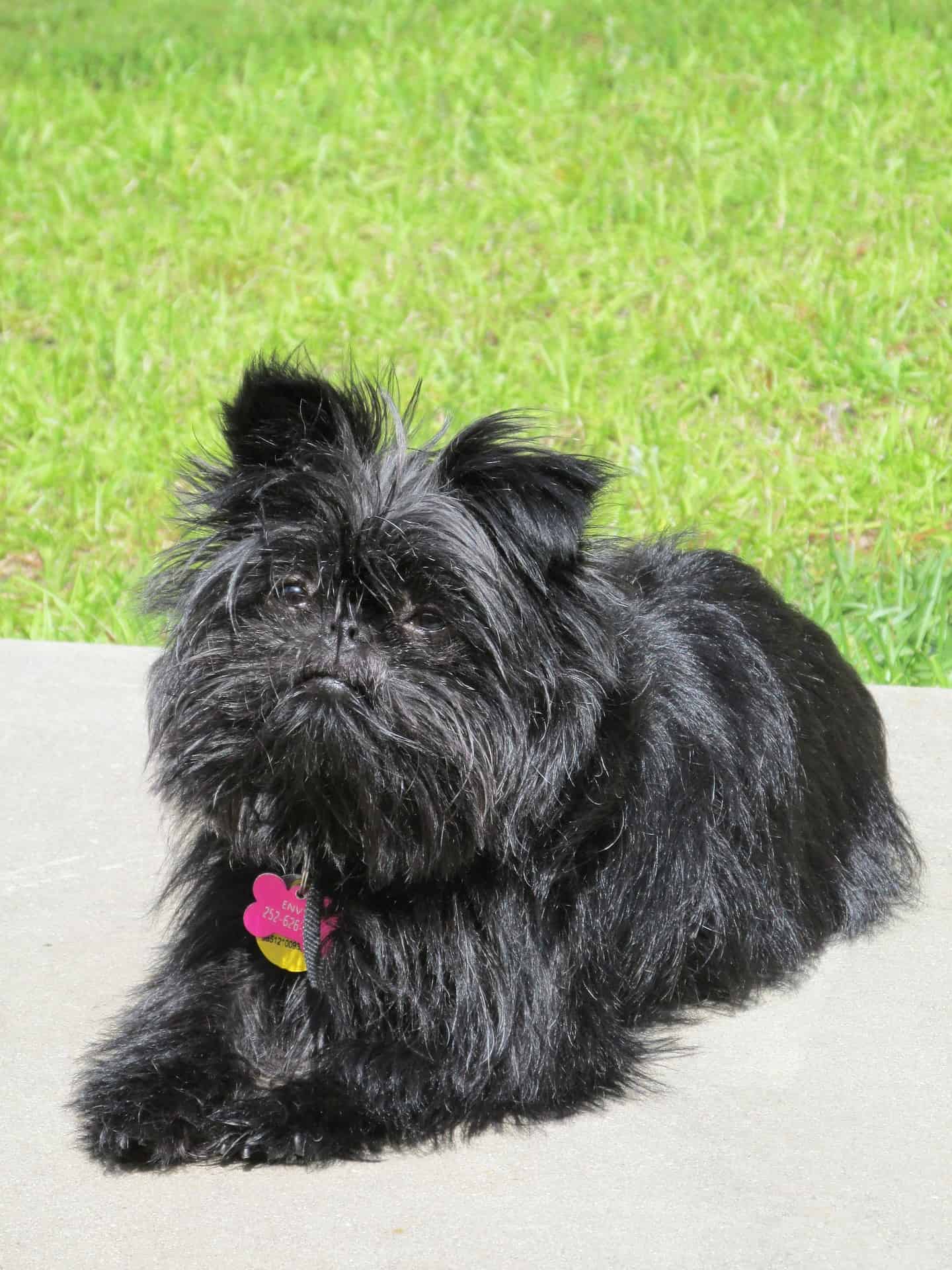
The Affenpinscher is the German cousin, also in the Pinscher family, also compact and fearless. It shares the Min Pin's stubborn independence and tendency to challenge larger dogs, though its rough, monkey-faced coat places it in a different grooming tier entirely. All three are small dogs that do not behave like small dogs.
Trait ratings
- Energy level
- 5/5
- Exercise requirements
- 2/5
- Playfulness
- 5/5
- Affection level
- 3/5
- Friendliness toward dogs
- 2/5
- Friendliness toward other pets
- 1/5
- Friendliness toward strangers
- 1/5
- Ease of training
- 1/5
- Watchdog ability
- 5/5
- Protection ability
- 1/5
- Grooming requirements
- 1/5
- Cold tolerance
- 1/5
- Heat tolerance
- 3/5