Mastiff
Also known as English Mastiff
From Great Britain
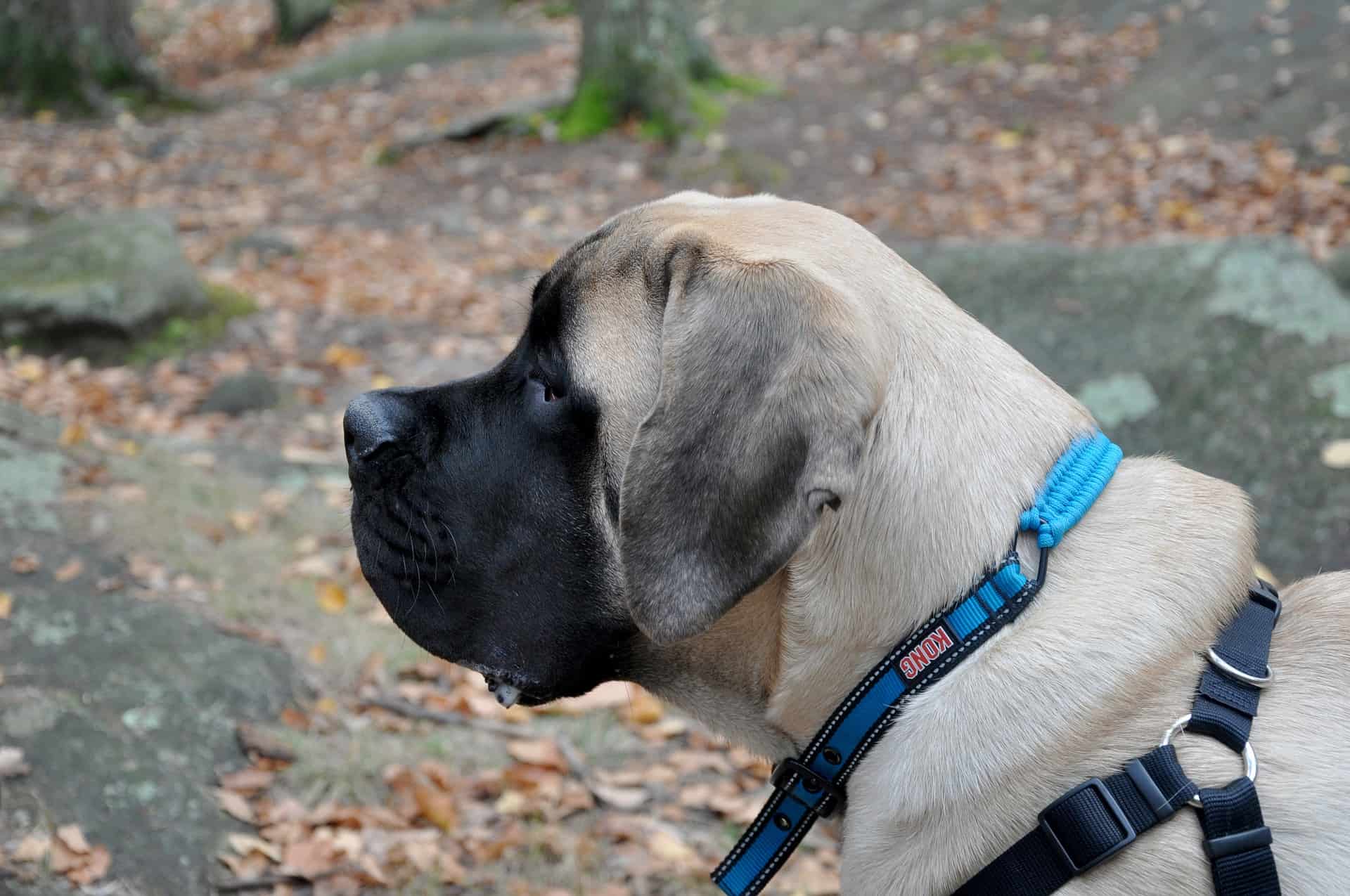
The Mastiff, despite a history of guarding and fighting, is pleasantly calm and easy to get along with. The most major disadvantage of caring, feeding, and training this breed is its massive size. A Mastiff enjoys contact, ideally human company, and is willing to give devotion and love. It is smart and teachable, but it requires an owner with both knowledge and fitness to maintain strong command and guarantee that its defending tendencies do not lead to aggression.
Purpose & Origin
The Mastiff is the original from which the entire mastiff family of dogs takes its name, a distinction that also makes its history difficult to trace cleanly. Its roots are ancient: by the time Julius Caesar arrived in Britain, mastiffs were already serving as war dogs and gladiators. Through the medieval period they worked as guard and hunting dogs, reportedly kept by Kublai Khan in numbers reaching five thousand. They later fell into bull-baiting, bear-baiting, and dog fighting, cruel practices that persisted in England even after the official ban in 1835.
The breed we know today traces partly to the Lyme Hall line, founded by the Mastiff of Sir Piers Legh, who stood guard over her wounded master at the Battle of Agincourt until help arrived. Five centuries of that line fed directly into the modern breed. World War II nearly wiped out the Mastiff in England, but enough dogs had reached America by then to preserve the breed, which has grown steadily in popularity since.
Temperament & Behaviour
Despite centuries of fighting and guarding work, the Mastiff today is calm, good-natured, and gentle to a degree that surprises people meeting one for the first time. This is not an aloof or cold watchdog: it is devoted to its family, patient with children, and generally composed indoors. It reserves its suspicion for strangers, which is exactly what you want from a guardian breed, but it is not a dog that looks for confrontation.
The drawback is sheer scale. Everything about managing a Mastiff, from training to feeding to basic daily handling, is harder when the dog weighs up to 190 pounds. An owner without the physical presence and experience to maintain clear authority may find that protective instincts drift into something less manageable.
Activity & Training
Exercise requirements are moderate for such a large dog. A daily walk or a solid play session is enough for an adult. The Mastiff does not cope well with heat, so summer exercise should be kept to cooler parts of the day. Training is achievable, the breed is intelligent and willing enough, but the combination of size and independent character means inconsistency gets expensive fast. Early socialisation and obedience work are not optional.
Grooming
The Mastiff's short coat needs very little maintenance. Brushing once a week keeps shedding manageable and the coat in good condition. The real daily task is the drool: Mastiffs drool freely, and owners learn to keep a cloth nearby. Ears and facial wrinkles should be checked and wiped regularly to prevent moisture build-up.
Health
The Mastiff carries significant health risks common to giant breeds. Hip and elbow dysplasia are the primary structural concerns, and gastric torsion (bloat) is a serious and potentially fatal condition that owners must know how to recognise. Osteosarcoma and cardiomyopathy appear in the breed, and lifespan typically runs nine to eleven years. Obesity compounds every joint and cardiac issue, so diet and weight management matter throughout the dog's life.
Why these breeds are similar
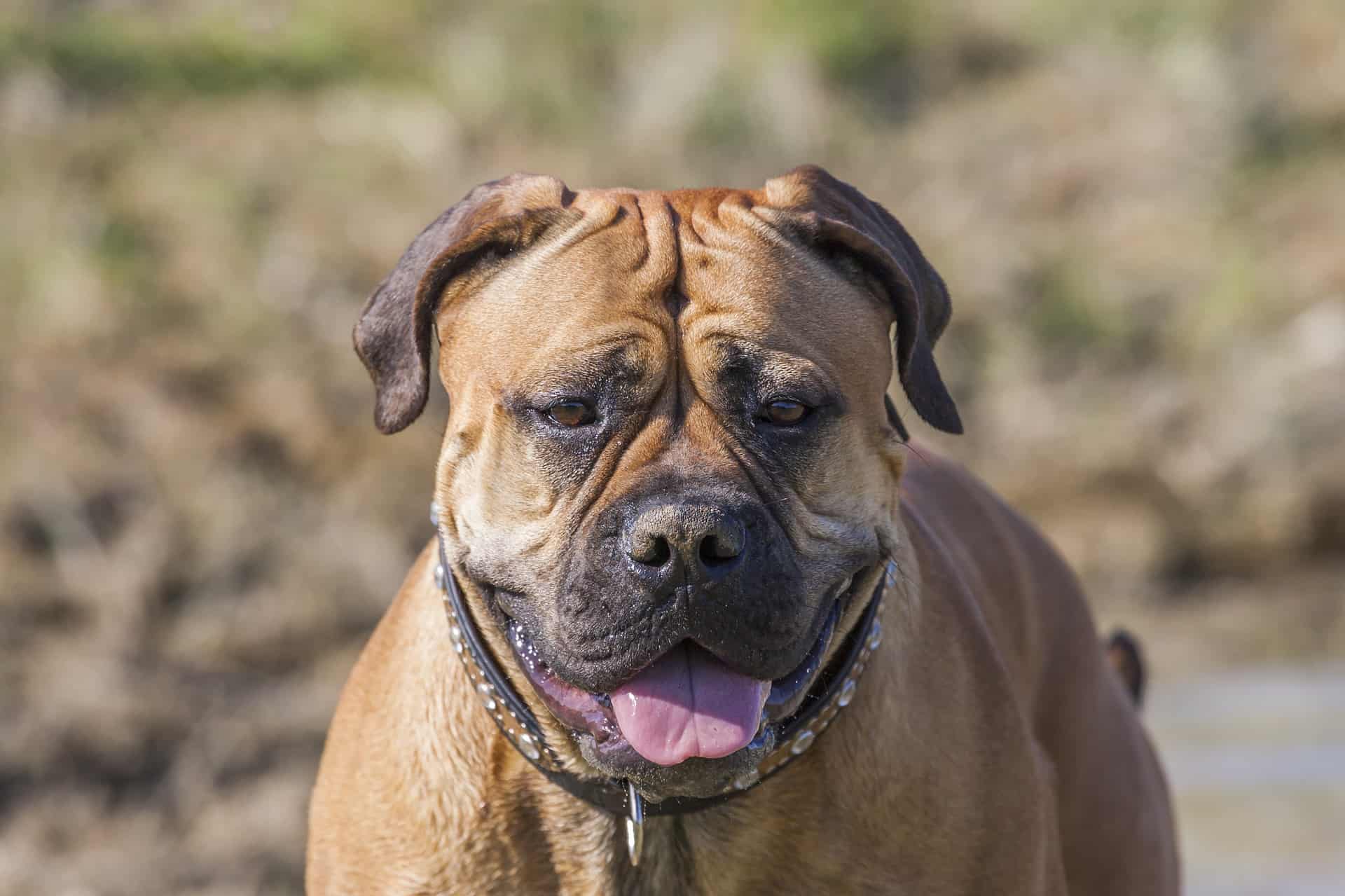
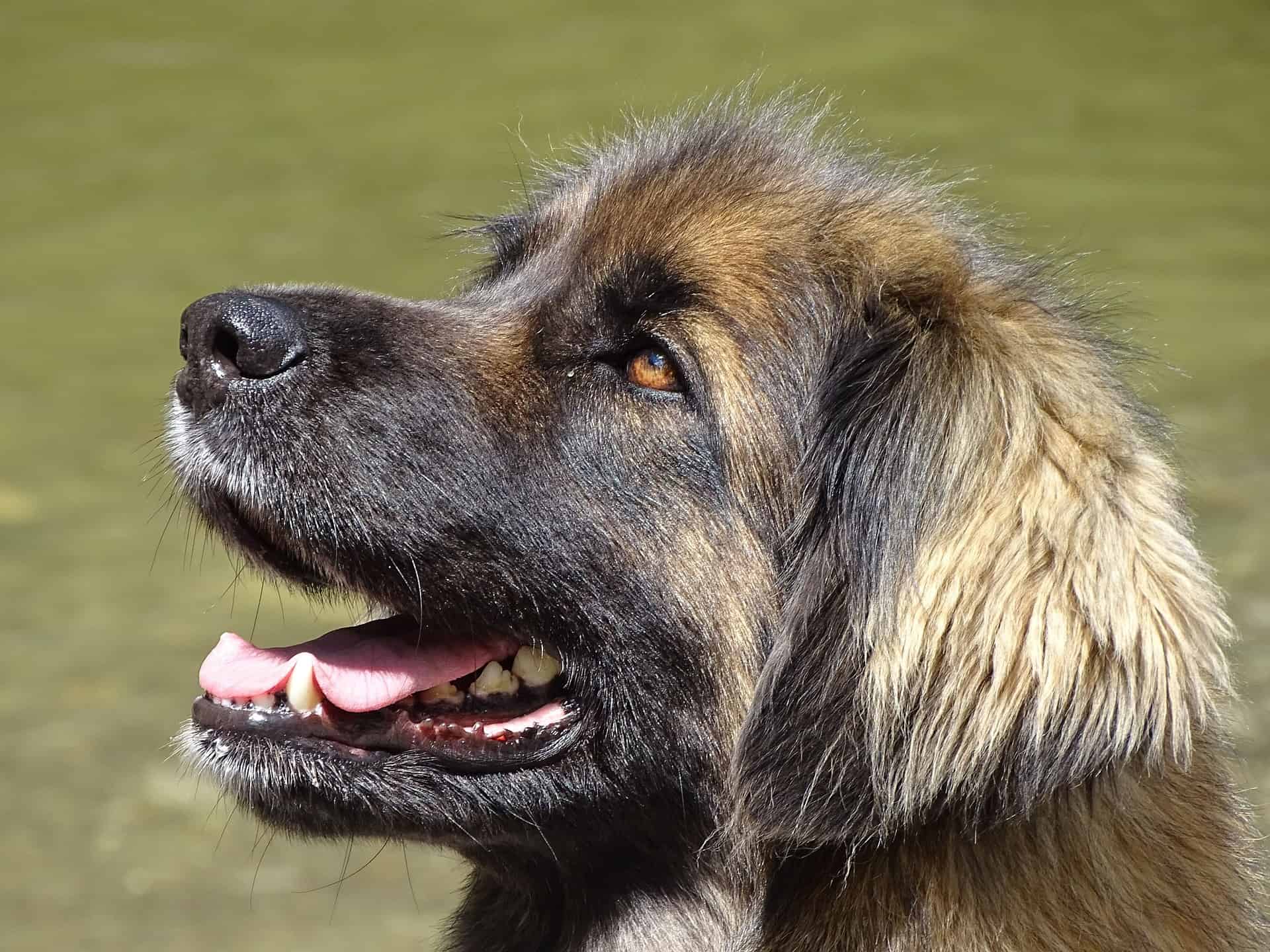
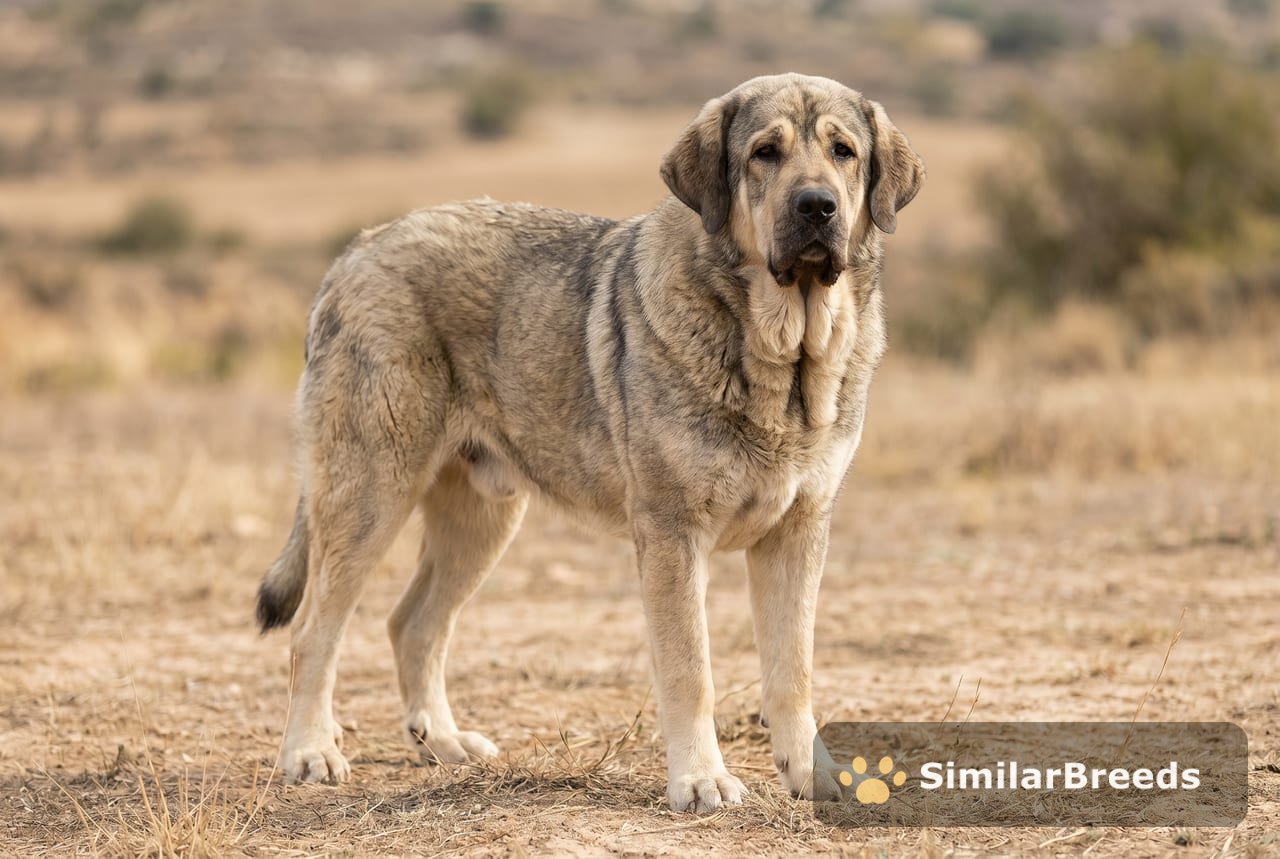
The Bullmastiff is the closest relative, bred in England specifically by crossing Mastiff with Bulldog to produce an estate guard that combined the Mastiff's size and power with greater agility. Temperament, purpose, and build overlap substantially. The Spanish Mastiff is a parallel development, an Iberian livestock guardian from the same ancient mastiff family, sharing the same massive frame, low energy level, and instinctive protective behaviour, though its roots are in flock guarding rather than estate work.
The Leonberger is the outlier in build terms, a lighter and more active dog, but it belongs here because of its similar combination of giant size, calm and affectionate family temperament, and a watchdog instinct that stops well short of aggression.
Trait ratings
- Energy level
- 1/5
- Exercise requirements
- 2/5
- Playfulness
- 1/5
- Affection level
- 4/5
- Friendliness toward dogs
- 3/5
- Friendliness toward other pets
- 4/5
- Friendliness toward strangers
- 2/5
- Ease of training
- 3/5
- Watchdog ability
- 5/5
- Protection ability
- 4/5
- Grooming requirements
- 1/5
- Cold tolerance
- 3/5
- Heat tolerance
- 2/5