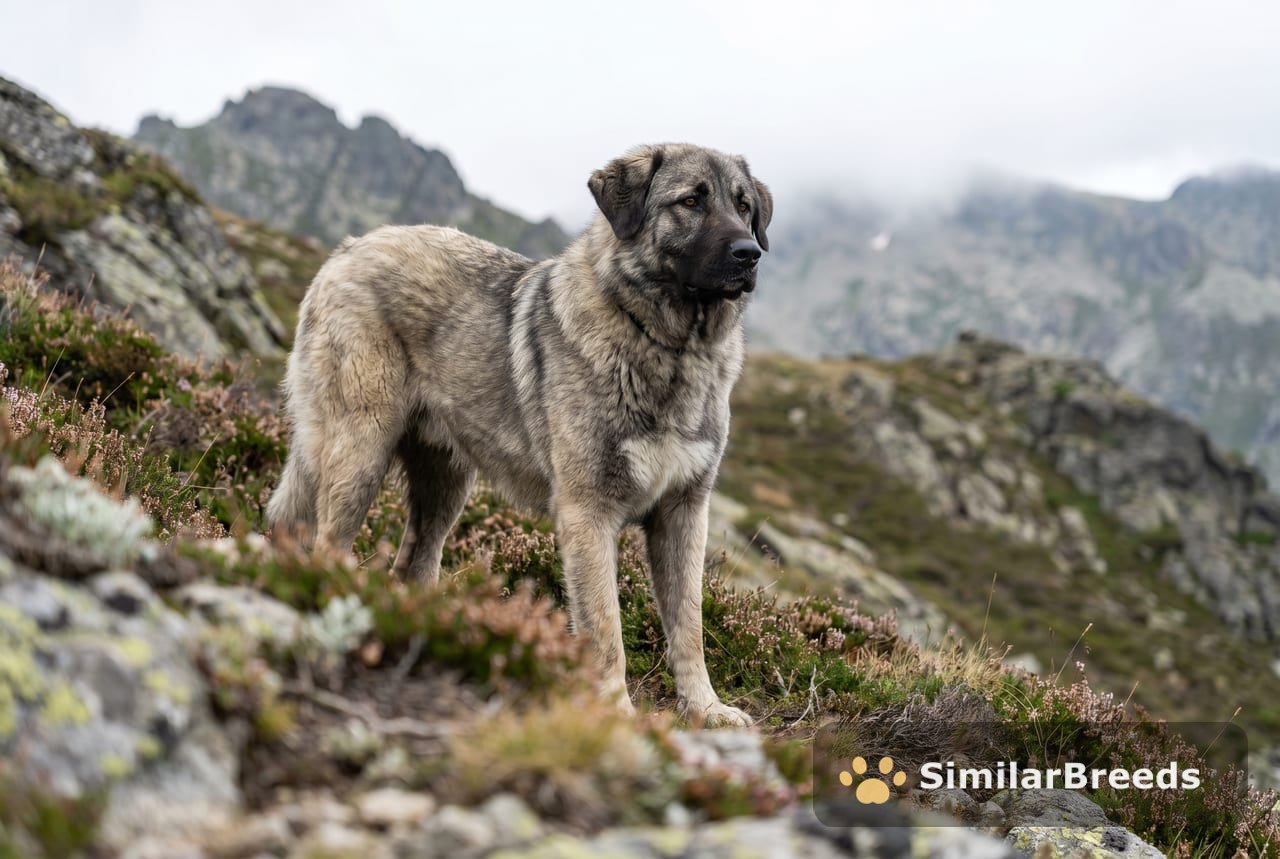
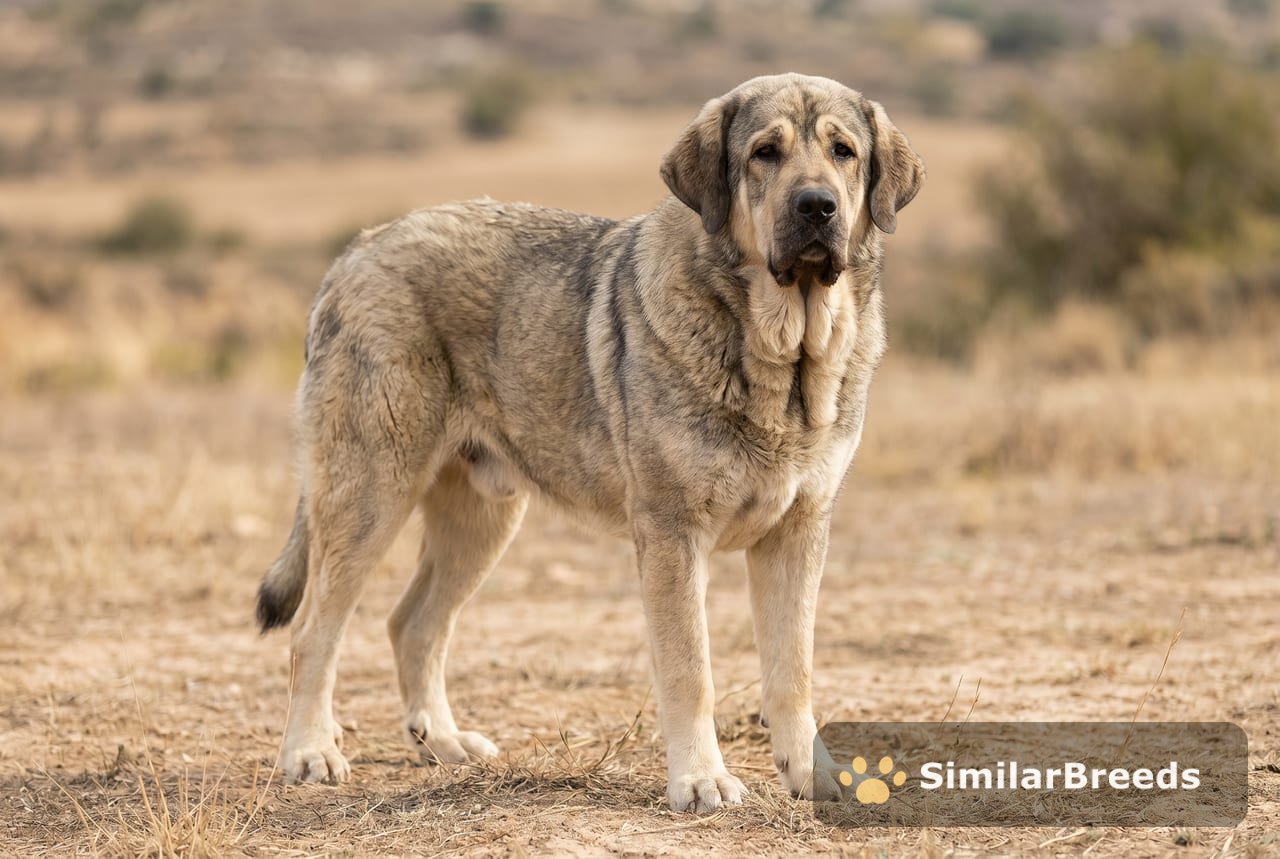
Spanish Mastiff
From Spain
The Spanish Mastiff was originally employed to guard animals and houses in Spain, and it still does so today. In its home country, the breed is equally appreciated as a companion dog. Although this breed is loving and faithful to its family, it can be hostile to outsiders and other dogs.
Purpose & Origin
The Spanish Mastiff is one of the oldest livestock guardian breeds in Europe, known in its homeland as the Mastín Español. Its roots trace to the first millennium BC, when Phoenician traders are believed to have introduced the ancestral stock to Iberia. By the 15th century, written records confirm the breed's central role alongside the Mesta, the guild of Spanish shepherds: these dogs walked the transhumance routes with vast Merino flocks, holding off wolves.
The breed also served in boar hunting and, more recently, as a property guardian. Today it remains a working livestock guard in the remote hills of Castile and Extremadura, though small numbers have reached enthusiasts in Germany, Switzerland, and the United States.
Temperament & Behaviour
Calm, self-possessed, and deeply loyal to its people, the Spanish Mastiff bonds closely with its family and is notably gentle with children it knows. Around strangers and unfamiliar dogs it is instinctively reserved, a trait rooted in centuries of independent flock defence. It is territorial and will not defer to intruders, but it is not reactive or sharp in the way fighting breeds are. Early and consistent socialisation matters: a 90-kilogram dog that has not learned to read human social contexts becomes genuinely difficult to manage in public. The breed can coexist with other animals it has grown up with, though its wariness of strange dogs does not fully disappear.
Activity & Training
The Spanish Mastiff is not a high-energy dog, but it needs regular moderate exercise: long daily walks rather than sprinting or fetch sessions. It was bred to patrol territories at a steady pace, and that need remains. A small apartment is not a suitable environment.
Training requires patience. This is an intelligent breed, but one that evolved to make independent judgements without handler direction. It does not defer to commands the way a retriever does and will not drill for praise alone. Reward-based methods work better than compulsion. First-time owners who want a reliably obedient dog should look elsewhere.
Grooming
The coat is dense and straight, moderately long, and sheds year-round with heavier seasonal blows. Weekly brushing handles normal periods; during peak shedding a deshedding rake two or three times a week is practical. The large ear canals trap moisture and need regular checking. The deep dewlaps and lip folds need occasional cleaning to prevent bacterial buildup.
Health
Lifespan is typically 10 to 12 years. The main concerns are hip and elbow dysplasia and gastric dilatation-volvulus (GDV, or bloat). GDV is a medical emergency: feed two smaller meals daily rather than one large one, and avoid vigorous exercise around mealtimes. Responsible breeders test for hip and elbow scores.
Why these breeds are similar
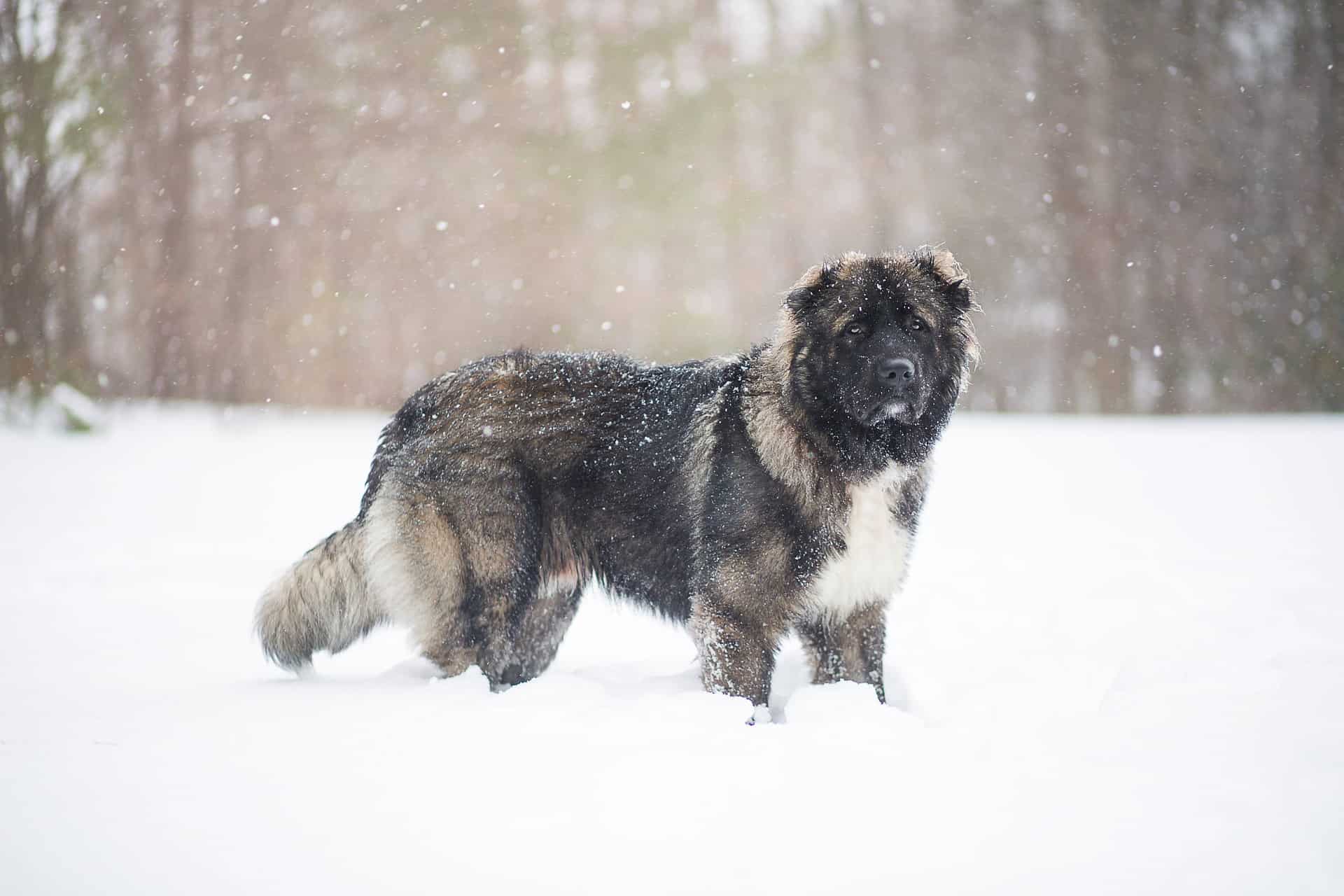
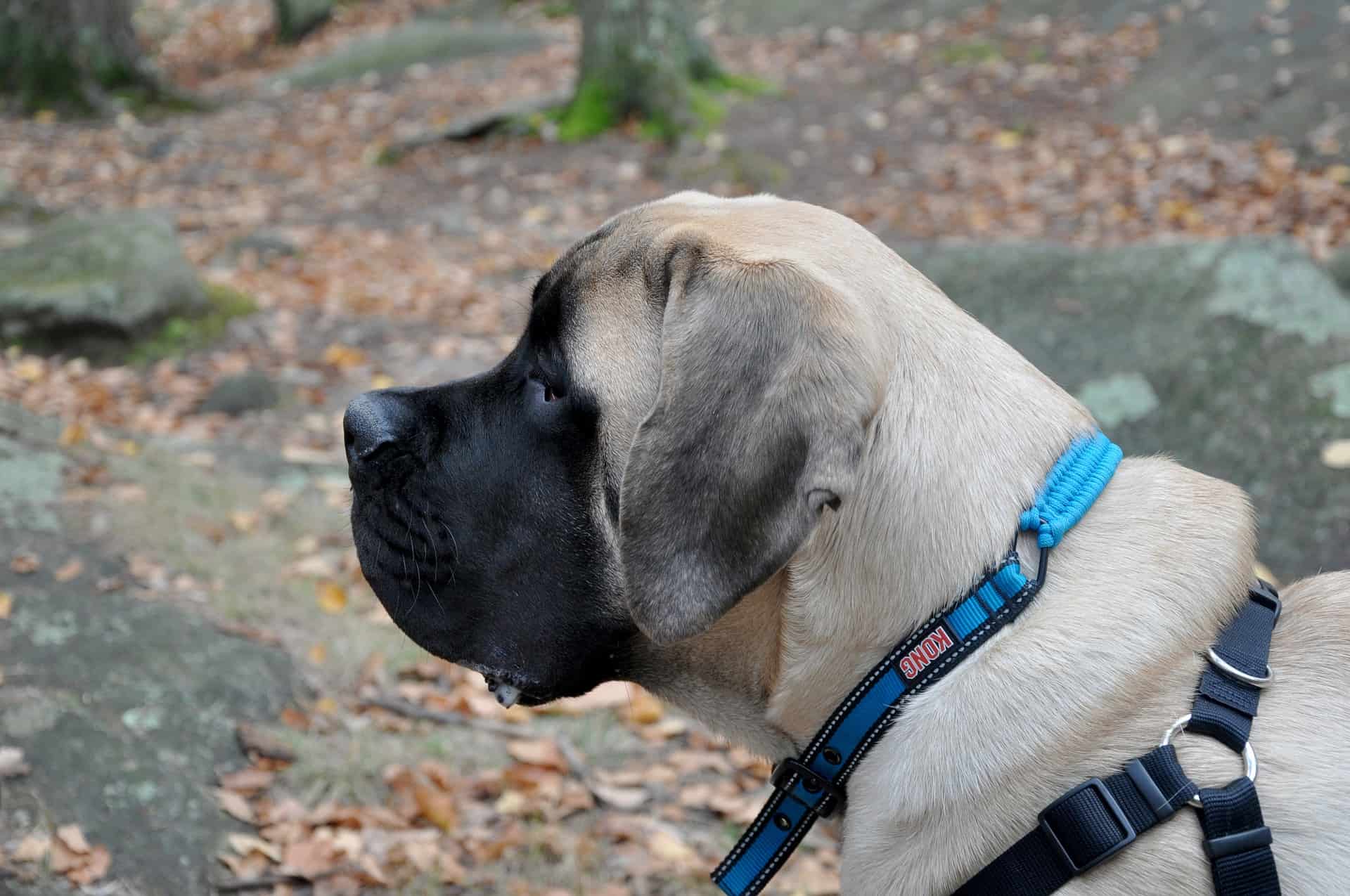
**Estrela Mountain Dog** shares the same Iberian livestock-guardian tradition, similar size, and a comparable disposition toward strangers, making it the closest functional parallel. **Caucasian Shepherd Dog** matches the Spanish Mastiff in mass, territorial instinct, and the independence that comes with large flock guardians. **Mastiff** (English) is the molossoid cousin, sharing the broad head, heavy frame, and calm family temperament, though the English Mastiff has no working-livestock heritage.
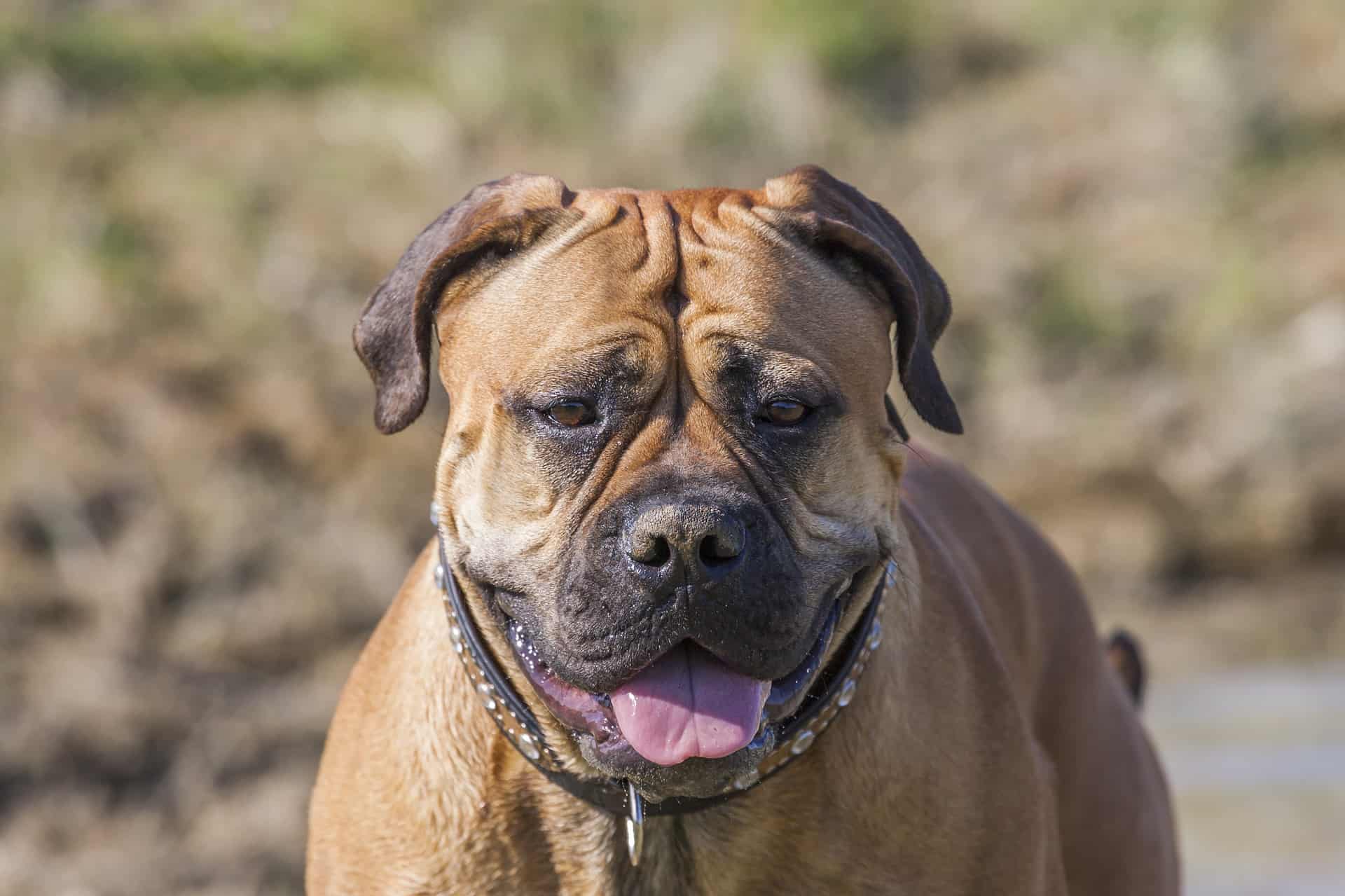
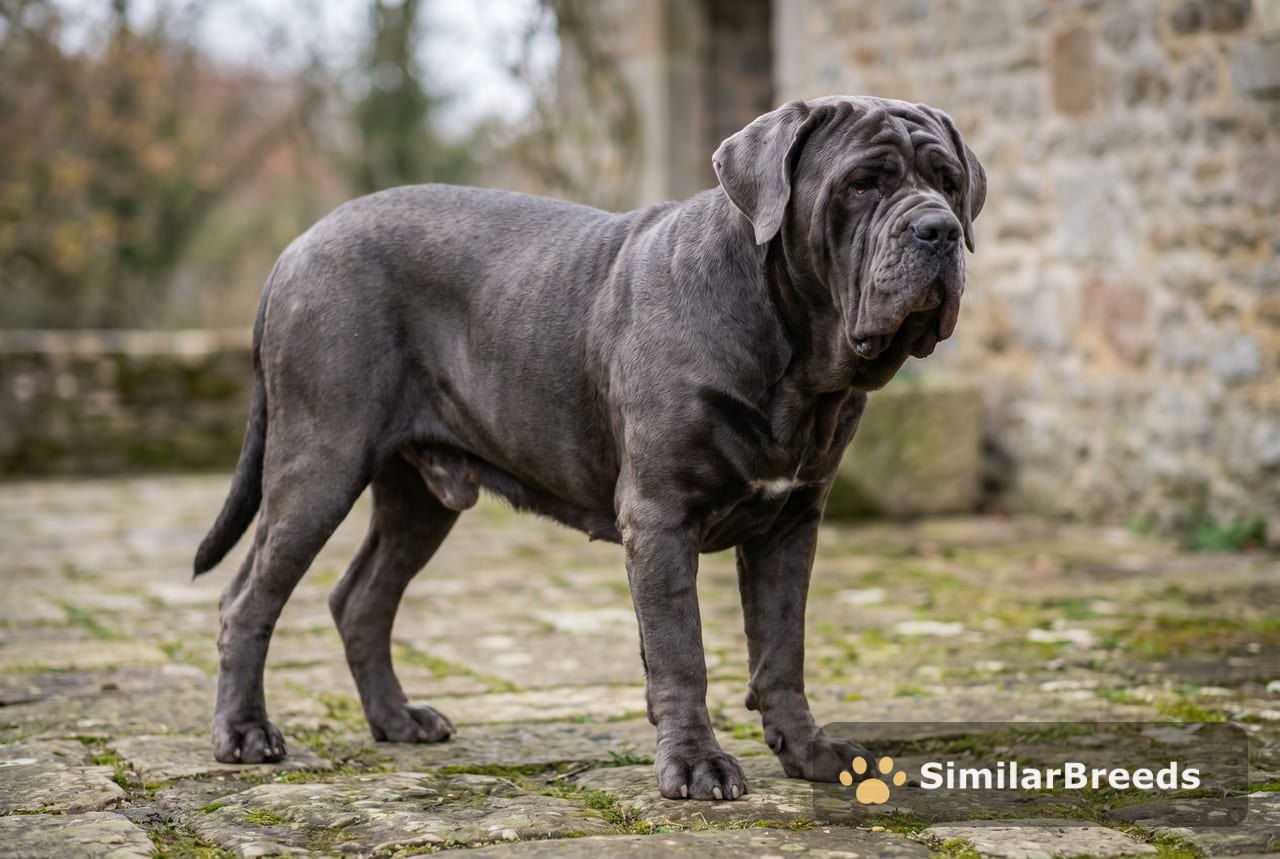
**Bullmastiff** is lighter and more responsive but shares the protective role and the same combination of gentleness at home with suspicion of strangers. **Dogue de Bordeaux** echoes the massive head and family devotion, shaped by a different working history as a French estate guard. **Neapolitan Mastiff** represents the same ancient molossoid lineage with comparable bulk and wariness, though it is more wrinkled, less active, and carries heavier health burdens.