Purpose & Origin
The Schapendoes is a Dutch herding dog whose roots lie in 19th-century Holland, where it worked sheep across flat lowlands and polders. Its name translates roughly as "sheep-jumper," a nod to the breed's remarkable leaping ability. It herded by nudging sheep with nose or shoulder rather than gripping.
By the early 20th century the breed had nearly disappeared, displaced by the more efficient imported Border Collie. Recovery began in the 1940s under Dutch cynologist P.M.C. Toepoel, who gathered surviving specimens and rebuilt the studbook. The breed received formal Dutch recognition in 1952 and FCI recognition in 1970. It remains rare outside the Netherlands. Morris lists possible ancestral crosses with the Bearded Collie, Bergamasco, Briard, Puli, Polish Lowland Sheepdog, and the German Schafpudel, though no documentary proof survives.
Temperament & Behaviour
The Schapendoes is cheerful, alert, and genuinely playful, with the tireless energy of a working herder. It bonds closely with its family and is generally friendly with strangers, though Morris notes a tendency toward being highly strung in some individuals. This is not a dog that tolerates neglect or long isolation well.
The herding instinct stays active without livestock. Without sheep to manage, the breed will redirect onto children, other pets, or anything moving in a group. It is not aggression, but it needs managing in unprepared households.
Activity & Training
The Schapendoes needs around an hour of real daily exercise, not just a slow walk. It excels at agility, which suits both its build and its need for mental work. The jumping ability is genuinely impressive for a dog of this size.
Training is manageable for an engaged owner. The breed is intelligent and willing but carries an independent streak from its herding past and will make its own decisions when training is inconsistent. Positive reinforcement works well; harsh methods amplify the nervous edge the breed can already show. Early socialization is important.
Grooming
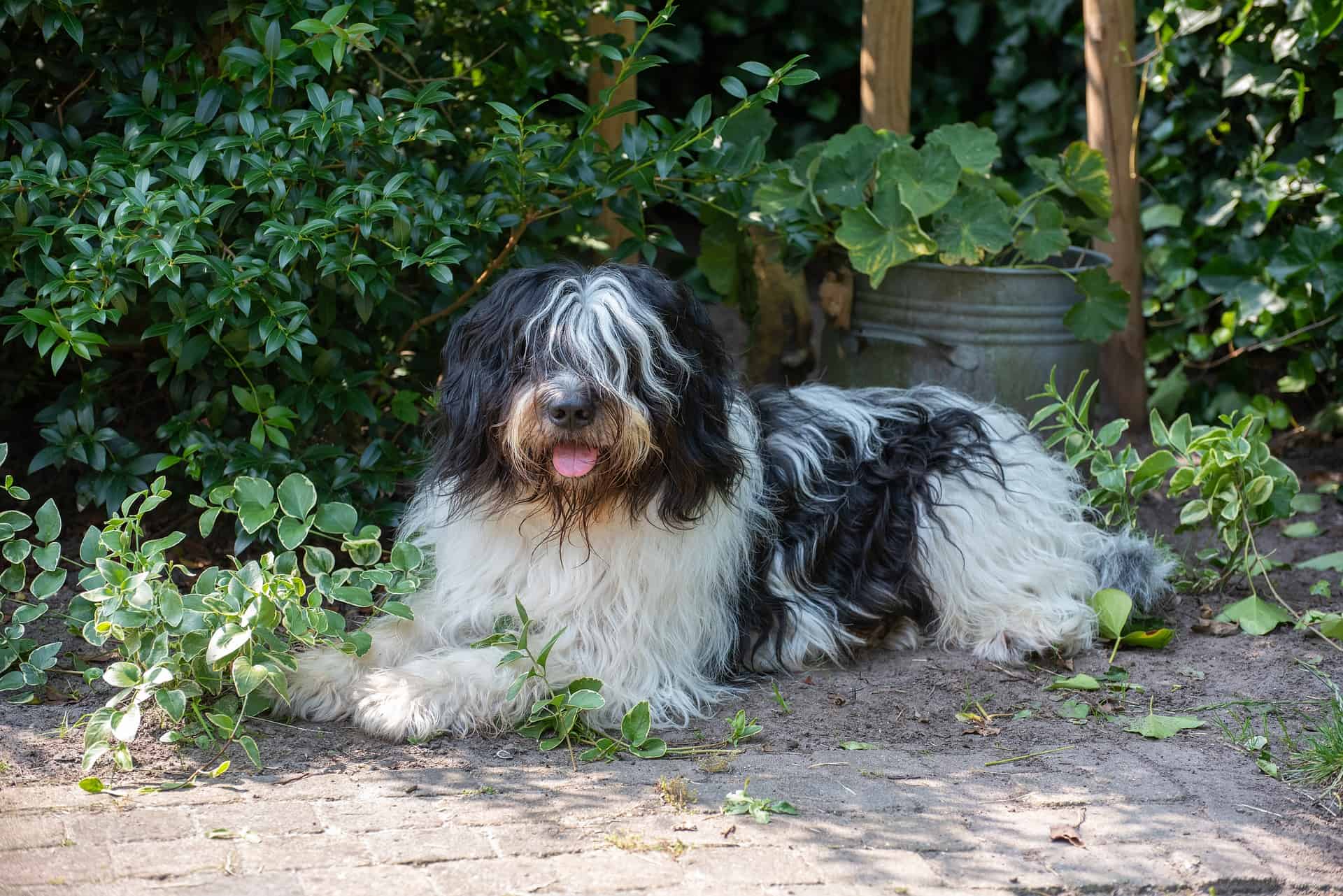
The coat is the main maintenance commitment. It is long, dense, and wavy with a thick undercoat. Colors range from black through grey and blue-grey. The coat mats readily, especially behind the ears, under the legs, and around the collar line. Brushing two to three times per week is the realistic minimum. The beard traps food and moisture and needs regular attention. Drop ears covered by coat restrict airflow, so weekly ear checks matter.
Health
The Schapendoes is generally healthy with a lifespan of 12 to 15 years. Two conditions have documented breed predisposition: progressive retinal atrophy (PRA), which leads to progressive vision loss and eventual blindness, and hip dysplasia. Occasional epilepsy has also been reported. Responsible breeders DNA test for PRA and screen breeding stock for hips. Buyers should request clearances for both.
Why these breeds are similar
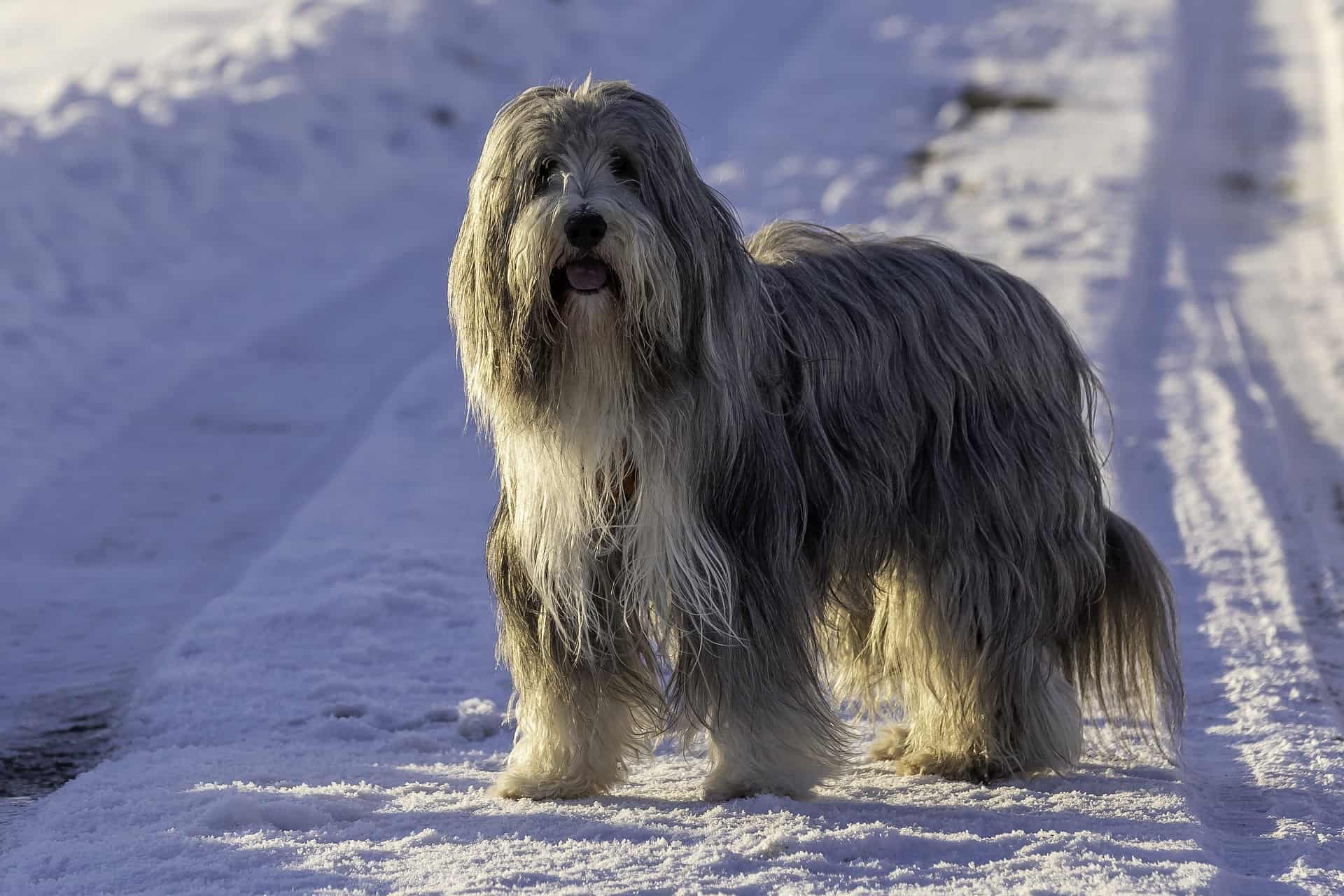
**Bearded Collie:** The most direct parallel. Both are long-coated, shaggy herding dogs of similar size with drop ears and a lively temperament. Morris lists the Bearded Collie as a probable ancestor of the Schapendoes, and the herding style, coat type, and cheerful character align closely.
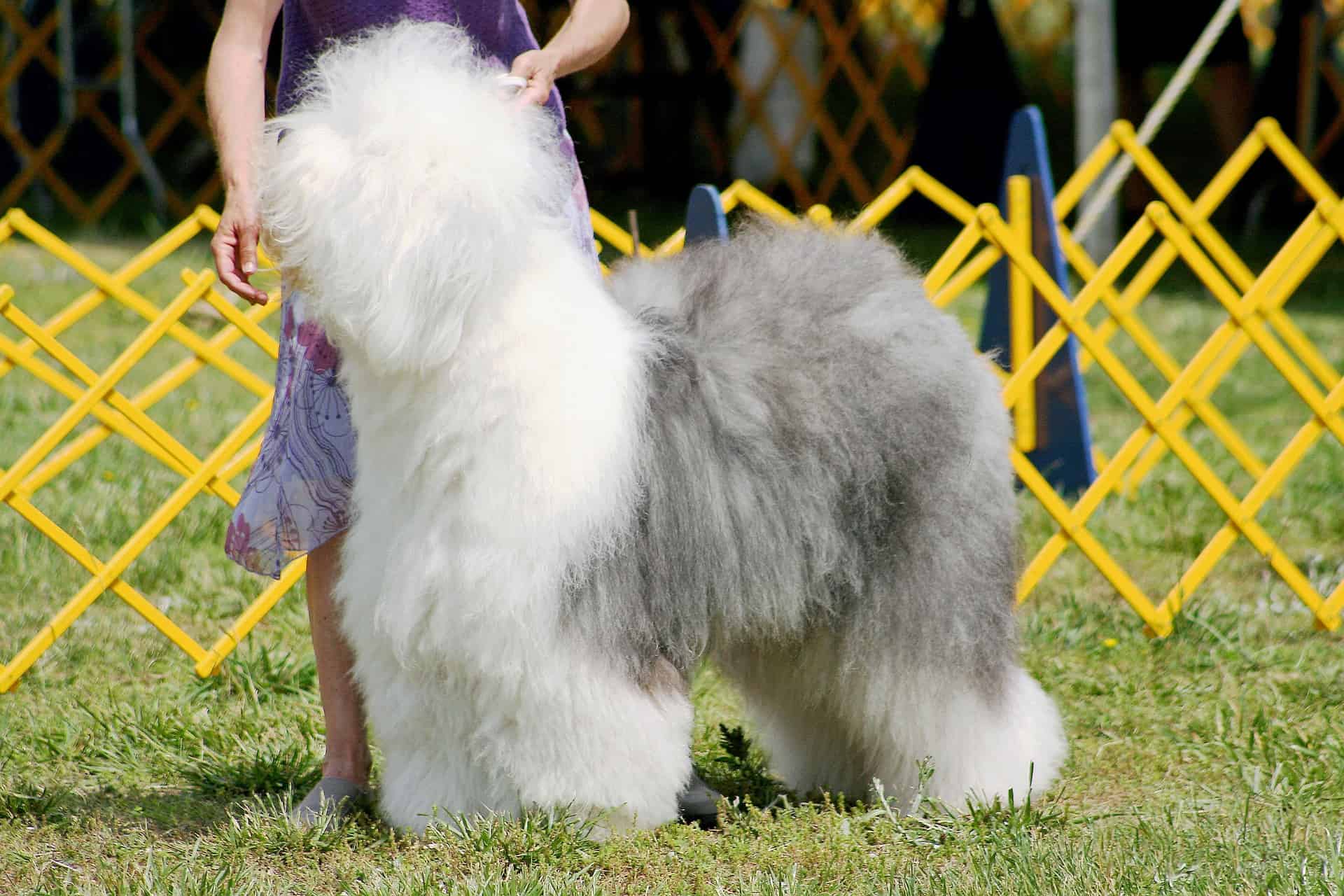
**Old English Sheepdog:** Another profusely coated herder with the same general silhouette and working origin. The OES is heavier and calmer in energy, but the shaggy double coat, herding background, and playful family-dog character make the comparison obvious.
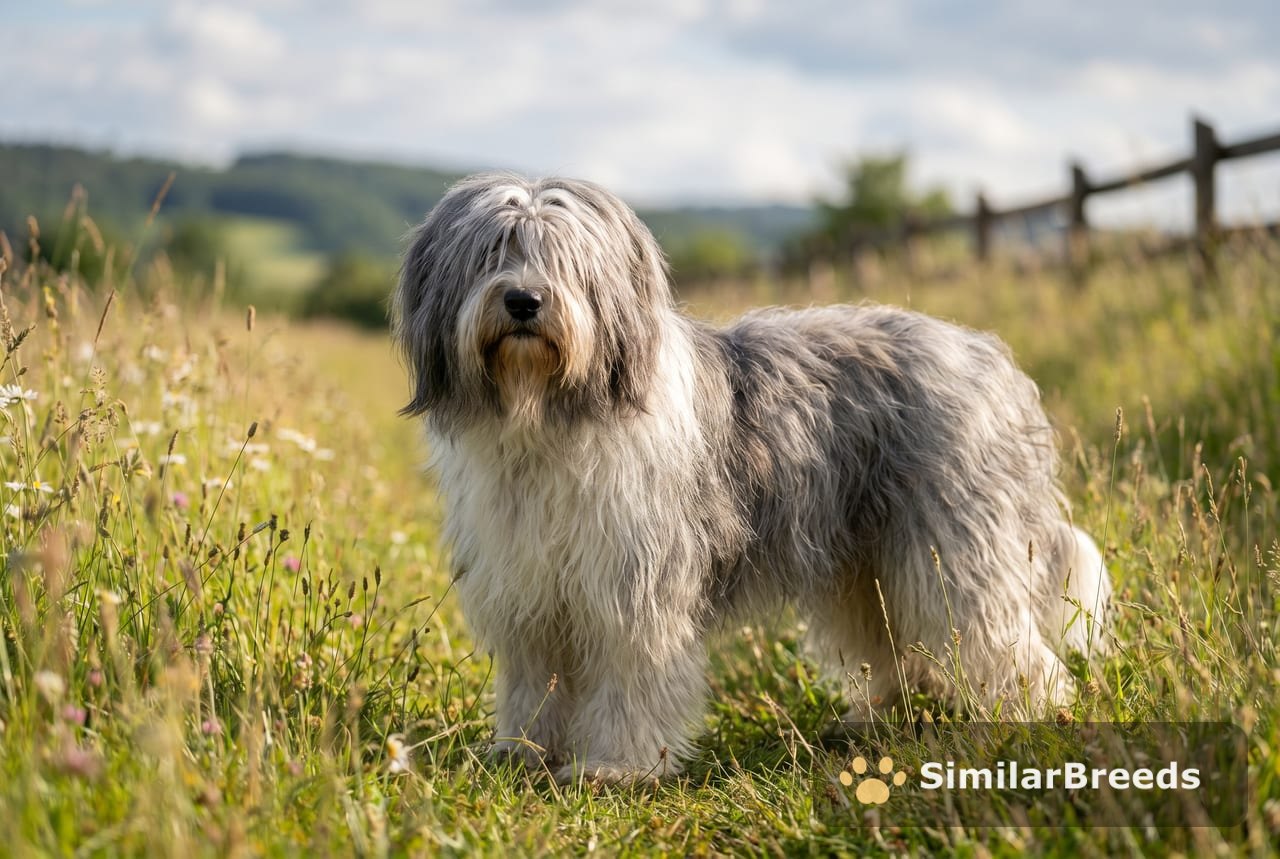
**Polish Lowland Sheepdog:** Also cited as a probable ancestor. The PON is compact and similarly shaggy, with the same independent herding intelligence and equivalent grooming demands. Of the three, the PON is closest to the Schapendoes in working style and physical type.